View methods side by side.
Choose up to four methods. Add them using the search and share the comparison by copying its link.
| Criterion |  Facilitation Stakeholder Salience Model |  Innovation Lotus Blossom |  Innovation Brainstorming |
|---|---|---|---|
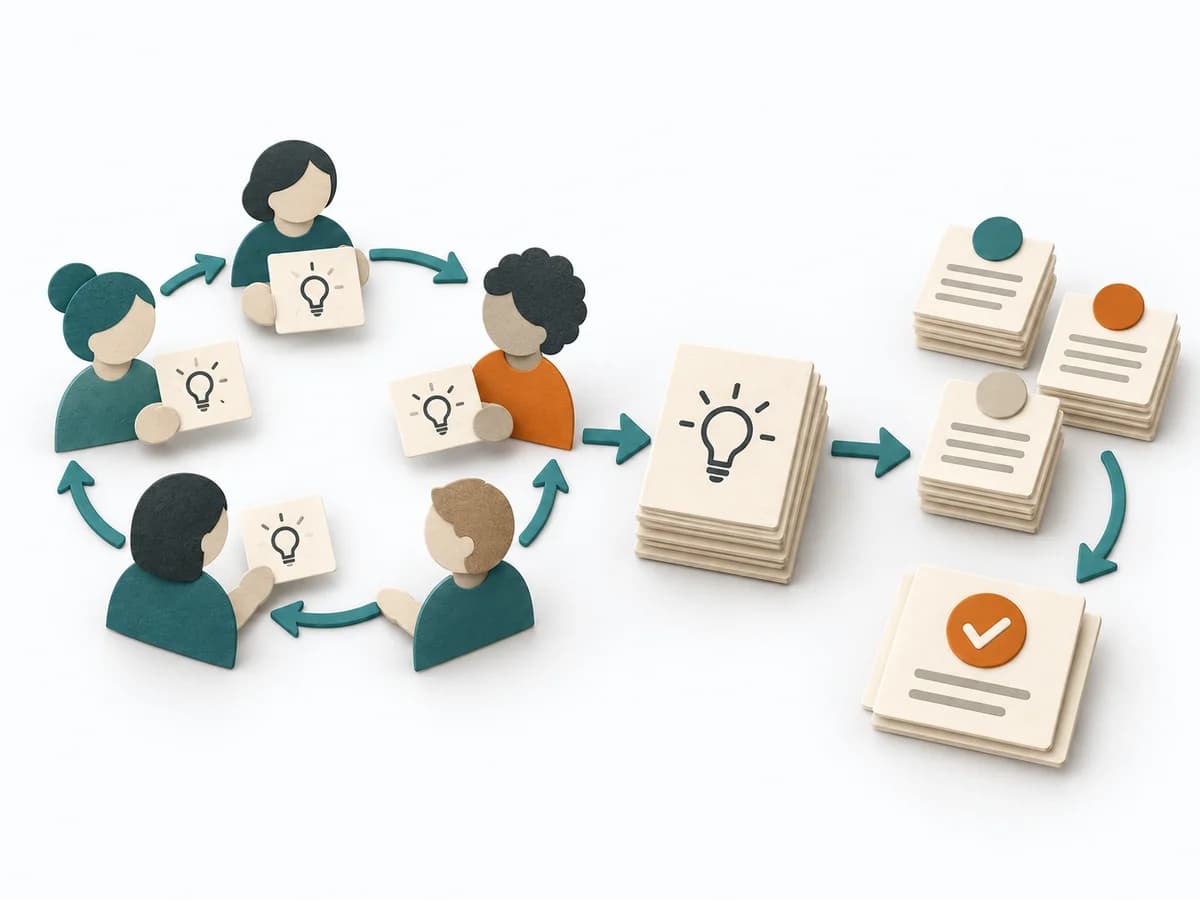
Purposedifferent | When stakeholders appear to matter very differently, the Stakeholder Salience Model rates their actual priority through power, legitimacy, and urgency. It turns individual contributions into a visible selection. The result is captured as a Salience diagram and a class-based strategy. | When a central question feels too large, the method breaks it into neighboring topic fields with their own depth of ideation. It holds structure and openness at the same time, so adjacent perspectives don't get lost. This grows an idea space out of a core problem. | When a team faces an open question with many obvious directions, the method first creates breadth instead of premature commitment. It separates idea flow from evaluation and makes lines of thought visible, creating a pool for selection and further development. |
Complexitydifferent | Medium | Low | Low |
Timedifferent | 60-90 min | 45-90 min | 30-60 min |
Participantsdifferent | 3-6 | 3-10 | 4-12 |
Formatsame | Workshop | Workshop | Workshop |
Outputdifferent | Salience Diagram, Strategy per Class | Lotus Diagram, Idea Themes, Shortlist | Idea pool, Theme clusters, Shortlist |
Tagsno overlap | StakeholdersFacilitationAlignmentGovernance | BrainstormingIdeationCreativityDivergenceWorkshop | BrainstormingIdeationCreativityWorkshopDivergence |
Often compared together
Methods with strong topical overlap with the current selection, not yet in the comparison.