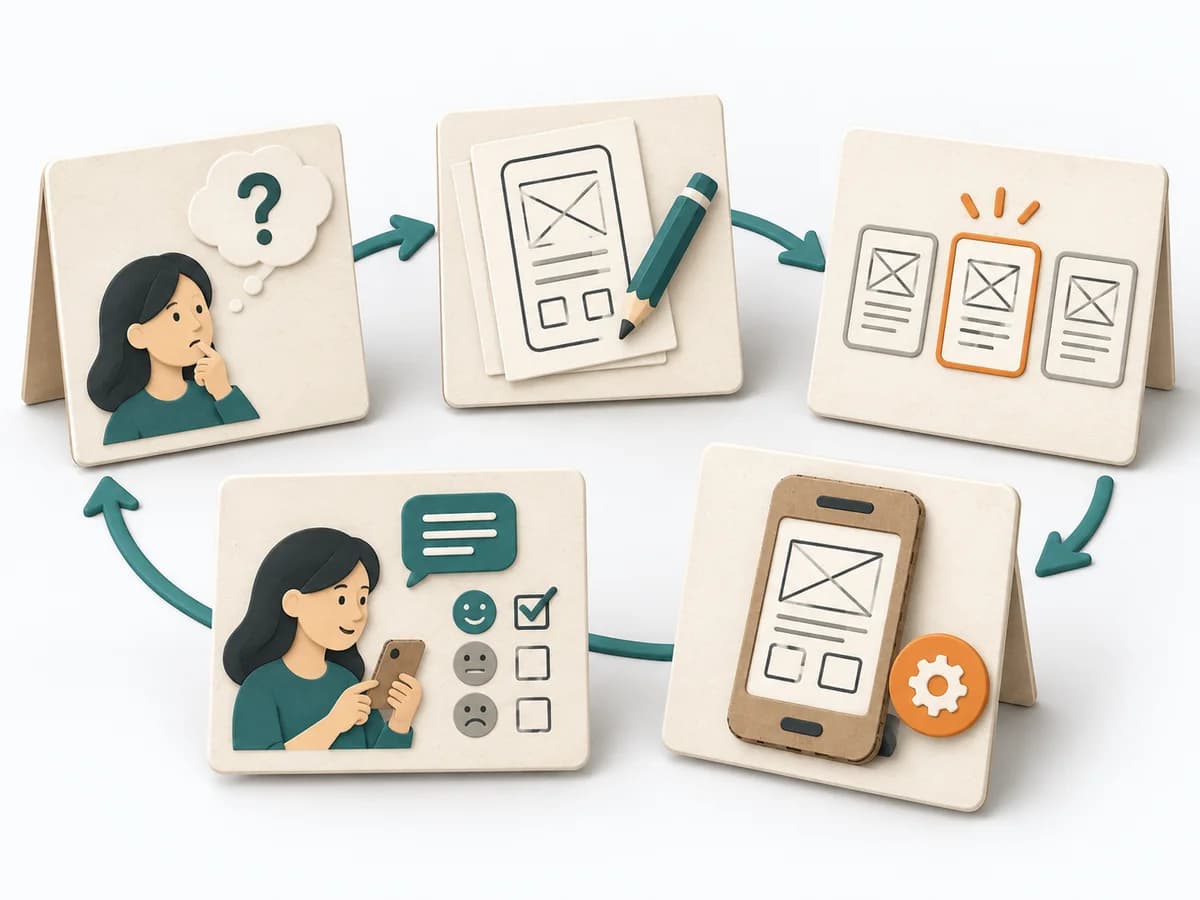
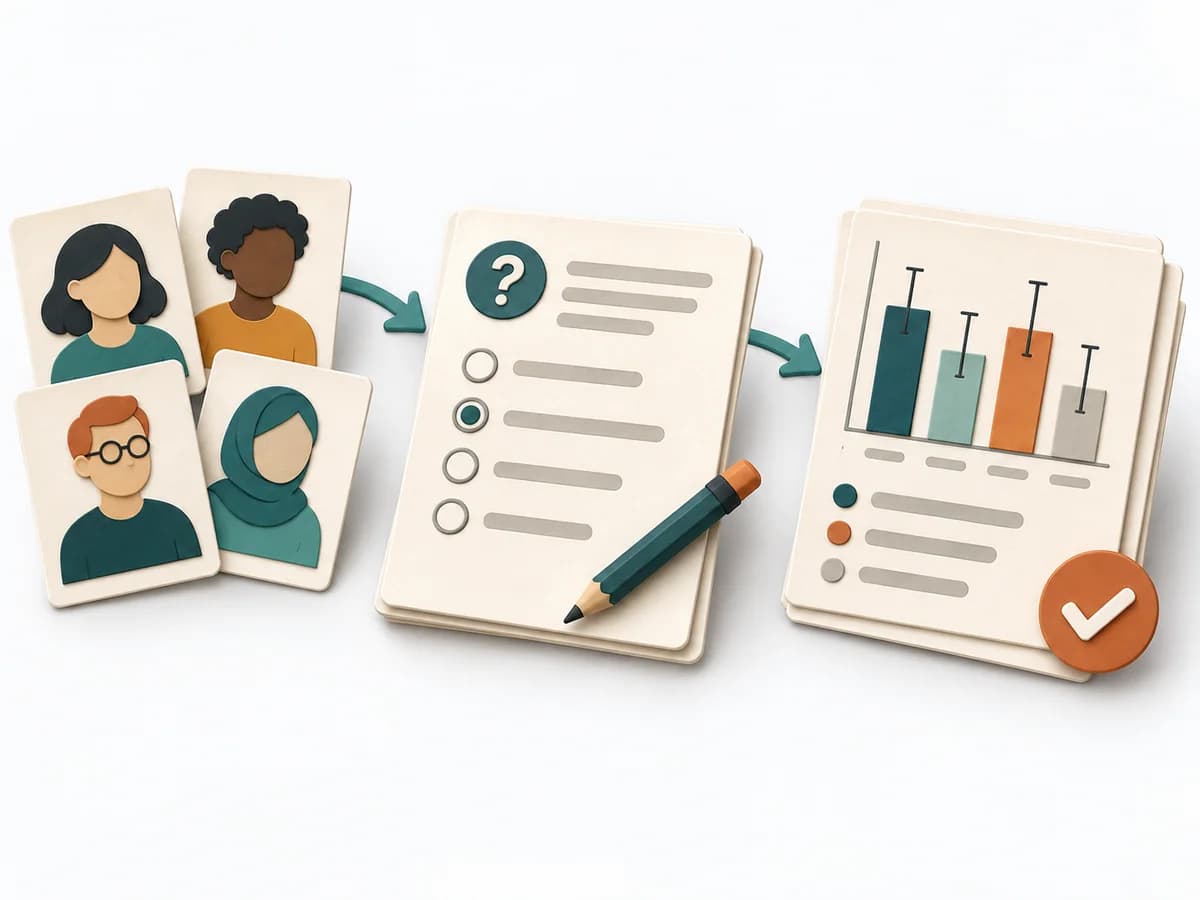
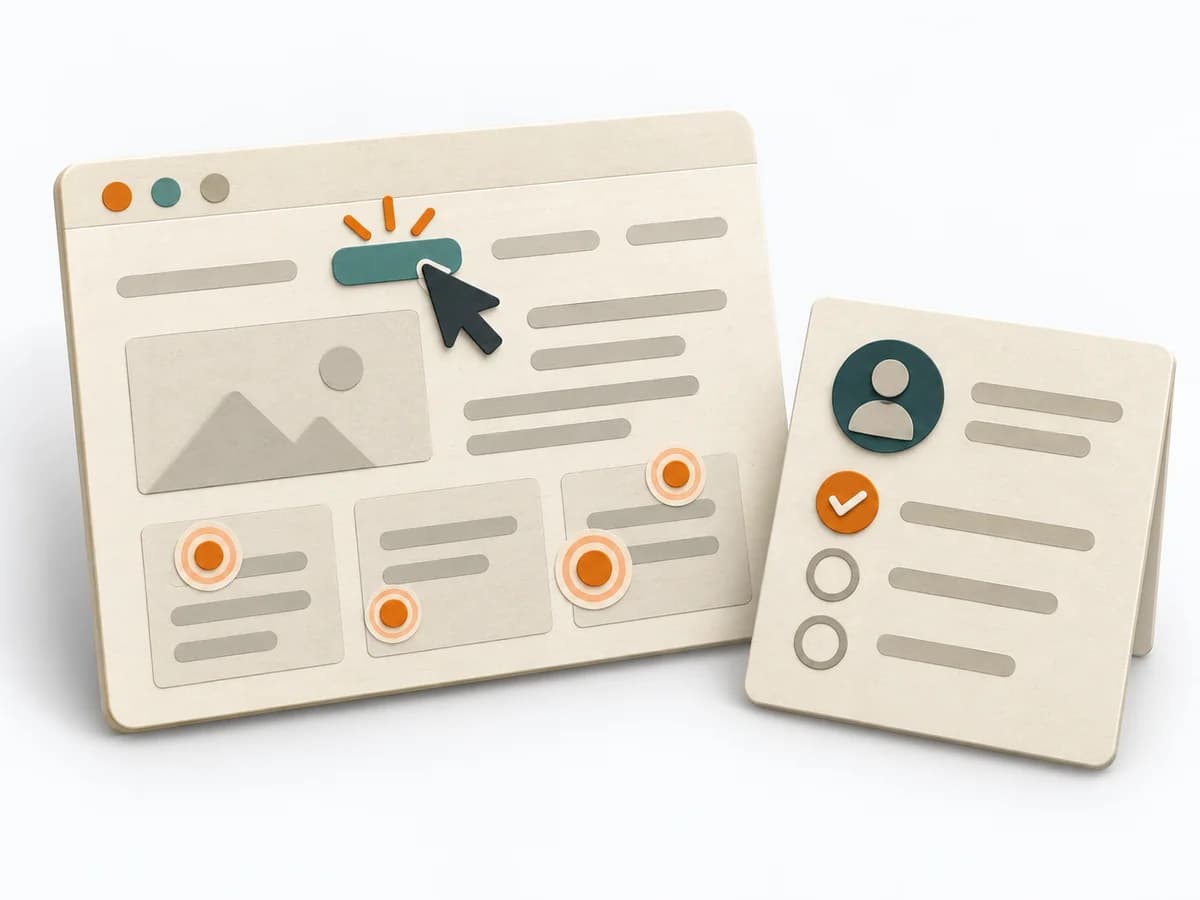
View methods side by side.
Choose up to four methods. Add them using the search and share the comparison by copying its link.
| Criterion | 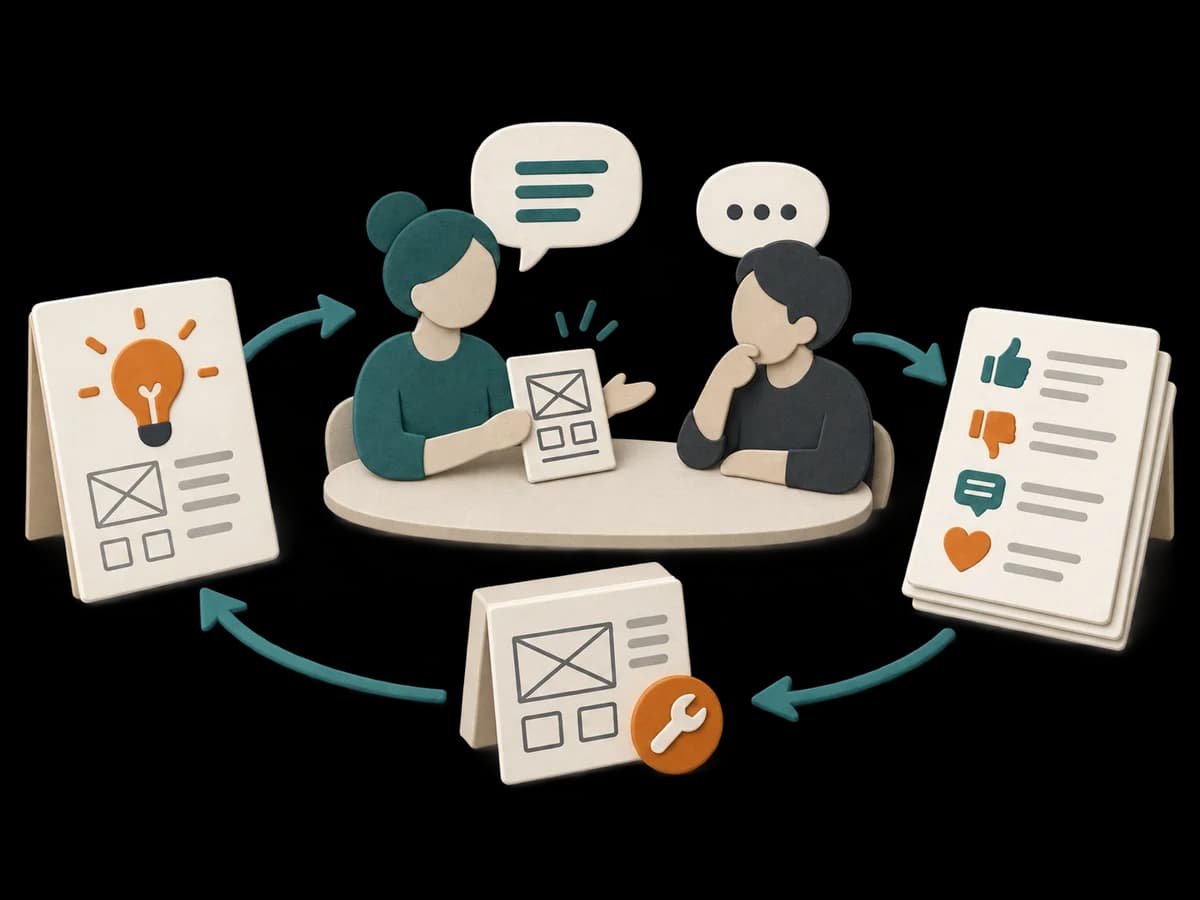 Product Discovery Solution Interview | 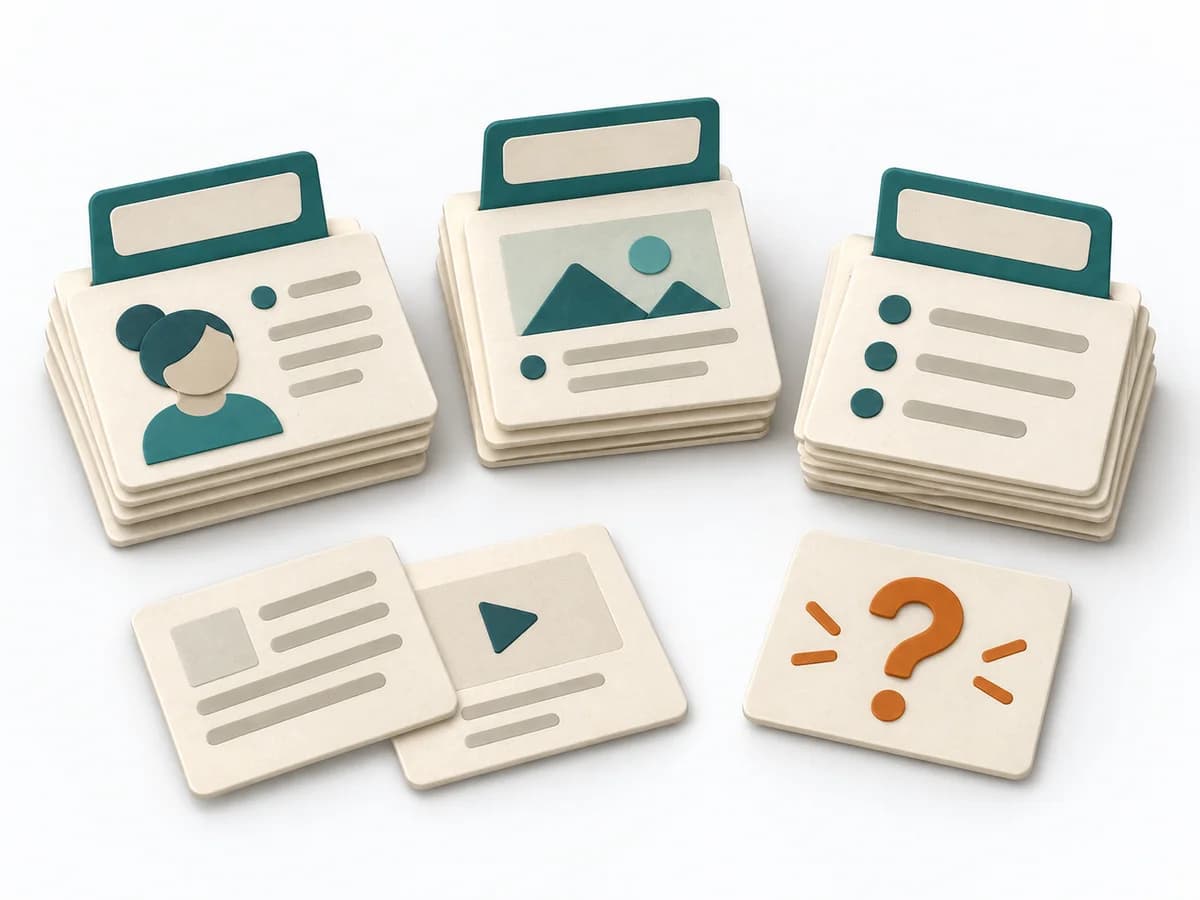 UX Research Card Sorting | 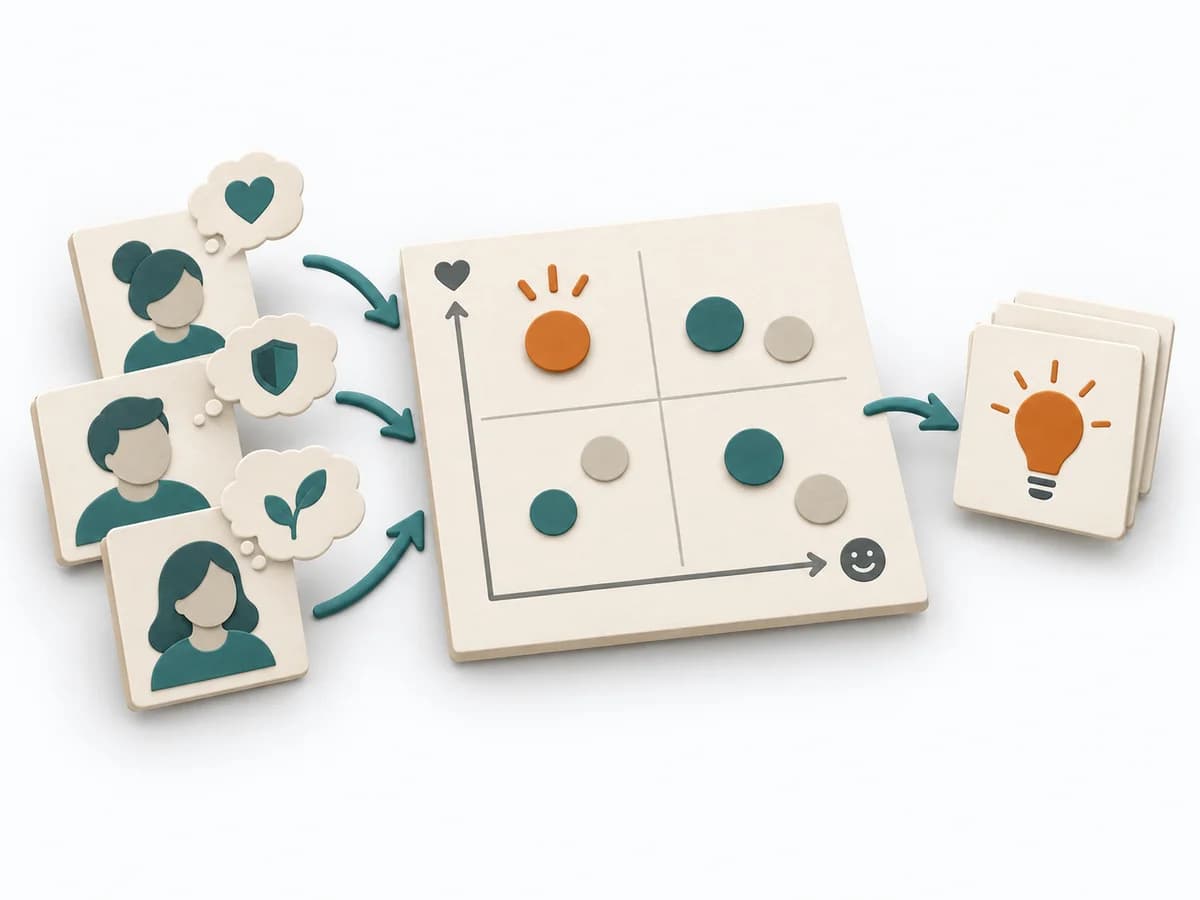 Product Discovery Outcome-Driven Innovation |
|---|---|---|---|
Purposedifferent | When a solution idea is already on the table, it checks how it is understood and evaluated. It looks for resonance, objections, and missing fit early in the conversation. | When content only makes sense internally and users can't find the structure again, card sorting exposes their mental order. Terms, groups, and naming are then aligned with the target group's expectations. | Outcome-Driven Innovation clarifies customer problems, solution opportunities, and evidence. It separates jobs, desired outcomes, importance, satisfaction, and opportunity, and captures results as desired outcome statements, an opportunity landscape, and segments by underserved needs. |
Complexitydifferent | Medium | Low | High |
Timedifferent | 30-60 min je Interview | 20-45 min | Mehrere Wochen |
Participantsdifferent | 5-10 Interviews | Based on research question | 2-6 researchers plus sample |
Formatsame | Workshop + async | Workshop + async | Workshop + async |
Outputdifferent | Solution Feedback, Objection List, Validation Notes | Content groups, Label set, IA hypotheses | Desired outcome statements, Opportunity landscape, Segmentation by underserved needs, Innovation hypotheses |
Tagsno overlap | ValidationInterviewsPrototype | Information architectureNavigationStructure | OutcomesInnovationResearchQuantitative |
Often compared together
Methods with strong topical overlap with the current selection, not yet in the comparison.