View methods side by side.
Choose up to four methods. Add them using the search and share the comparison by copying its link.
| Criterion | 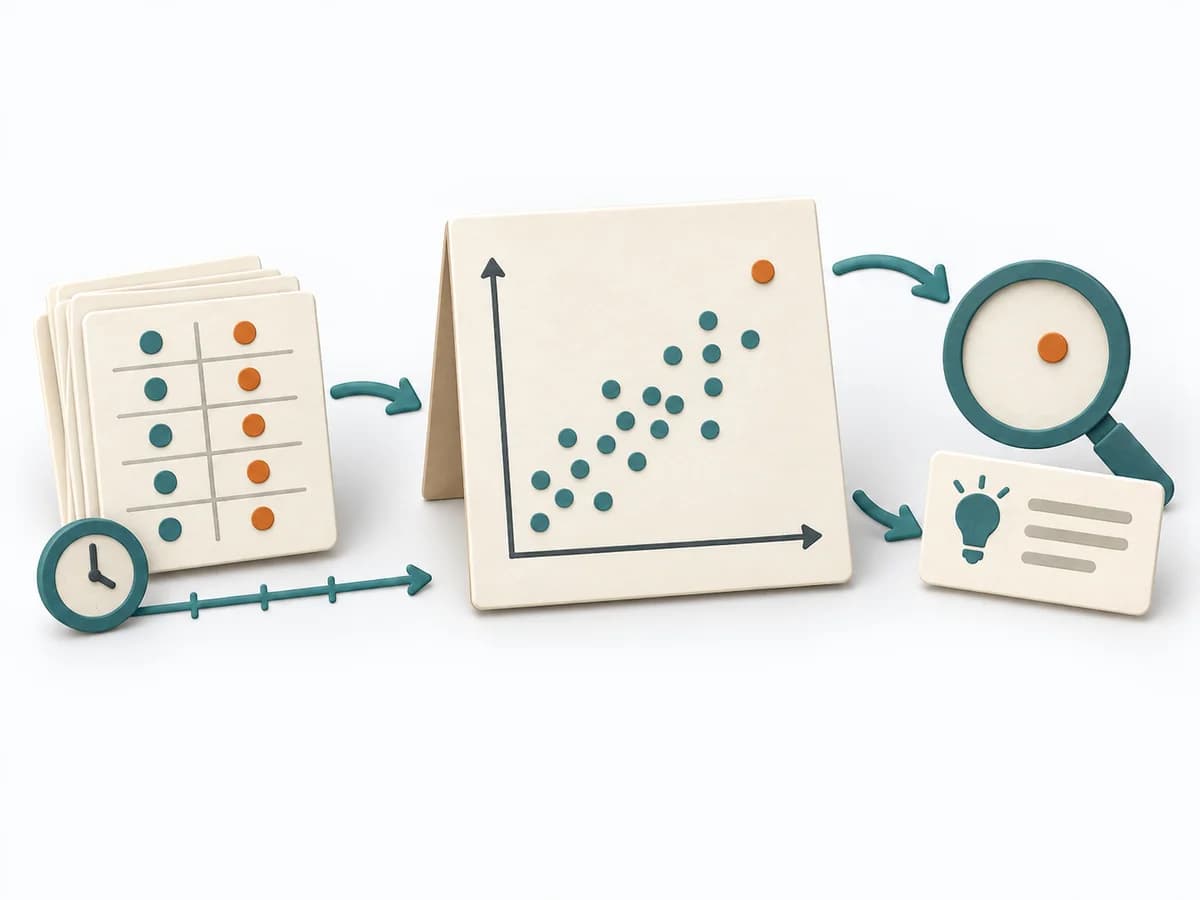 Operations Scatter Diagram |  Operations Root Cause Analysis |  Architecture LASR (Lightweight Approach for Software Reviews) |
|---|---|---|---|
Purposedifferent | When the question is whether two measures are related, the method makes patterns in the data picture visible. It separates felt correlations from relationships that actually show up in the data. | When a problem keeps recurring and the cause stays unclear, the method exposes the underlying mechanism. It separates symptom, guess, and robust explanation from one another. | LASR helps development teams identify where their software falls short of important quality goals and which improvements to consider. A small group with existing system knowledge can make an initial assessment and investigate open questions in more detail. |
Complexitydifferent | Low | Medium | Medium |
Timedifferent | 30-90 min | 1-4 h | 3–4 h for initial assessment; preparation and deeper analysis additional |
Participantsdifferent | 1-4 | 3-8 | 1 or a small team; particularly suitable for 3–4 people |
Formatsame | Workshop + async | Workshop + async | Workshop + async |
Outputdifferent | Scatter Plot, Korrelationsnotiz, Hypothesenliste | Problem Statement, Cause Hypotheses, Confirmed Causes, Action Plan | Lean Mission Statement describing the software’s purpose, Prioritized quality goals and evaluation criteria, Risks and estimated gaps against quality goals, More closely examined findings and open checks |
Tags1 shared | Root causeQualityVisualization | Root causeProblem solvingQualityIncident | ArchitectureQualityRiskAssessmentLean |
Often compared together
Methods with strong topical overlap with the current selection, not yet in the comparison.



