View methods side by side.
Choose up to four methods. Add them using the search and share the comparison by copying its link.
| Criterion | 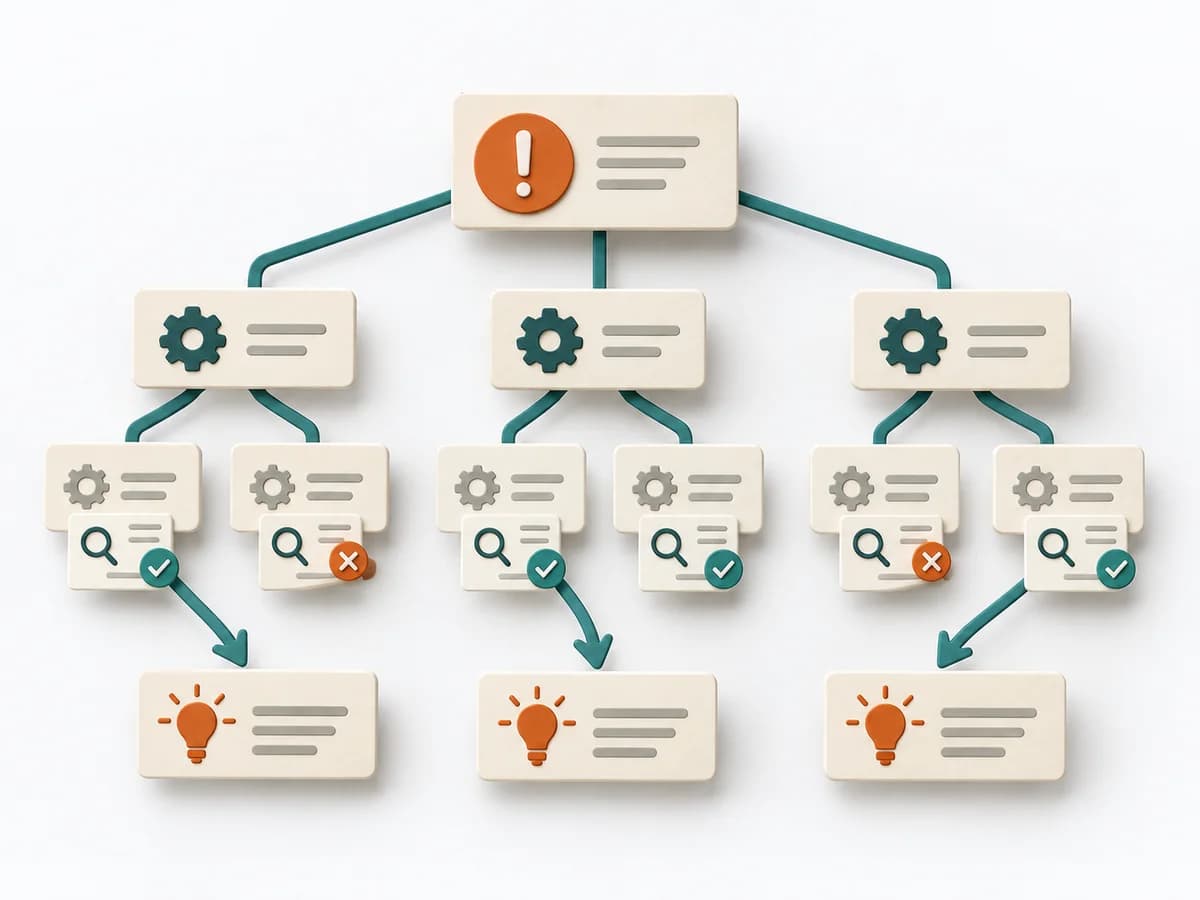 Operations Root Cause Tree Analysis |  Innovation SCAMPER |  Innovation Rapid Ideation |
|---|---|---|---|
Purposedifferent | For a problem with several suspected causes, the method builds a causal structure instead of a mere list. It makes visible how causes connect and where the strongest points of leverage lie. | For an existing solution under pressure to change, the method deliberately opens space for systematic variants. It directs attention to rebuilding, combining, and repurposing rather than only new basic ideas. This produces concrete evolution paths for products, offerings, or workflows. | When a decision needs to be prepared quickly, the method generates many solution-close variants in a short time. It deliberately relies on pace to undercut self-censorship and perfectionism. This quickly produces a usable field for prioritization and further work. |
Complexitydifferent | Medium | Low | Low |
Timedifferent | 1-3 h | 30-60 min | 5-20 min |
Participantsdifferent | 2-8 | 2-10 | 1-20 |
Formatdifferent | Workshop | Workshop | Workshop + async |
Outputdifferent | Cause Tree, Evidence Notes, Countermeasures | SCAMPER Idea List, Concept Shortlist, Variation Notes | Ideenpool, Roh-Shortlist, Cluster |
Tagsno overlap | Root causeTreeIncidentQuality | BrainstormingIdeationCreativityReframingInnovation | BrainstormingIdeationDivergenceSpeed |
Often compared together
Methods with strong topical overlap with the current selection, not yet in the comparison.