View methods side by side.
Choose up to four methods. Add them using the search and share the comparison by copying its link.
| Criterion |  Systems Thinking Polarity Mapping | 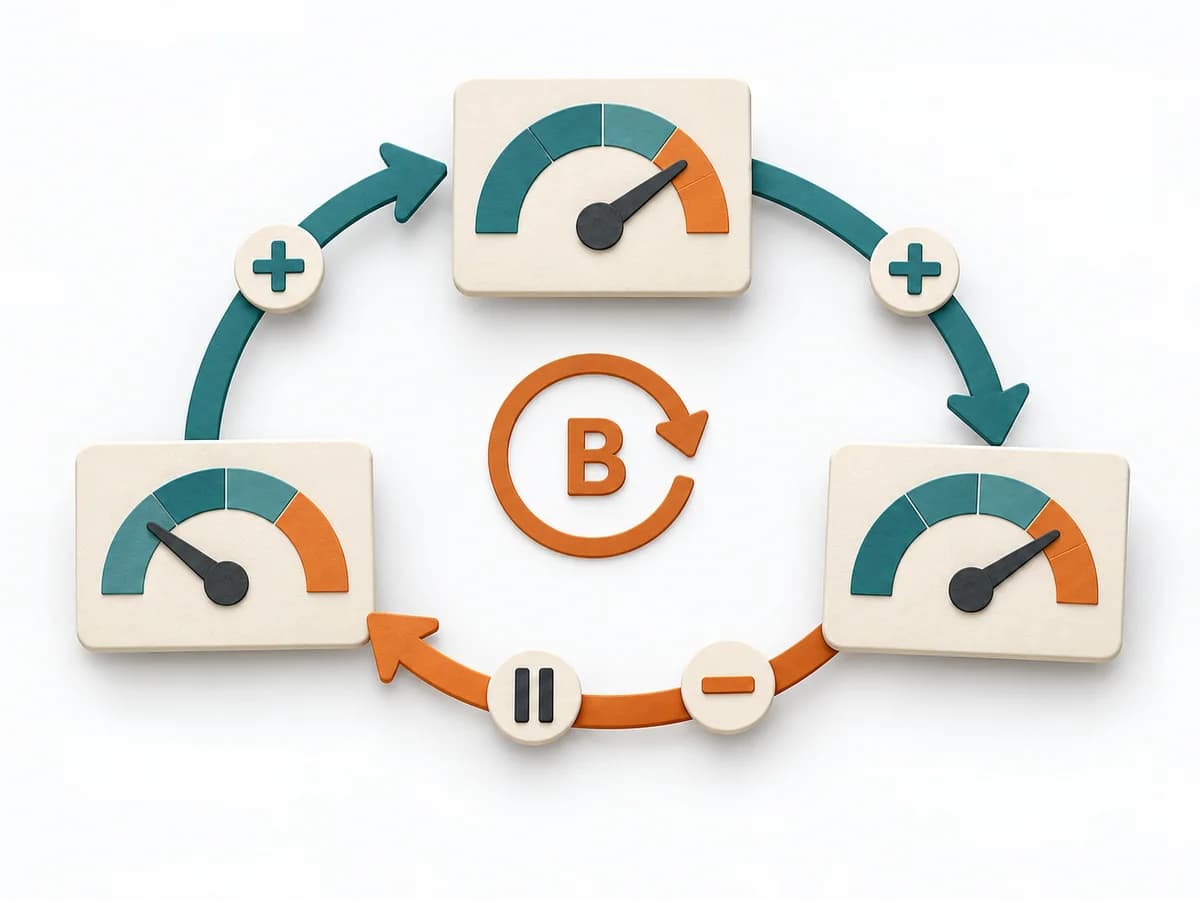 Systems Thinking Causal Loop Diagram |  Growth A/B Testing |
|---|---|---|---|
Purposedifferent | Polarity Mapping makes tensions between two opposing poles tangible, such as standardization and adaptation or control and autonomy. The method guards against making apparent either-or decisions prematurely. | A Causal Loop Diagram makes feedback, reinforcement, and balance in a system legible. It uncovers side effects and self-reinforcement that stay hidden in linear explanations. | When two variants compete, discussions quickly decide by taste rather than effect. A/B Testing checks behavior under controlled conditions and separates real improvement from chance or expectation effects. |
Complexitydifferent | Medium | Medium | High |
Timedifferent | 1-2 h | 1-3 h | 1-4 Wochen |
Participantsdifferent | 3-12 | 2-8 | 1-6 |
Formatdifferent | Workshop | Workshop | Async |
Outputdifferent | Polarity Map, Warning Signs, Balance Actions | Causal Loop Diagram, Feedback Notes, Leverage Points | Experiment results, Decision log, Learning summary |
Tagsno overlap | Systems thinkingTradeoffsLeadership | FeedbackSystems thinkingCausalityDynamics | ExperimentsGrowthAnalyticsValidation |
Often compared together
Methods with strong topical overlap with the current selection, not yet in the comparison.