View methods side by side.
Choose up to four methods. Add them using the search and share the comparison by copying its link.
| Criterion |  Knowledge Modeling PARA Method | 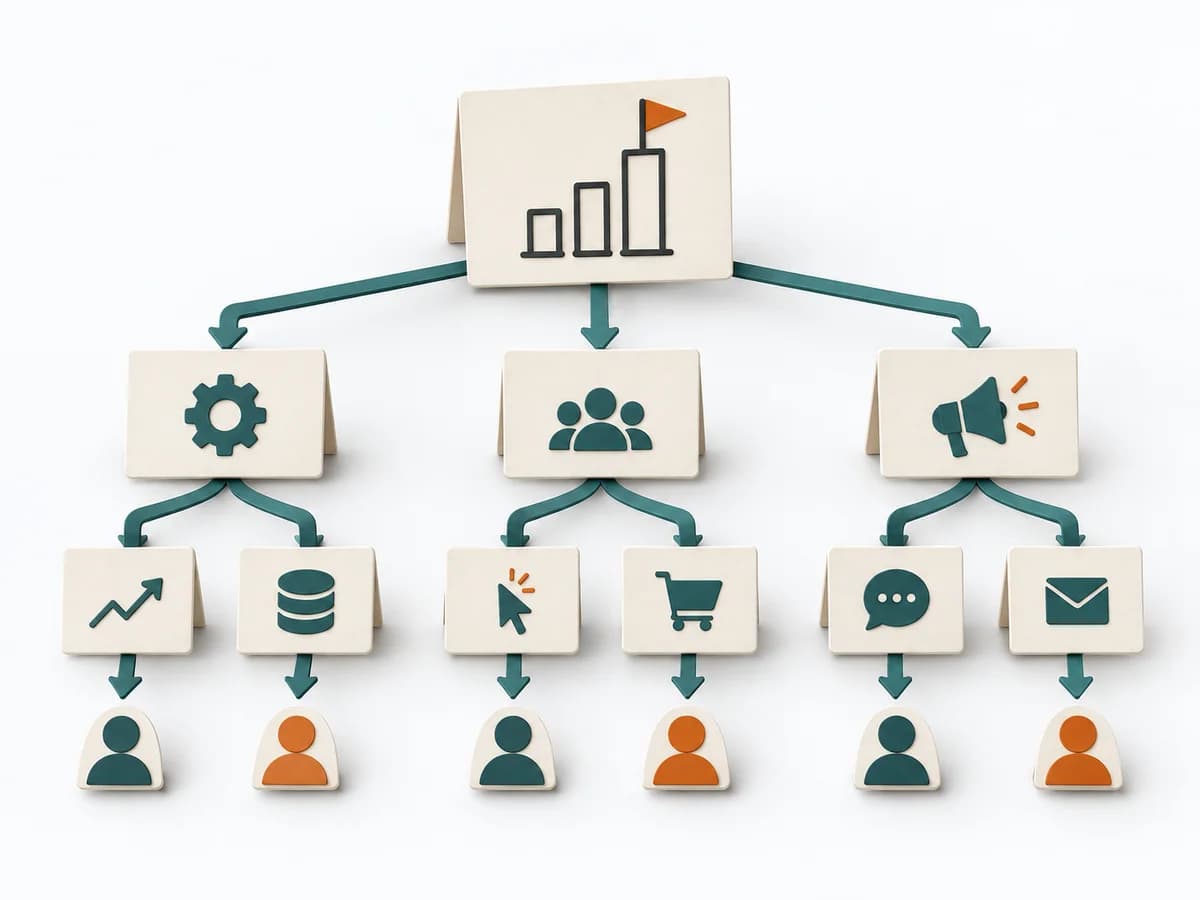 Product Strategy KPI Tree | 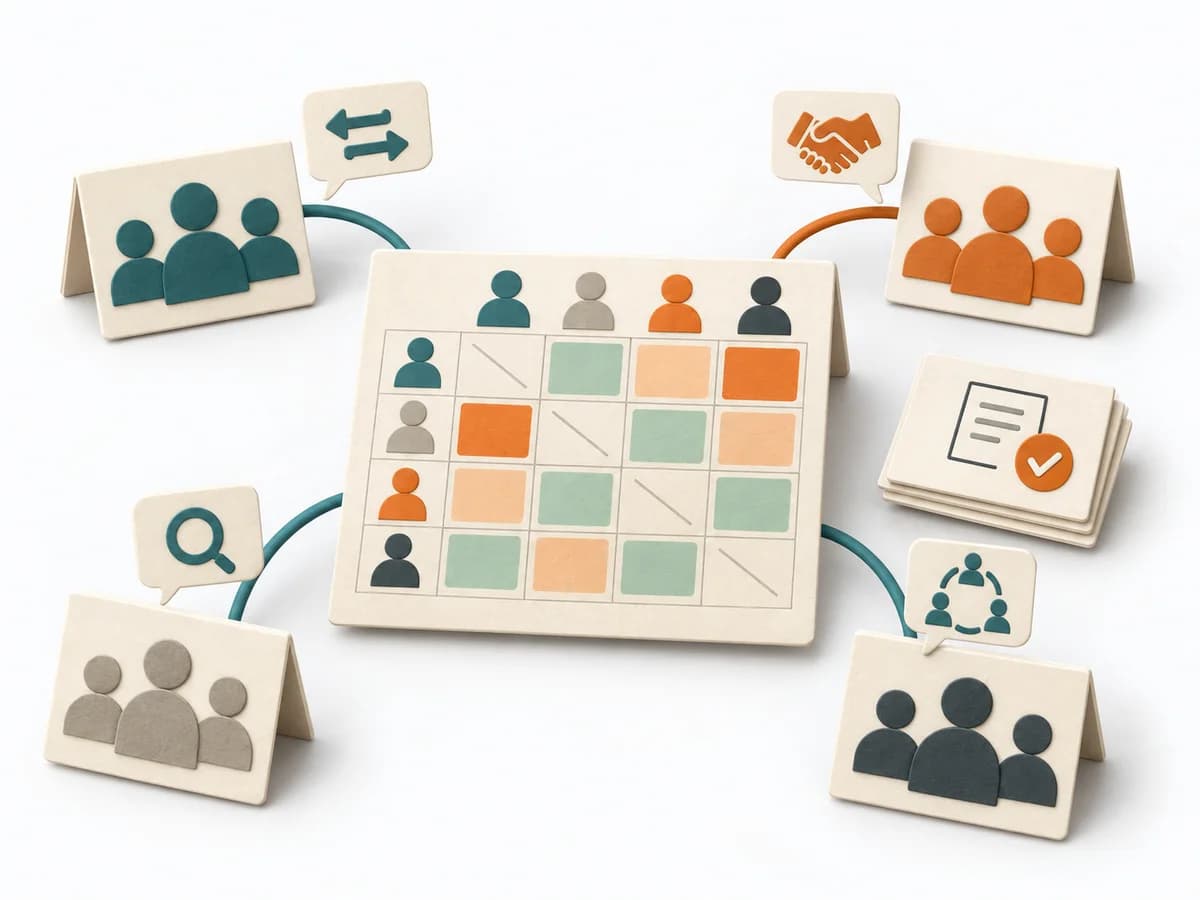 Team Design Team Topologies Interaction Modes |
|---|---|---|---|
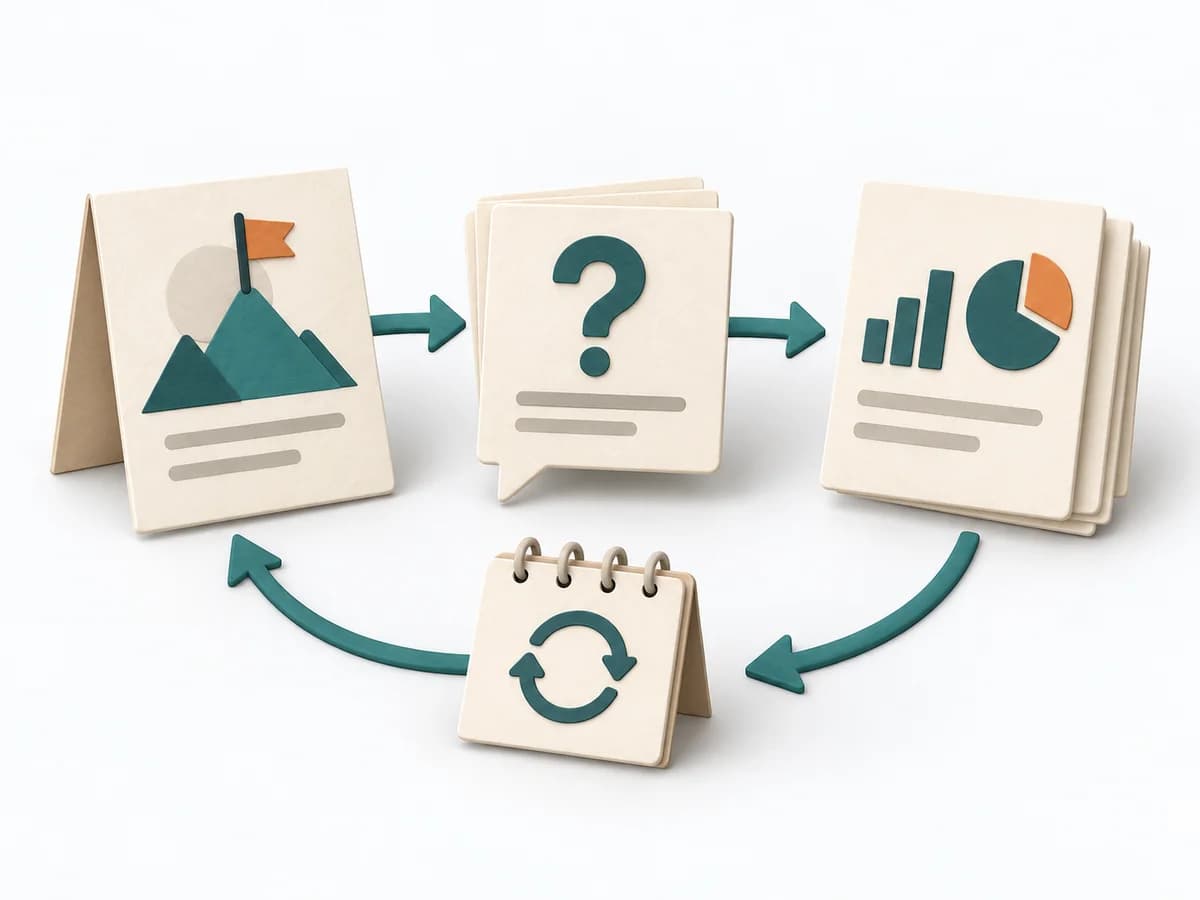
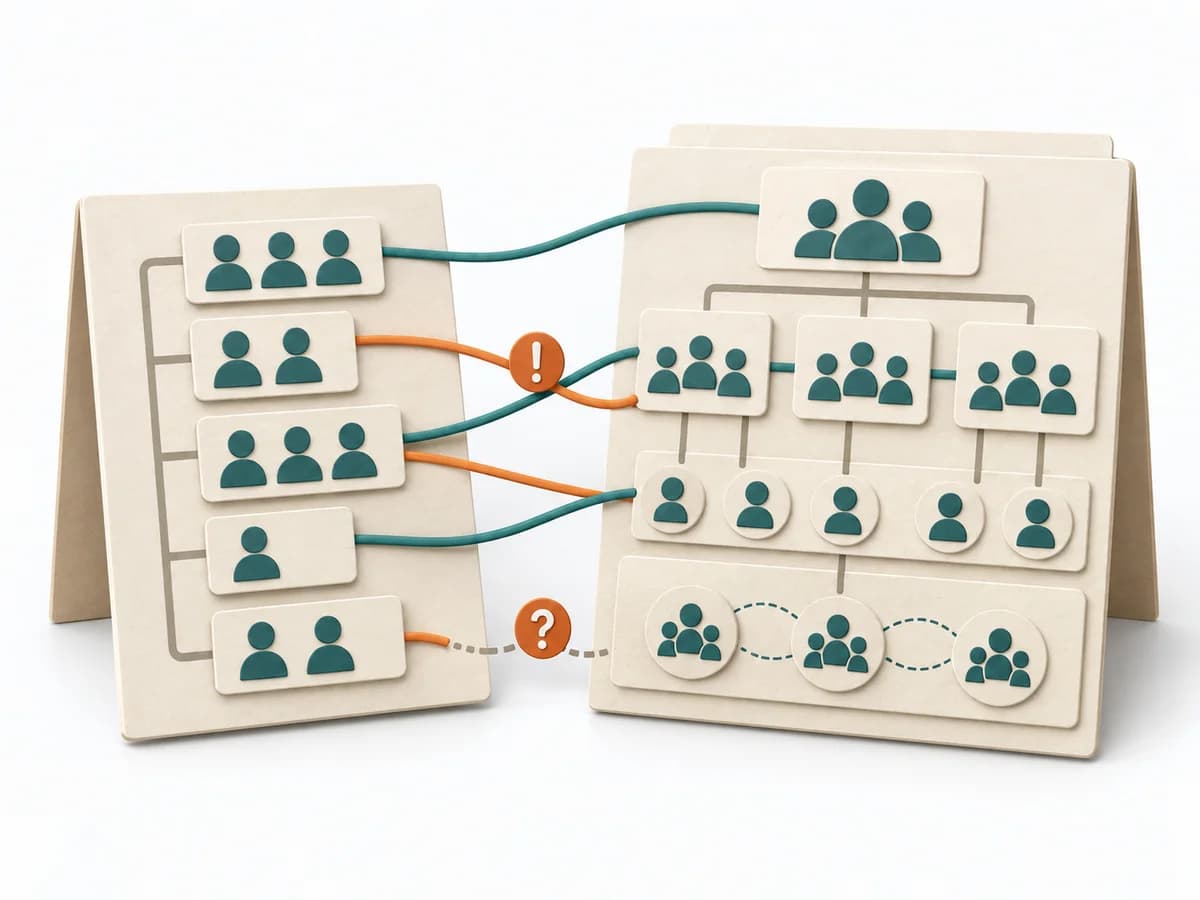
Purposedifferent | The PARA Method organizes knowledge into Projects, Areas, Resources, and Archives. It creates order when digital notes, files, and tasks no longer cleanly fit current work. | When metrics across the organization drift apart, it arranges drivers and effects under one shared logic. It connects customer value, product logic, and decision priorities. The result is captured as a KPI tree and owner list. | When several teams collaborate repeatedly, it describes the right interaction mode for each interface between them. It clarifies responsibility, interaction, and load between teams. The result is captured as an interaction heat map and pairwise agreements. |
Complexitysame | Medium | Medium | Medium |
Timedifferent | 1-3 h Setup, laufend | 90-180 min initial, dann laufend | Half day |
Participantsdifferent | 1 | 3-8 | Team-Leads plus Architecture |
Formatdifferent | Async | Workshop + async | Workshop |
Outputdifferent | PARA Structure, Project Notes, Knowledge Archive | KPI Tree, Owner List | Interaction Heat Map, Agreements per Pair |
Tagsno overlap | KnowledgeProductivityOrganization | MetricsStrategyAlignmentMeasurement | TeamAlignmentCollaborationOrganization |
Often compared together
Methods with strong topical overlap with the current selection, not yet in the comparison.