View methods side by side.
Choose up to four methods. Add them using the search and share the comparison by copying its link.
| Criterion |  Product Discovery Outcome-Driven Innovation |  Facilitation Stakeholder Mapping | 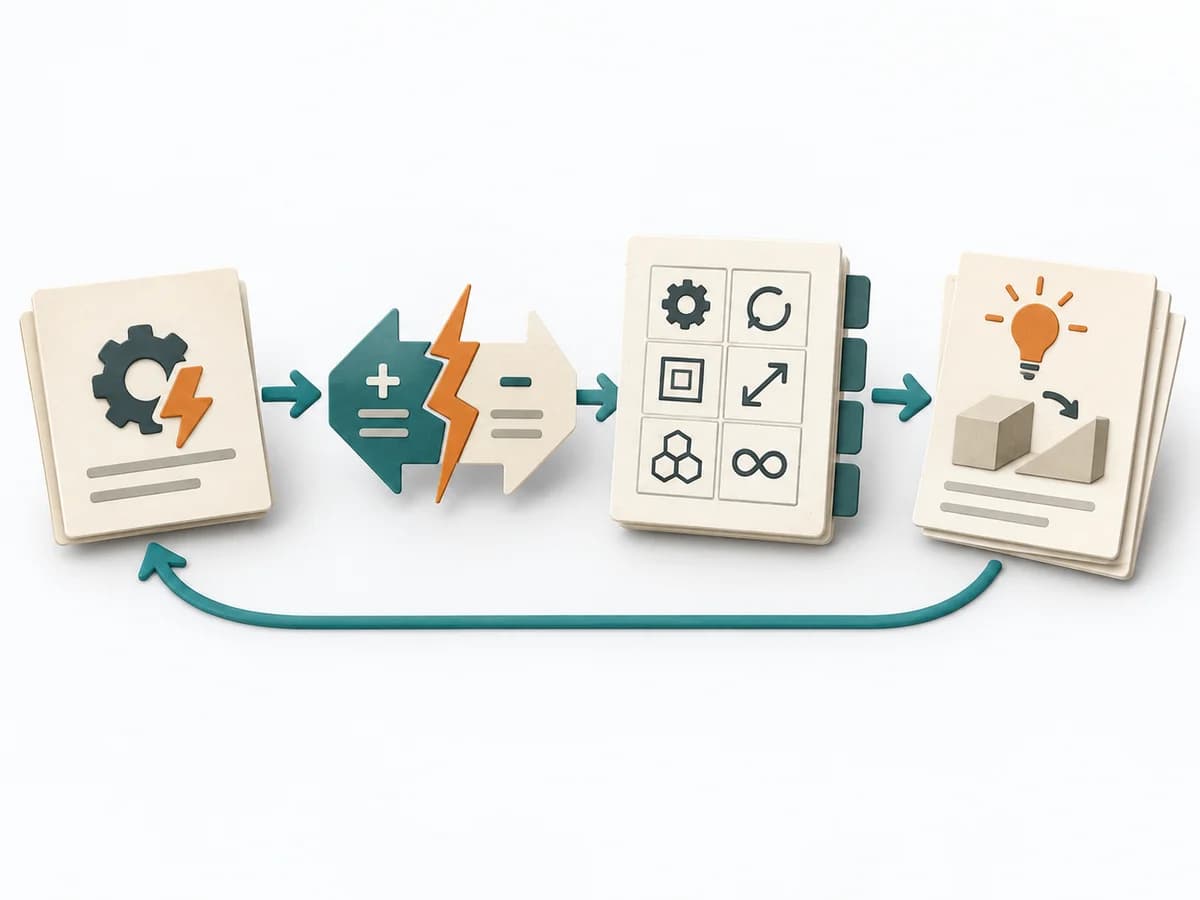 Innovation TRIZ |
|---|---|---|---|
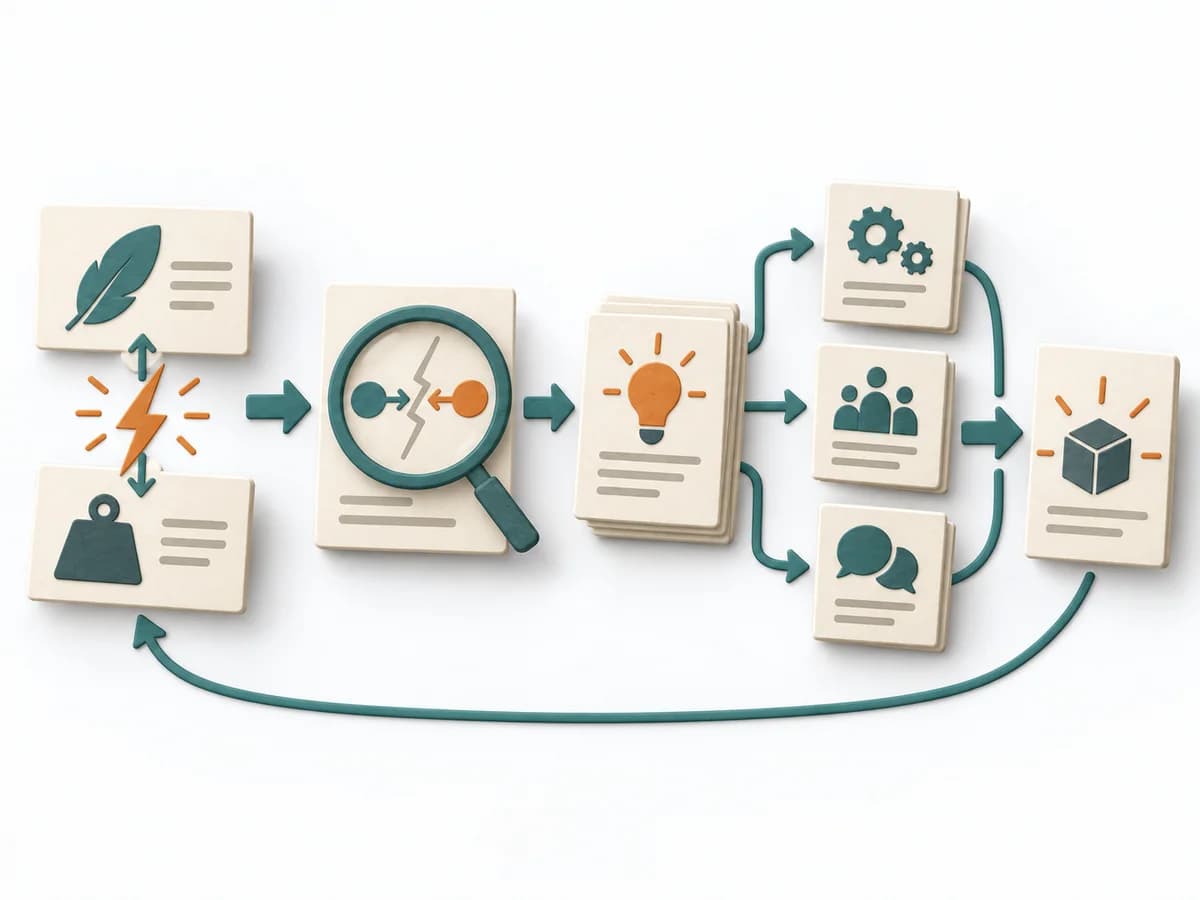
Purposedifferent | Outcome-Driven Innovation clarifies customer problems, solution opportunities, and evidence. It separates jobs, desired outcomes, importance, satisfaction, and opportunity, and captures results as desired outcome statements, an opportunity landscape, and segments by underserved needs. | When an initiative depends on many people, interests, and power dynamics, Stakeholder Mapping systematically orders the environment. It shows who influences, who is affected, and where relationship management or safeguarding matters first. | For technical contradictions or trade-offs, the method looks for solutions that resolve opposing requirements at the same time. It translates limits into an explicit picture of conflict that becomes workable. This produces not just compromises but more elegant principles. |
Complexitydifferent | High | Low | High |
Timedifferent | Mehrere Wochen | 60–90 min | 1-4 h |
Participantsdifferent | 2-6 researchers plus sample | 2-8 | 2-8 |
Formatsame | Workshop + async | Workshop + async | Workshop + async |
Outputdifferent | Desired outcome statements, Opportunity landscape, Segmentation by underserved needs, Innovation hypotheses | Stakeholder Map, Engagement Plan, Risk Notes | Contradiction Statement, Inventive Principles, Solution Concepts |
Tagsno overlap | OutcomesInnovationResearchQuantitative | StakeholdersAlignmentFacilitationChange | InnovationProblem solvingContradictionsCreativity |
Often compared together
Methods with strong topical overlap with the current selection, not yet in the comparison.