View methods side by side.
Choose up to four methods. Add them using the search and share the comparison by copying its link.
| Criterion | 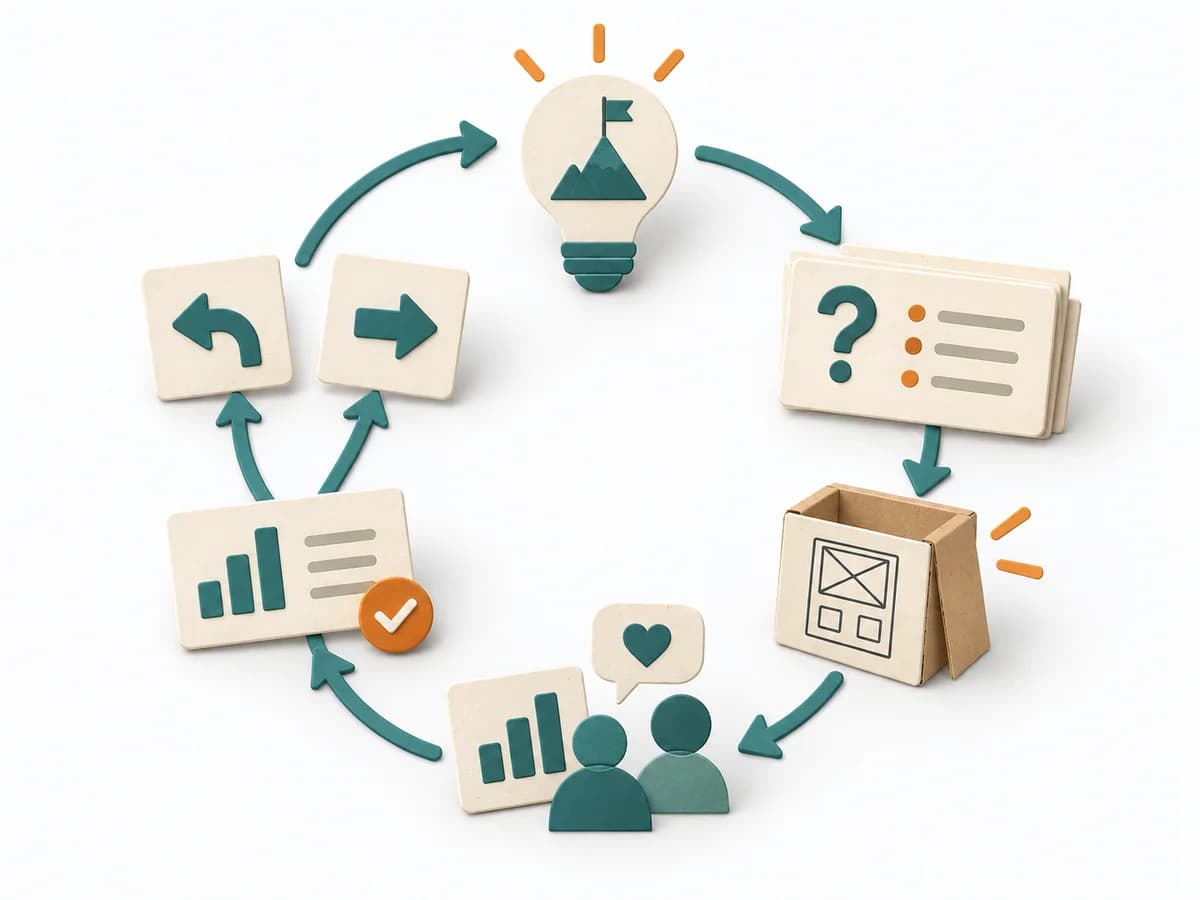 Innovation Lean Startup |  Innovation Morphological Analysis |  Innovation Design Sprint |
|---|---|---|---|
Purposedifferent | For uncertain business assumptions, the method forces the idea into contact with real market reactions early. It separates wishful picture, assumption, and observable behavior, so that learning becomes faster than planning. This translates uncertainty into measurable insight. | For a search for solutions with many degrees of freedom, a grid emerges for systematic combinations. The method separates features, variants, and exclusion criteria, so the space gets explored deliberately. | When the product question is unclear and time pressure is high, the method takes a team from an open idea to a testable solution. It connects problem understanding, decision, and learning in one compact format, lowering the risk of spending a lot of energy on a mere guess. |
Complexitydifferent | Medium | Medium | High |
Timedifferent | Wochen bis Monate je Lernzyklus | 1-3 h | 4-5 Tage |
Participantsdifferent | 2-8 | 2-8 | 5-8 |
Formatdifferent | Workshop + async | Workshop + async | Workshop |
Outputdifferent | Hypothesis list, MVPs, Learning reports, Pivot or persevere decision | Morphological Box, Concept Combinations, Idea Shortlist | Prototype, Test Findings, Decision Rationale |
Tagsno overlap | LeanStartupValidationMVP | IdeationInnovationCreativity | Design sprintPrototypeValidationInnovation |
Often compared together
Methods with strong topical overlap with the current selection, not yet in the comparison.