View methods side by side.
Choose up to four methods. Add them using the search and share the comparison by copying its link.
| Criterion | 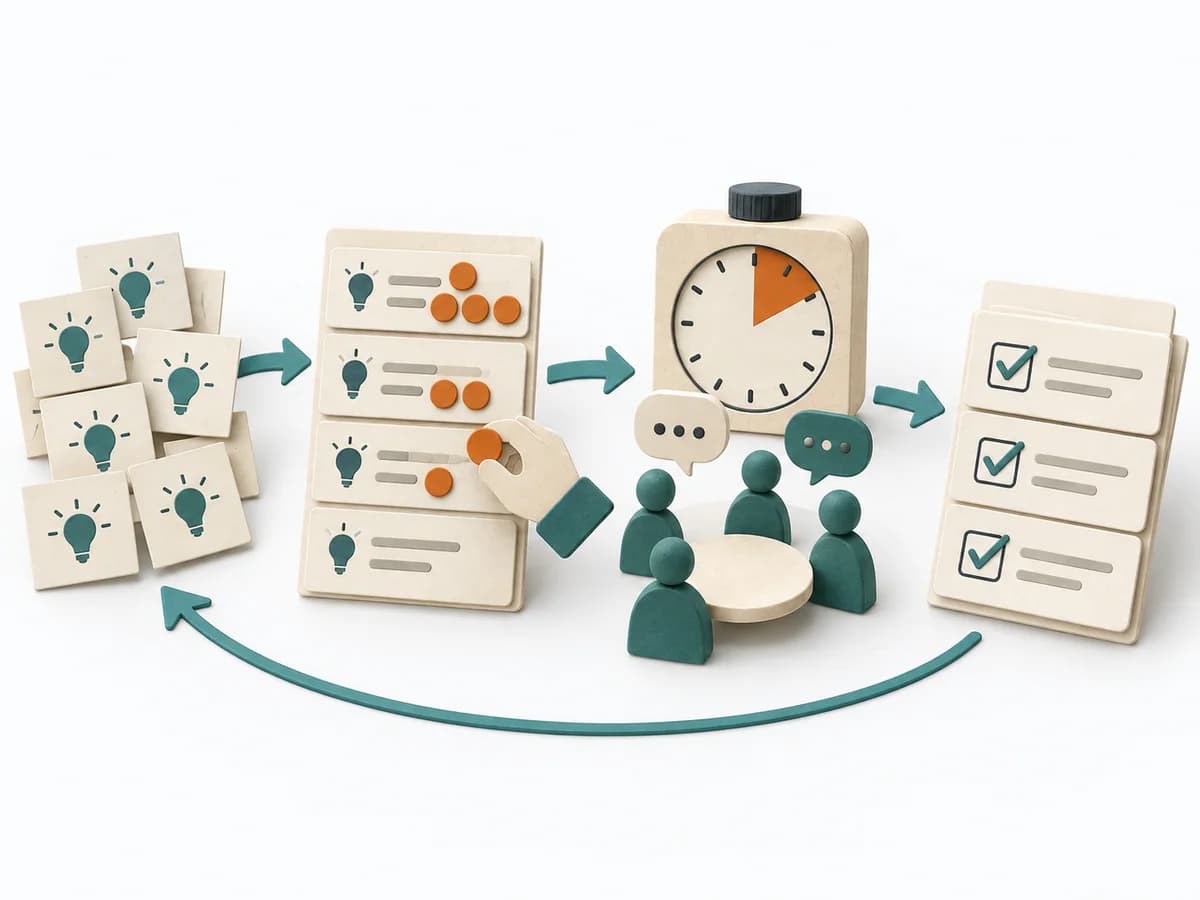 Facilitation Lean Coffee |  Facilitation Alignment Mapping | 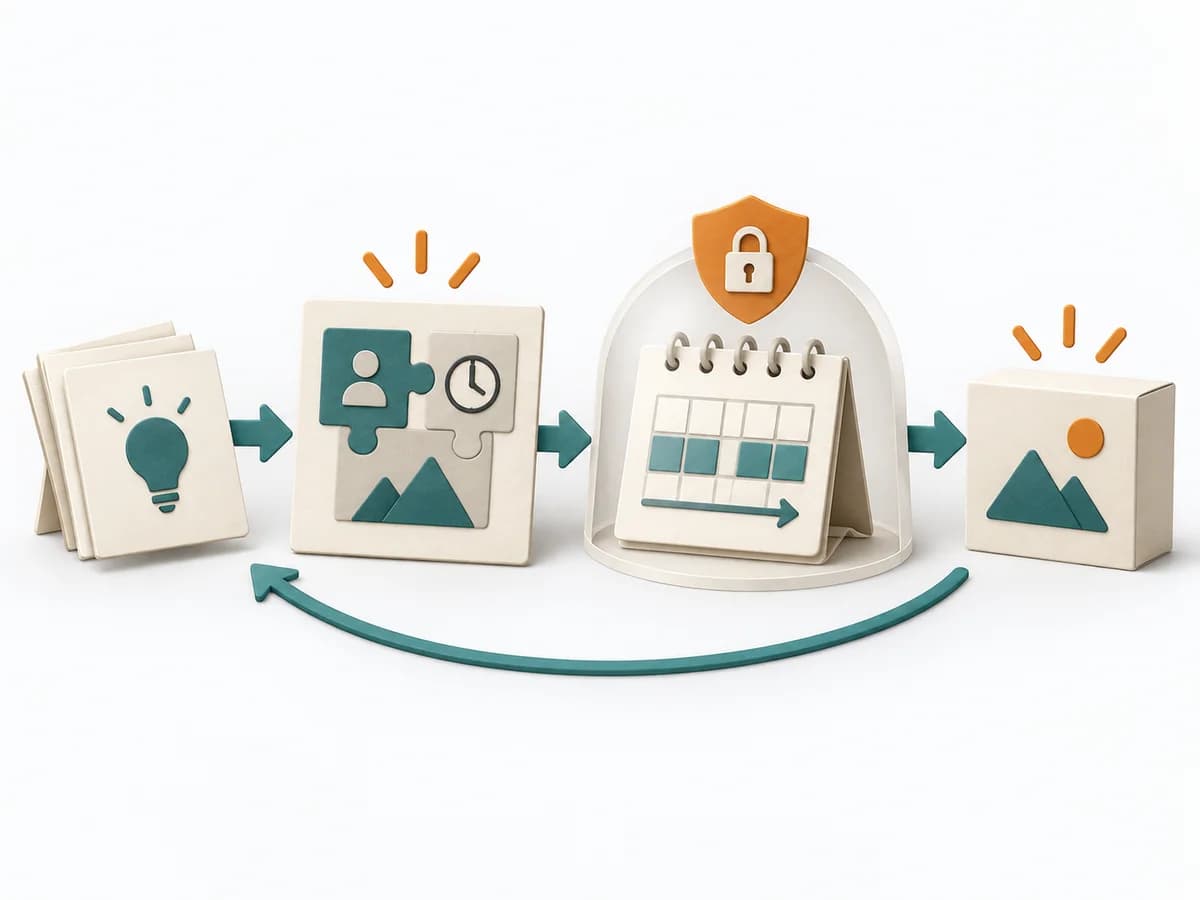 Delivery Shape Up |
|---|---|---|---|
Purposedifferent | When a group without a fixed agenda needs to get into useful conversations quickly, Lean Coffee structures the start around interests rather than a presentation. The group itself negotiates which topics get time first and which wait. | When several people work toward one goal but hold different mental maps, Alignment Mapping makes the discrepancies visible. It arranges goals, assumptions, and priorities so shared direction becomes verifiable. | Shape Up helps clarify scope, sequence, and delivery flow. It makes work boundaries and decisions explicit and captures results as pitches, bet-table decisions, and hill charts. |
Complexitydifferent | Low | Medium | Medium |
Timedifferent | 30-90 min | 1-2 h | 6 Wochen Cycle + 2 Wochen Cool-Down |
Participantsdifferent | 3-20 | 4-12 | 2-4 pro Pitch |
Formatdifferent | Workshop | Workshop | Workshop + async |
Outputdifferent | Prioritized Topics, Discussion Notes, Action Items | Alignment Map, Open Issues, Decision Questions | Pitches, Bet-table decisions, Hill charts, Cooldown outcomes |
Tagsno overlap | FacilitationAutonomyDialogue | AlignmentStakeholdersStrategyFacilitation | PlanningDeliveryAutonomy |
Often compared together
Methods with strong topical overlap with the current selection, not yet in the comparison.