View methods side by side.
Choose up to four methods. Add them using the search and share the comparison by copying its link.
Selected:LASR (Lightweight Approach for Software Reviews)Failure Mode and Effects AnalysisValue Chain Analysis
| Criterion |  Architecture LASR (Lightweight Approach for Software Reviews) |  Operations Failure Mode and Effects Analysis | 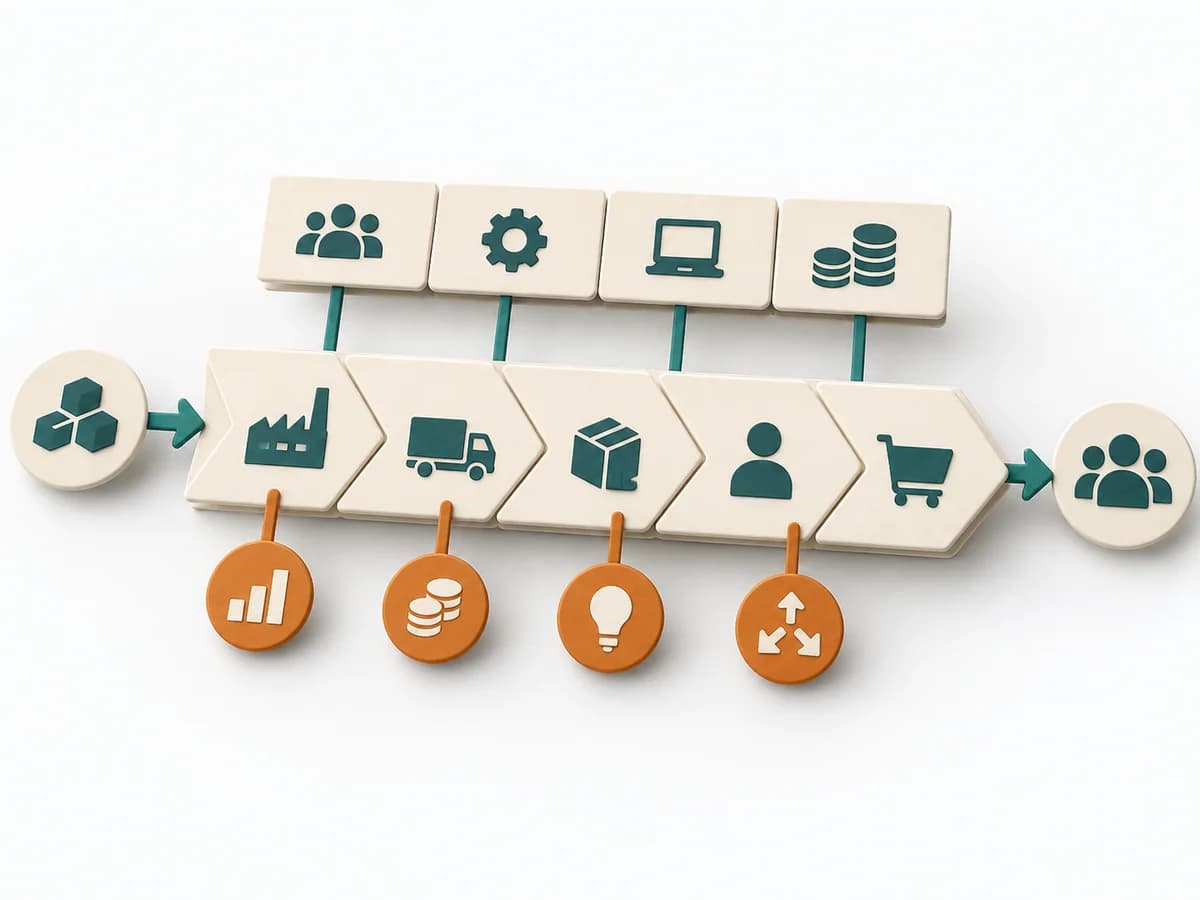 Business Strategy Value Chain Analysis |
|---|---|---|---|
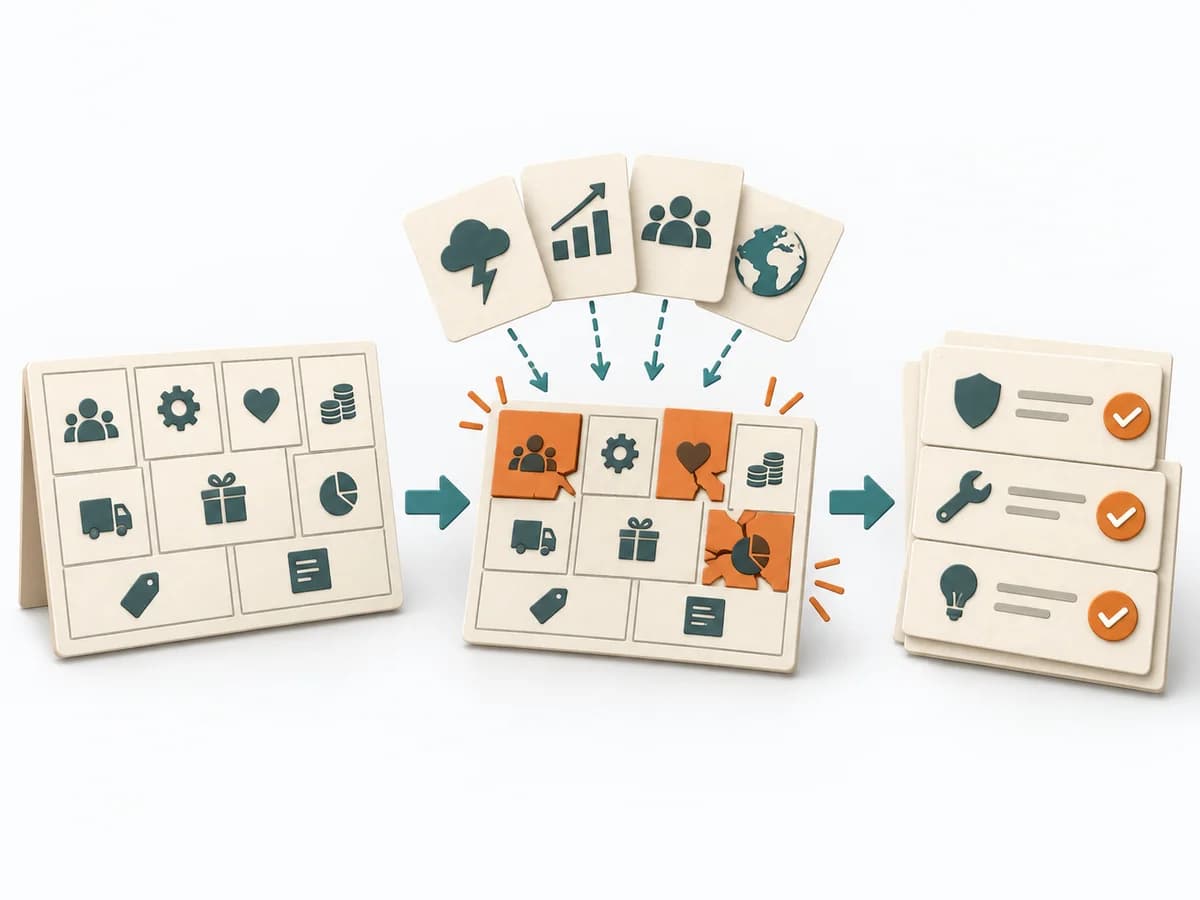
Purposedifferent | LASR helps development teams identify where their software falls short of important quality goals and which improvements to consider. A small group with existing system knowledge can make an initial assessment and investigate open questions in more detail. | For a process, product, or service with noticeable failure risks, the method assesses possible failure modes in advance. It directs attention to combinations of occurrence, effect, and detectability. | Value Chain Analysis shows where value is created, costs accrue, and differentiation becomes possible along the process. It compares strengths, risks, market logic, and courses of action. The result is captured as a value-chain map and lever list. |
Complexitydifferent | Medium | High | High |
Timedifferent | 3–4 h for initial assessment; preparation and deeper analysis additional | 2-6 h | Half day |
Participantsdifferent | 1 or a small team; particularly suitable for 3–4 people | 3-10 | 3-8 |
Formatdifferent | Workshop + async | Workshop | Workshop |
Outputdifferent | Lean Mission Statement describing the software’s purpose, Prioritized quality goals and evaluation criteria, Risks and estimated gaps against quality goals, More closely examined findings and open checks | FMEA Table, Risk Priority, Mitigation Actions | Value Chain Map, Lever List |
Tagsno overlap | ArchitectureQualityRiskAssessmentLean | RiskQualityOperationsRoot cause | StrategyBusiness modelDiagnosisAnalysis |
Often compared together
Methods with strong topical overlap with the current selection, not yet in the comparison.