View methods side by side.
Choose up to four methods. Add them using the search and share the comparison by copying its link.
| Criterion |  Engineering Hypothesis-Driven Troubleshooting | 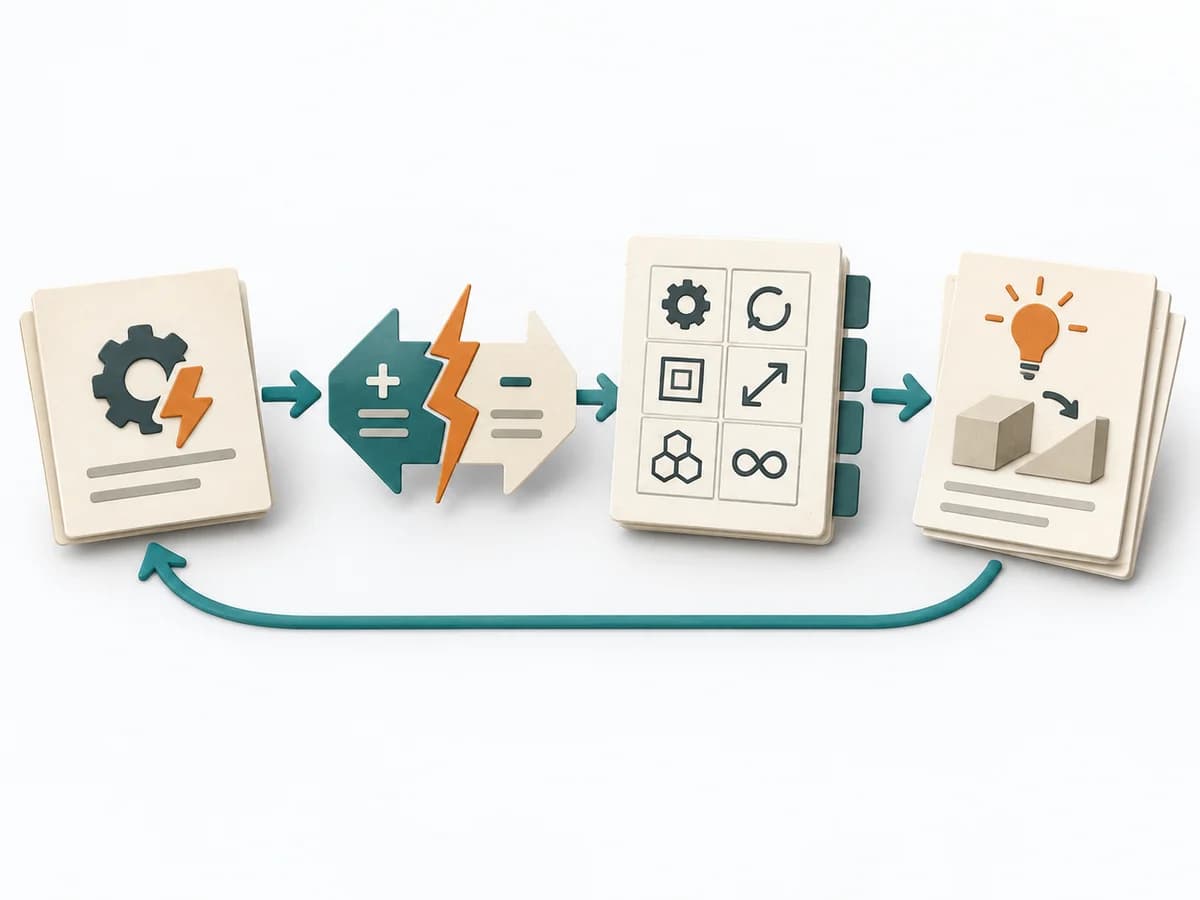 Innovation TRIZ |  Operations Change Analysis |
|---|---|---|---|
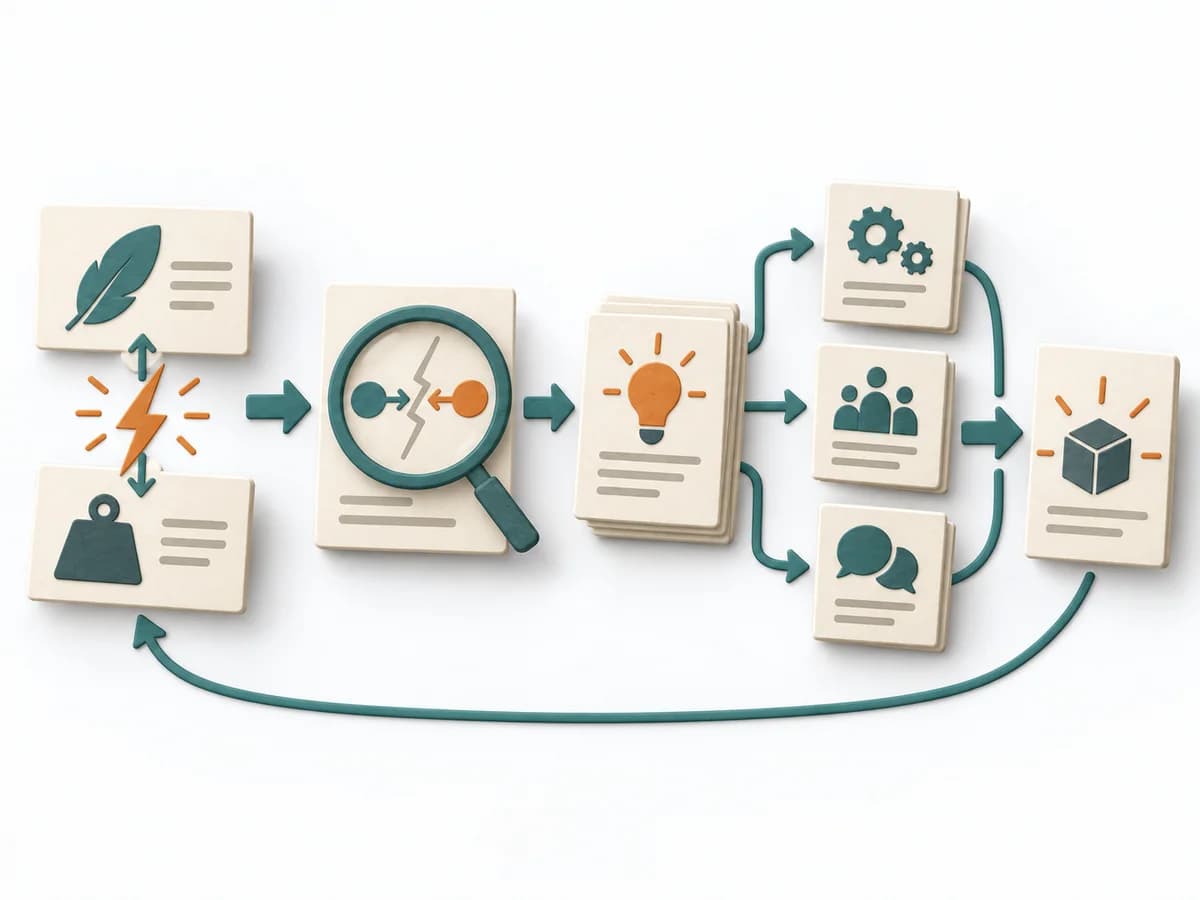
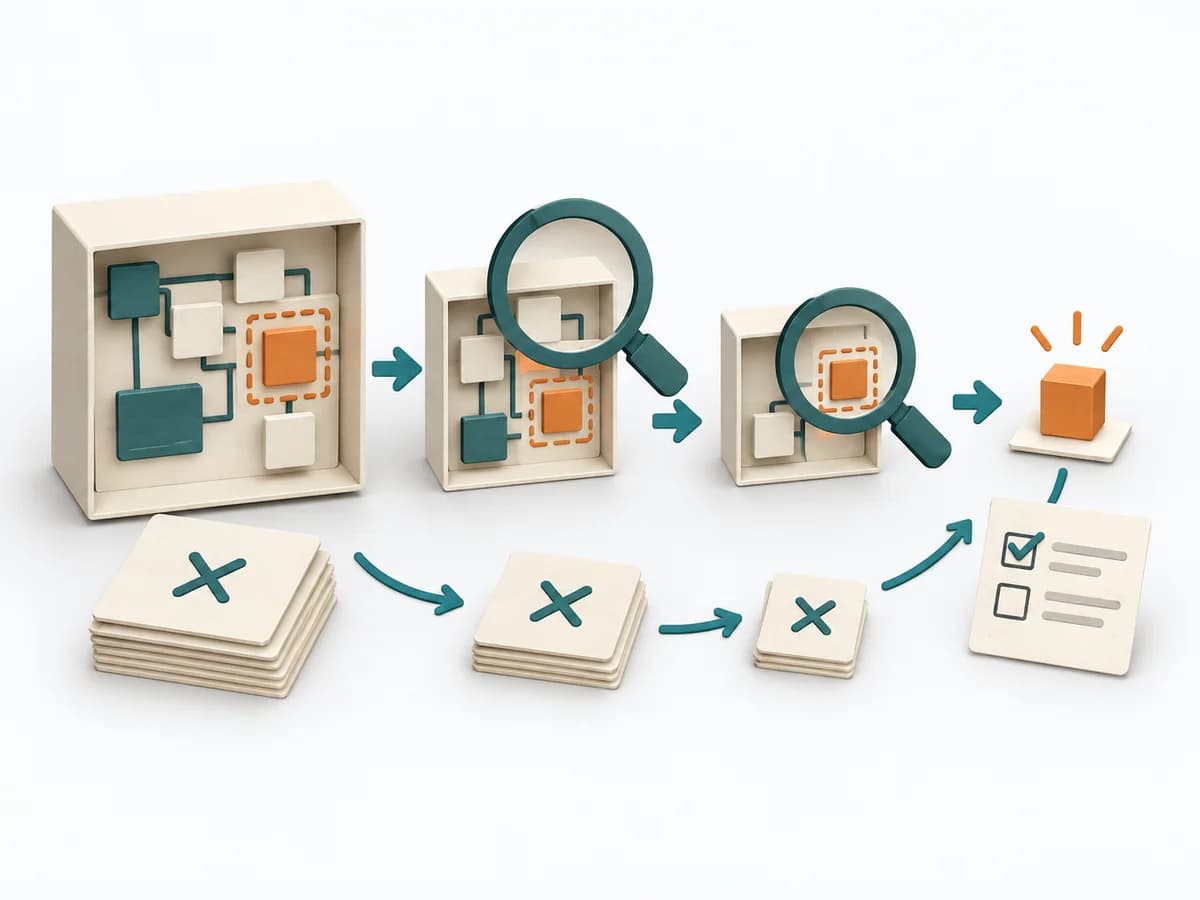
Purposedifferent | When systems fail unexpectedly, spontaneous attempts often produce more noise than insight. Hypothesis-driven Troubleshooting translates symptoms into testable assumptions and makes troubleshooting learnable. | For technical contradictions or trade-offs, the method looks for solutions that resolve opposing requirements at the same time. It translates limits into an explicit picture of conflict that becomes workable. This produces not just compromises but more elegant principles. | For a deviation after a change, the method isolates the influence of the altered condition. It narrows down which differences are relevant and which are just accompanying noise. |
Complexitydifferent | Medium | High | Medium |
Timedifferent | 30-240 min | 1-4 h | 45-120 min |
Participantsdifferent | 1-6 | 2-8 | 2-6 |
Formatsame | Workshop + async | Workshop + async | Workshop + async |
Outputdifferent | Hypothesis Log, Test Plan, Evidence Notes, Diagnosis Summary | Contradiction Statement, Inventive Principles, Solution Concepts | Change Matrix, Cause Hypotheses, Validation Questions, Action List |
Tagsno overlap | TroubleshootingProblem solvingDiagnosis | InnovationProblem solvingContradictionsCreativity | ChangeRoot causeTroubleshootingComparison |
Often compared together
Methods with strong topical overlap with the current selection, not yet in the comparison.