View methods side by side.
Choose up to four methods. Add them using the search and share the comparison by copying its link.
| Criterion | 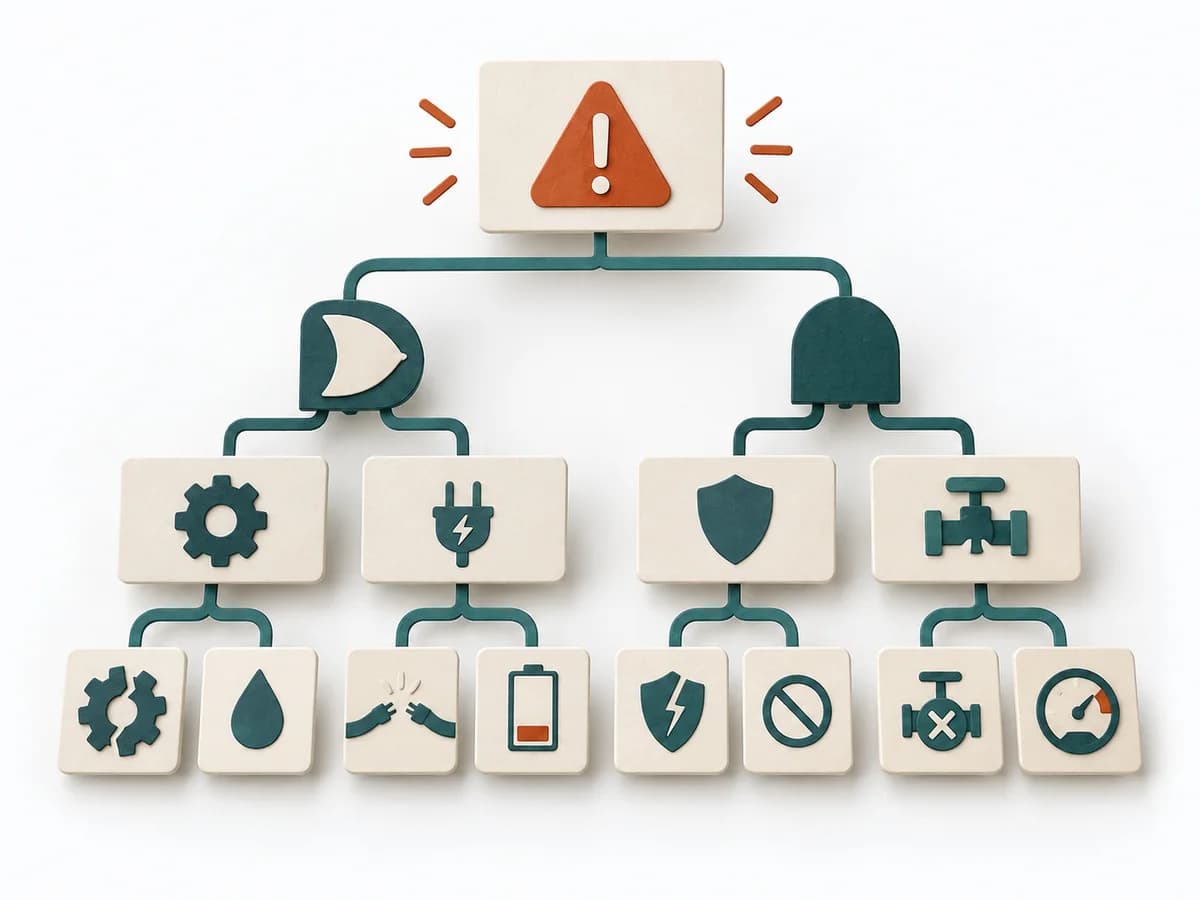 Operations Fault Tree Analysis |  Operations After-Action Review |  Operations Failure Mode and Effects Analysis |
|---|---|---|---|
Purposedifferent | For a critical top event with several possible triggers, the method logically models failure paths. It makes visible which combinations of conditions can lead to damage. | After missions or project phases with unclear outcomes, the method makes visible what actually happened and what can be learned from it. It separates course, effect, and causes so experience turns into solid improvement. | For a process, product, or service with noticeable failure risks, the method assesses possible failure modes in advance. It directs attention to combinations of occurrence, effect, and detectability. |
Complexitydifferent | High | Low | High |
Timedifferent | 2-6 h | 20-45 min | 2-6 h |
Participantsdifferent | 3-8 | 3-12 | 3-10 |
Formatdifferent | Workshop + async | Workshop + async | Workshop |
Outputdifferent | Fault Tree, Critical Paths, Cause Hypotheses, Control Actions | Lessons learned, Action items, Event summary | FMEA Table, Risk Priority, Mitigation Actions |
Tagsno overlap | RiskRoot causeSafety | LearningOperationsImprovement | RiskQualityOperationsRoot cause |
Often compared together
Methods with strong topical overlap with the current selection, not yet in the comparison.