View methods side by side.
Choose up to four methods. Add them using the search and share the comparison by copying its link.
| Criterion |  UX Research Empathy Mapping | 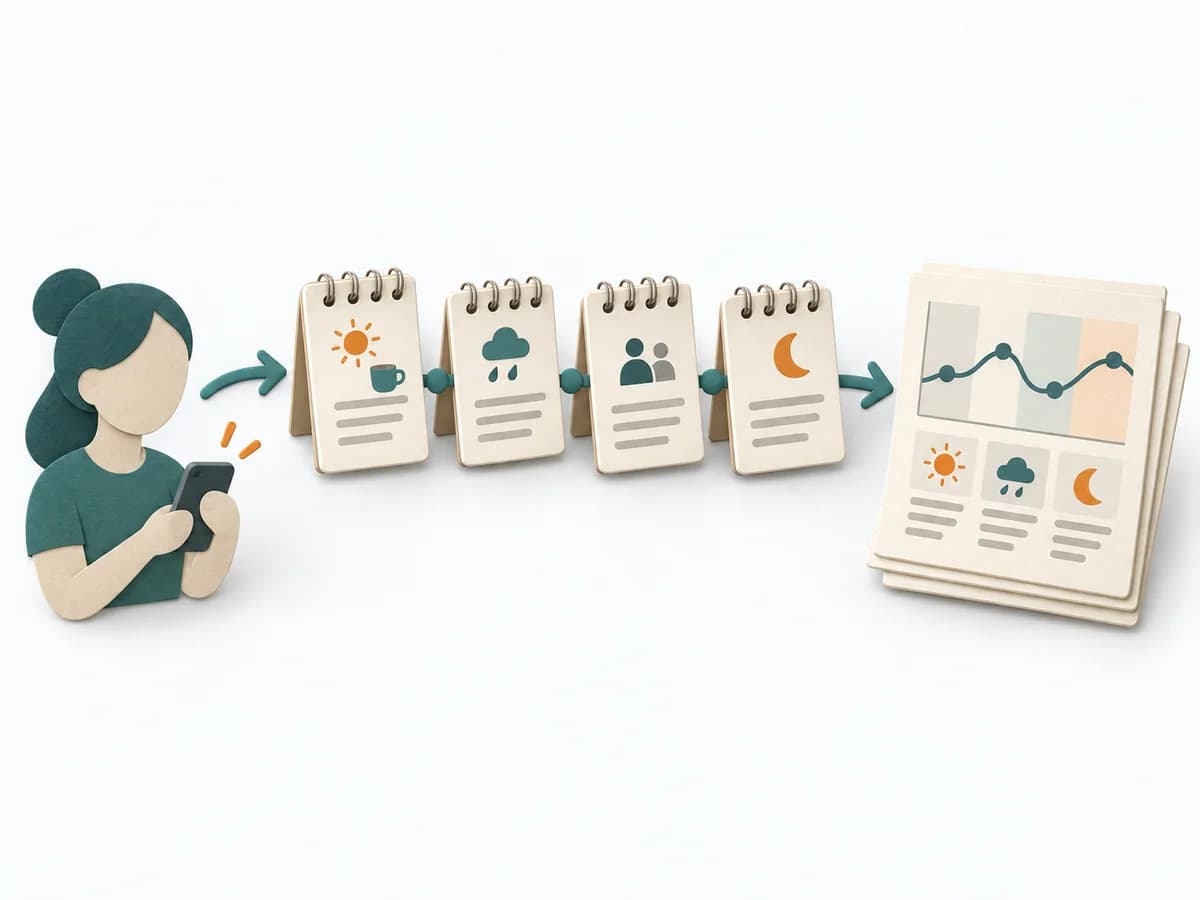 UX Research Diary Study | 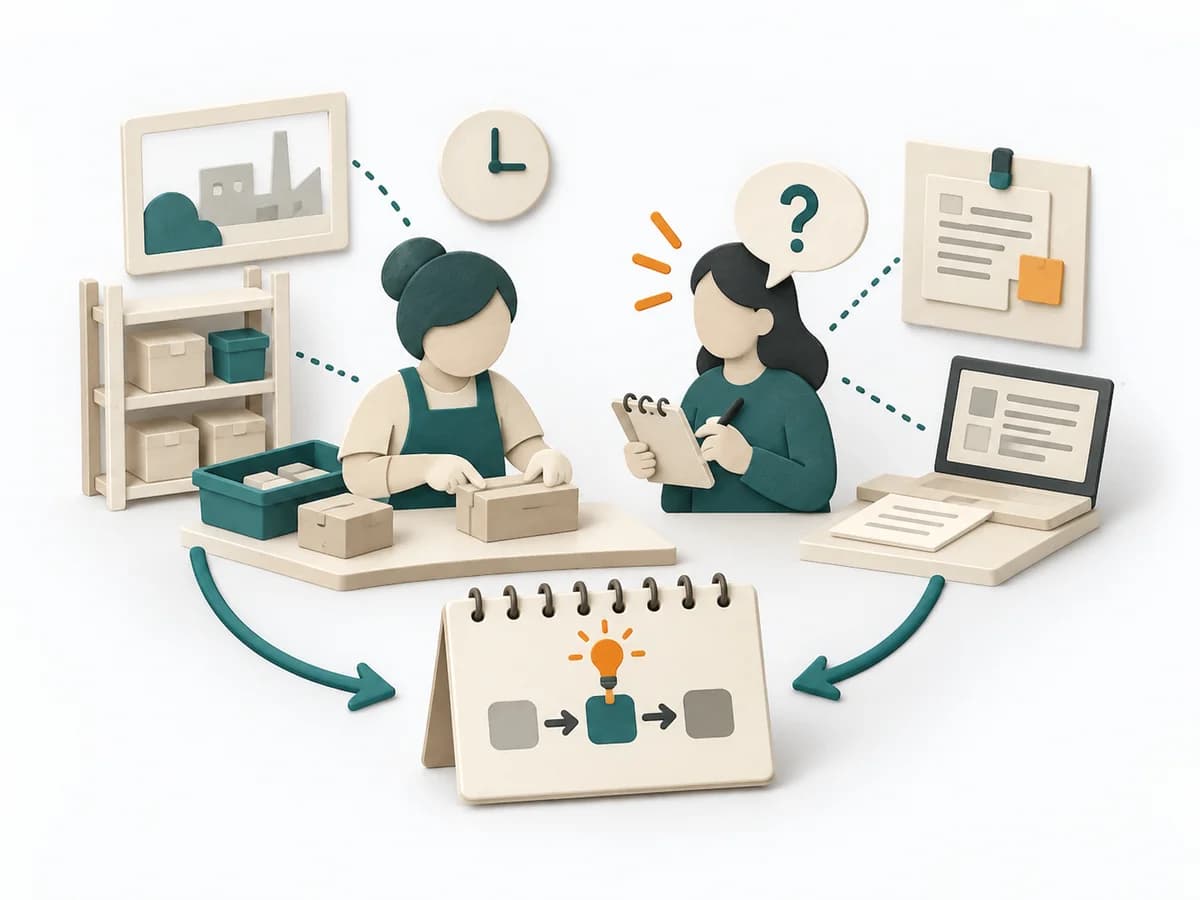 UX Research Contextual Inquiry |
|---|---|---|---|
Purposedifferent | When a lot is assumed about a target group but little is seen jointly, empathy mapping makes knowledge and gaps directly comparable. The picture also shows which assumptions hold up and where evidence is missing. | When experiences build up over days or weeks and a single session cannot capture them, Diary Study records the course of everyday life. Recurring triggers, moods, and habits become visible this way, beyond the sharpness of memory. | When work processes are known only from accounts and the real context stays hidden, Contextual Inquiry makes behavior at the workplace visible. Observation and follow-up questions together show how people actually work, get interrupted, and improvise. |
Complexitydifferent | Low | Medium | Medium |
Timedifferent | 30–60 min | 1-4 Wochen | 1-3 Wochen |
Participantsdifferent | 4-8 | 5-20 | 4-12 Beobachtungen |
Formatdifferent | Workshop | Async | Workshop + async |
Outputdifferent | Empathy Map, Assumptions List, Research Gaps | Diary Entries, Longitudinal Patterns, Experience Timeline | Field Notes, Workflow Insights, Pain Points |
Tagsno overlap | SynthesisQualitativeWorkshop | UX researchTrackingBehavior | UX researchObservationContext |
Often compared together
Methods with strong topical overlap with the current selection, not yet in the comparison.