View methods side by side.
Choose up to four methods. Add them using the search and share the comparison by copying its link.
| Criterion |  Facilitation Dot Estimation | 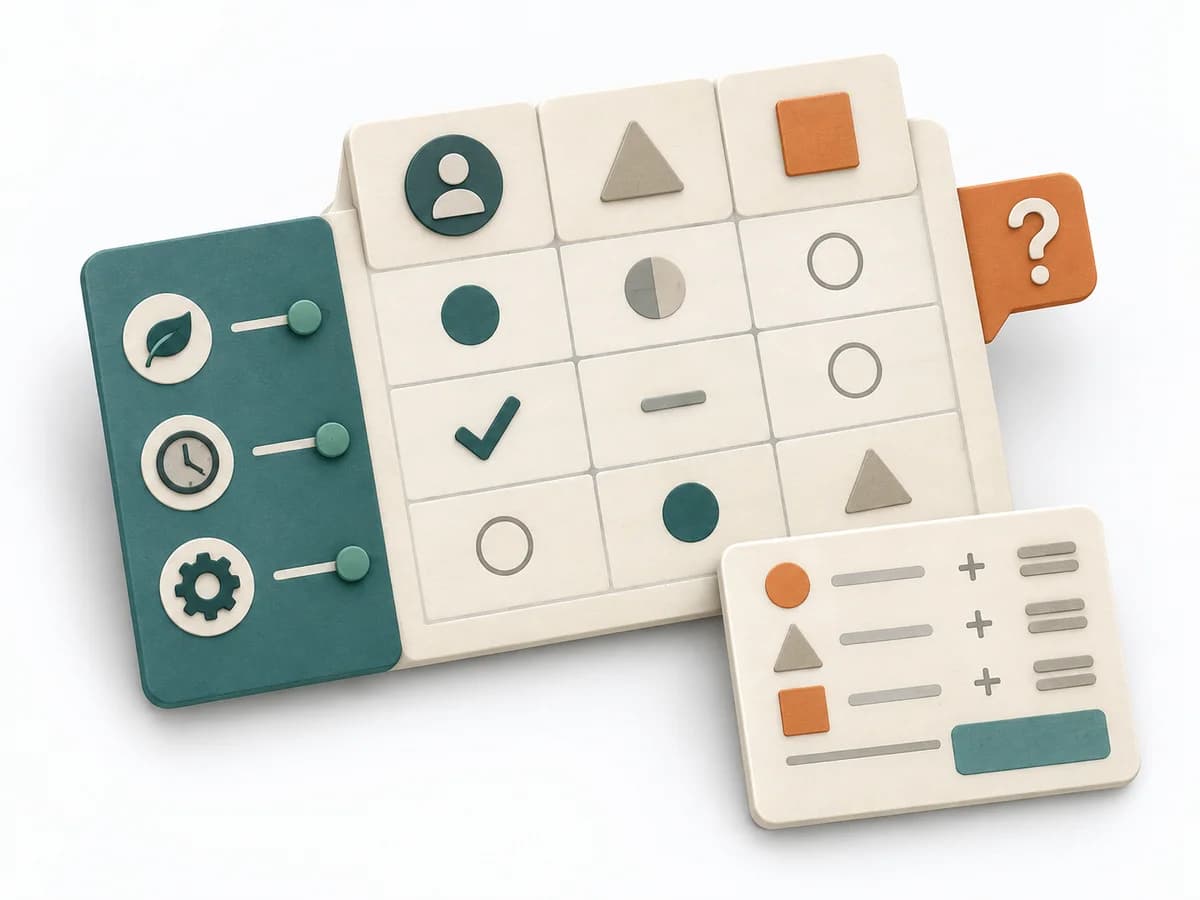 Decision Making Decision Matrix |  Product Discovery Assumption Mapping |
|---|---|---|---|
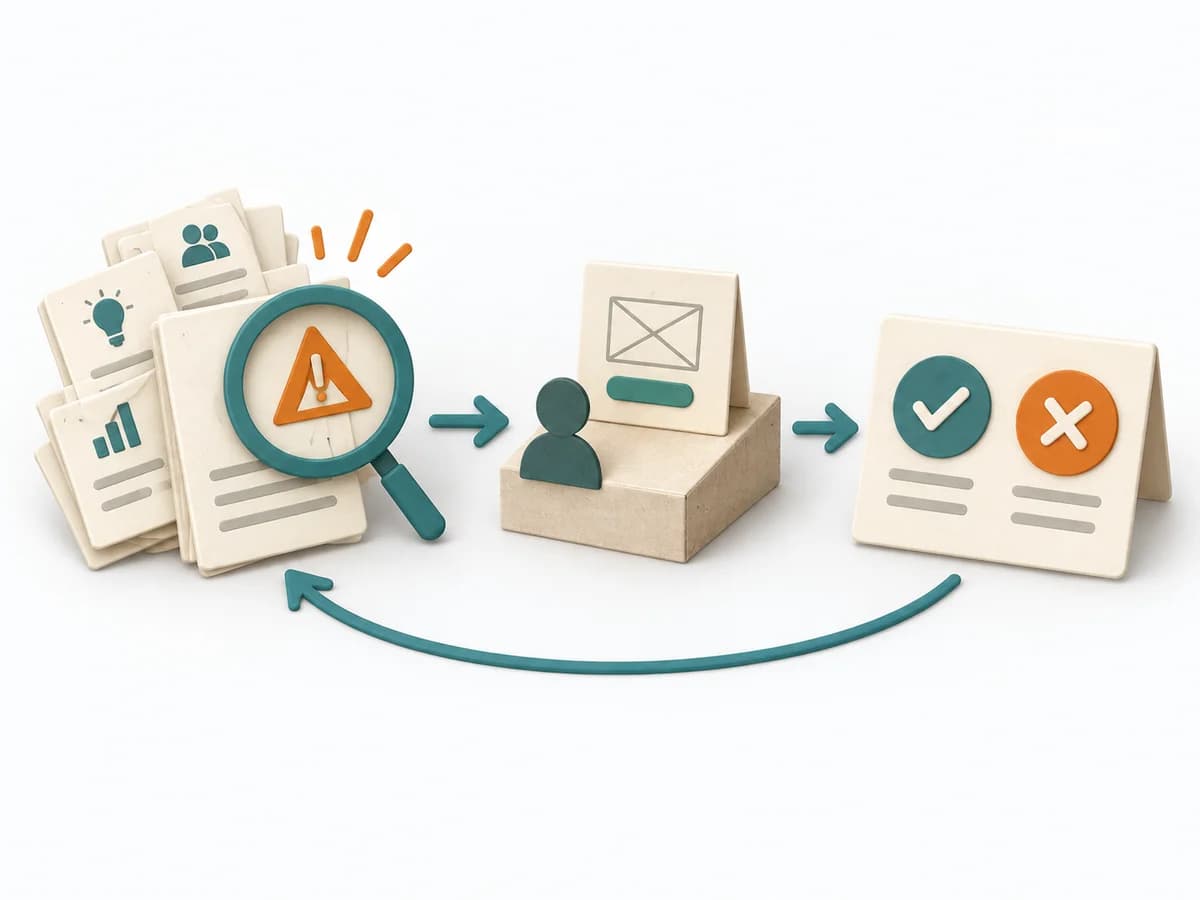
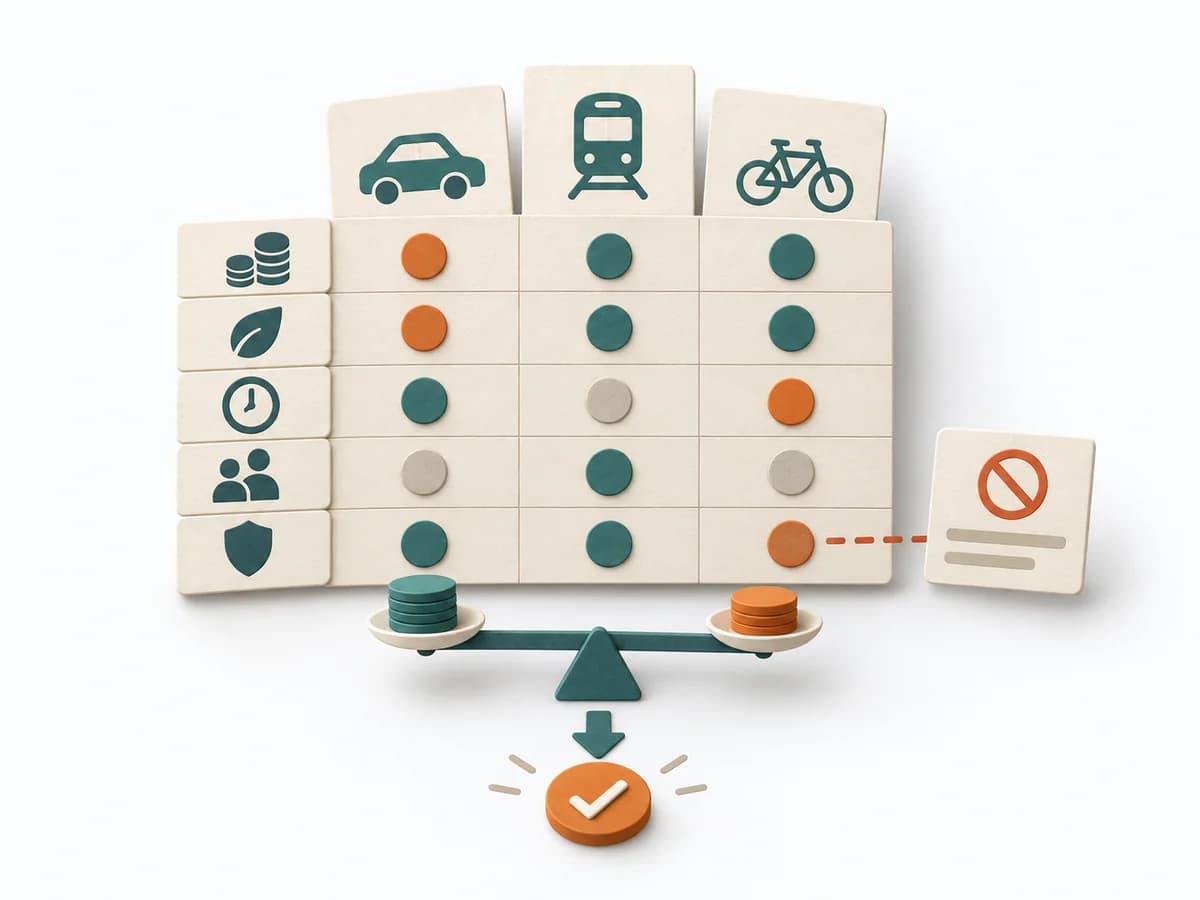
Purposedifferent | When size or effort can only be estimated roughly, Dot Estimation condenses the group's experience into a quick range. It turns individual contributions into a visible selection. The result is captured as an Effort Heatmap, Risk Signals, and Discussion Targets. | When several options collide with several criteria, comparison quickly becomes subjective. A Decision Matrix makes the trade-off visible and brings weighting, criteria, and options into a shared logic. | When assumptions still sit unordered in the room, it weighs uncertainty against leverage. It makes visible which hypotheses should be checked first. |
Complexitydifferent | Low | Medium | Medium |
Timedifferent | 5-20 min | 45-90 min | 45-60 min |
Participantsdifferent | 3-20 | 2-8 | 2-8 |
Formatdifferent | Workshop | Workshop + async | Workshop + async |
Outputdifferent | Effort Heatmap, Risk Signals, Discussion Targets | Decision Matrix, Scoring Rationale, Selected Option | Assumption map, Test backlog, Risk ranking |
Tagsno overlap | EstimationEffortRisk | DecisionCriteriaScoringTradeoffs | AssumptionsRiskExperimentsValidation |
Often compared together
Methods with strong topical overlap with the current selection, not yet in the comparison.