View methods side by side.
Choose up to four methods. Add them using the search and share the comparison by copying its link.
| Criterion | 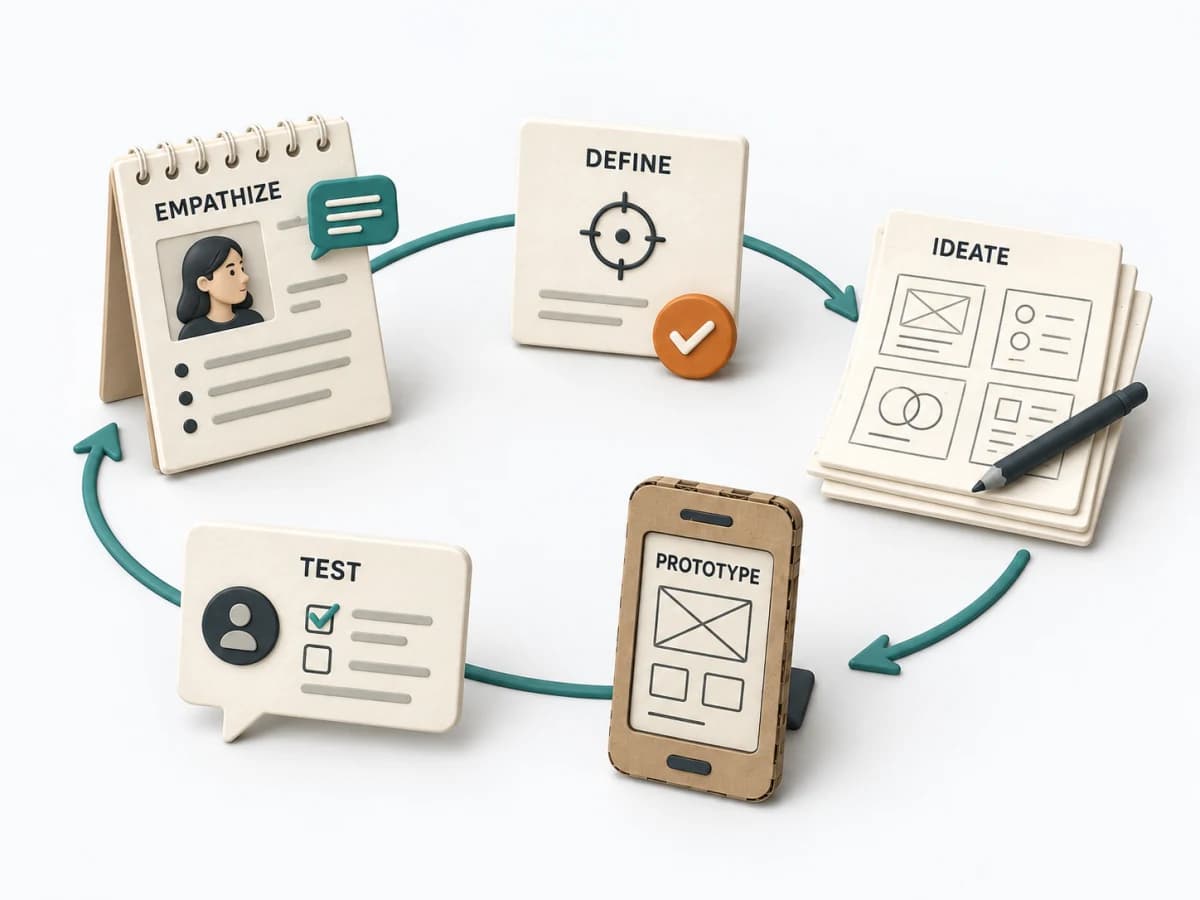 Innovation Design Thinking |  UX Research Empathy Mapping | 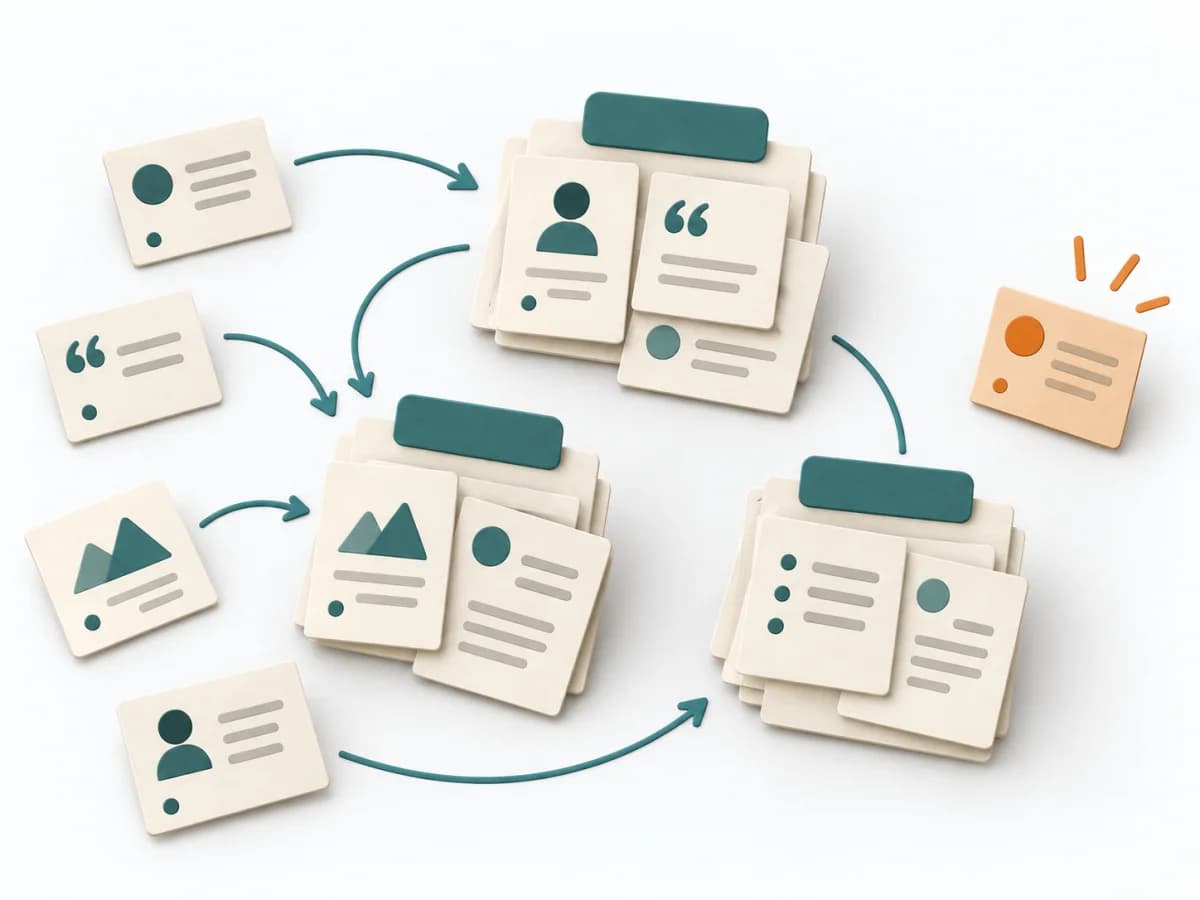 UX Research Affinity Diagramming |
|---|---|---|---|
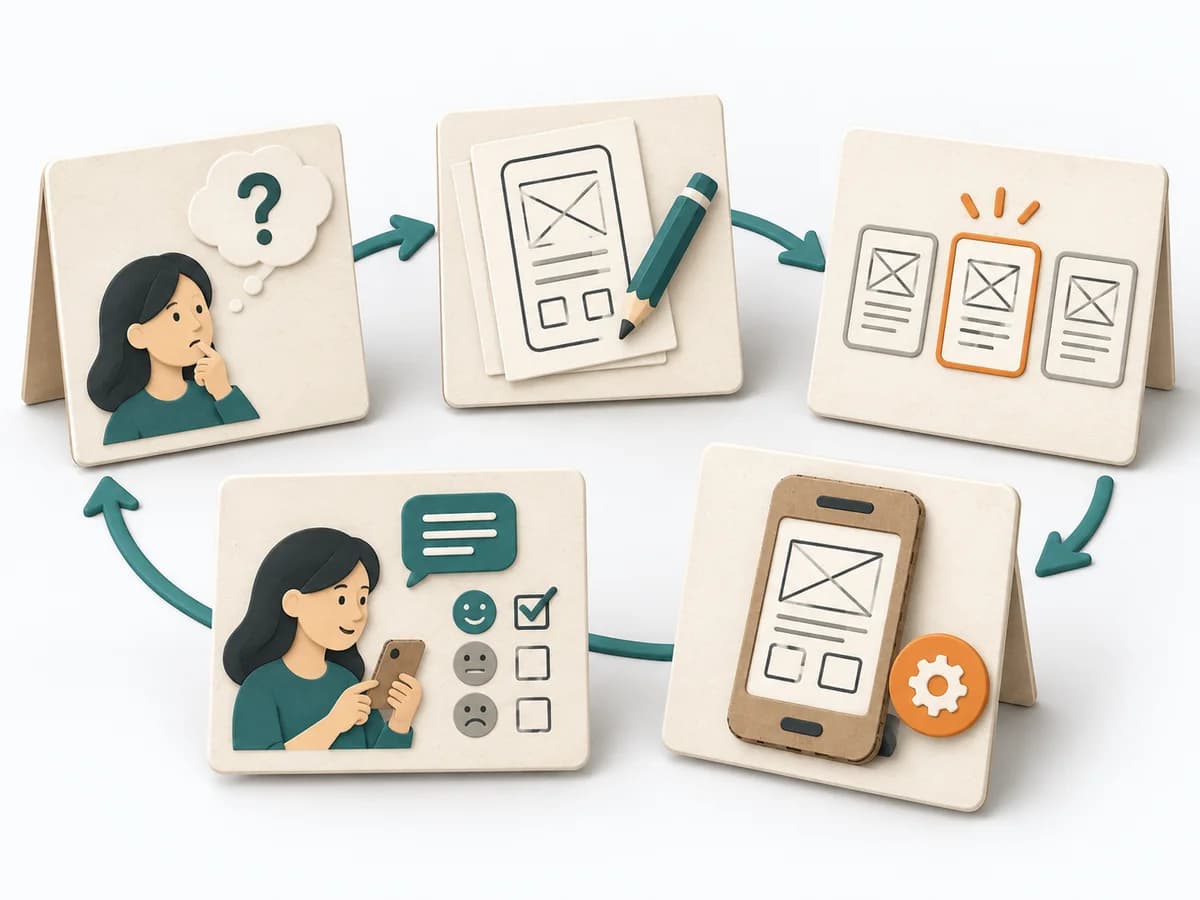
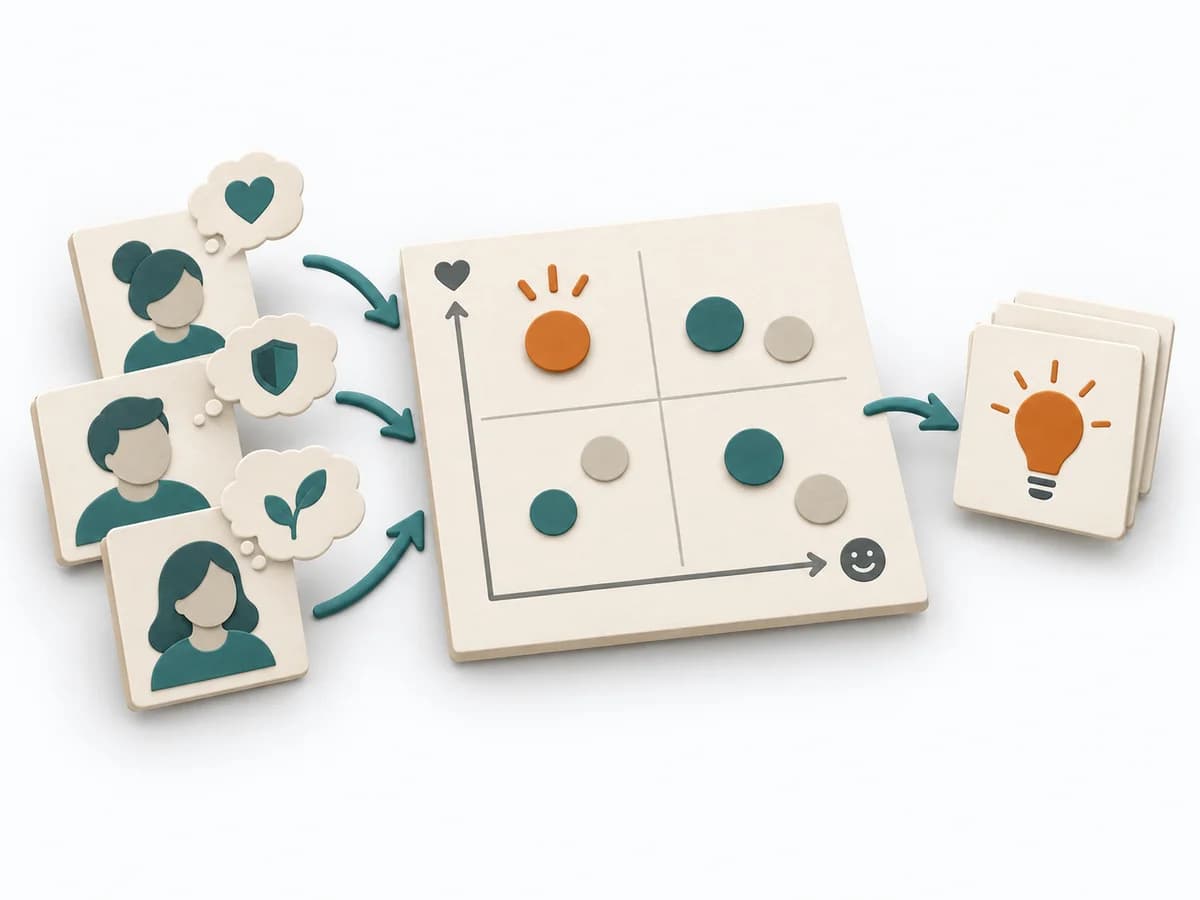
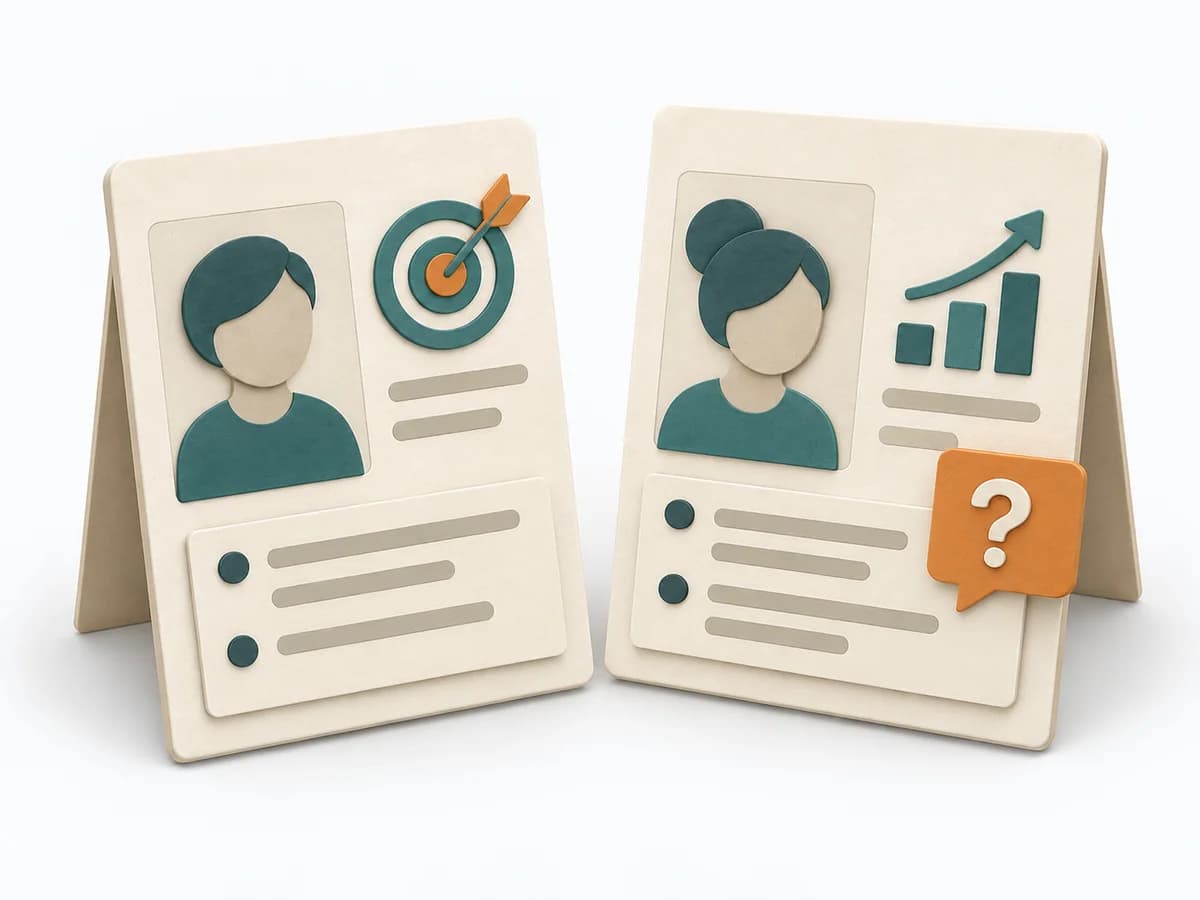
Purposedifferent | For complex user problems with an uncertain cause, the method connects observation, interpretation, and experiment into a learning cycle. It keeps the focus on real needs and avoids premature solution language. This produces robust decisions for product and service. | When a lot is assumed about a target group but little is seen jointly, empathy mapping makes knowledge and gaps directly comparable. The picture also shows which assumptions hold up and where evidence is missing. | When research notes, feedback, or observations sit unconnected side by side, affinity diagramming sorts the raw material into solid themes. Many individual points turn into patterns that make decisions and opportunities clearer. |
Complexitydifferent | High | Low | Low |
Timedifferent | 1 Tag bis mehrere Wochen | 30–60 min | 45–90 min |
Participantsdifferent | 4-10 | 4-8 | 3-10 |
Formatsame | Workshop | Workshop | Workshop |
Outputdifferent | Problem Statement, Prototype, Test Learnings | Empathy Map, Assumptions List, Research Gaps | Theme clusters, Insight statements, Opportunity areas |
Tagsno overlap | InnovationPrototypeResearch | SynthesisQualitativeWorkshop | SynthesisQualitativeRoot cause |
Often compared together
Methods with strong topical overlap with the current selection, not yet in the comparison.