View methods side by side.
Choose up to four methods. Add them using the search and share the comparison by copying its link.
| Criterion |  UX Design Design Studio |  Architecture ATAM (Architecture Tradeoff Analysis Method) |  Innovation Reverse Brainstorming |
|---|---|---|---|
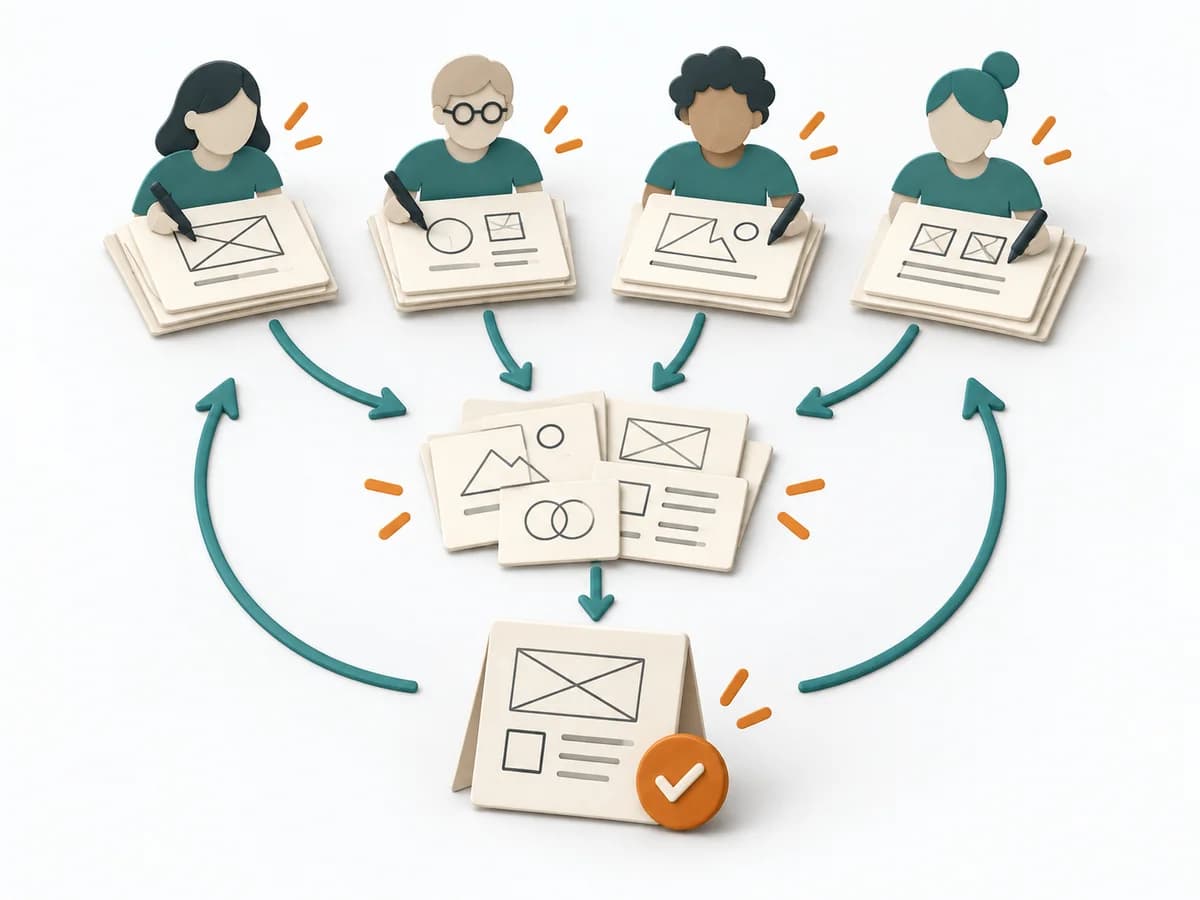
Purposedifferent | When several designs need to be quickly put in relation to each other, it makes ideas visible and comparable. It encourages early variants instead of long upfront debates. | ATAM helps teams weigh architecture decisions when quality goals compete. The team considers business goals, stakeholder expectations, and technical decisions together. The evaluation shows which risks need further investigation. | For persistent errors or blockages, the method shifts the view to the opposite of the desired effect. It exposes the mechanics of failure and makes hidden causes easier to grasp. This makes improvement more concrete and the problem clearer. |
Complexitydifferent | Medium | High | Low |
Timedifferent | 1-3 h | Several meetings plus preparation and analysis; total effort depends on scope | 30-60 min |
Participantsdifferent | 3-8 | Evaluation team, architects, and relevant stakeholders | 3-12 |
Formatdifferent | Workshop | Workshop + async | Workshop |
Outputdifferent | Sketches, Concept Directions, Design Decisions | Prioritized quality scenarios in a utility tree, Architecture risks with reasoning and assumptions, Sensitivity and trade-off points, Findings report with open investigations | Reverse Ideas, Risk Themes, Solution Ideas |
Tagsno overlap | SketchingCollaborationIdeation | ArchitectureQualityRiskTradeoffsStakeholders | BrainstormingIdeationCreativityRisk |
Often compared together
Methods with strong topical overlap with the current selection, not yet in the comparison.