View methods side by side.
Choose up to four methods. Add them using the search and share the comparison by copying its link.
| Criterion | 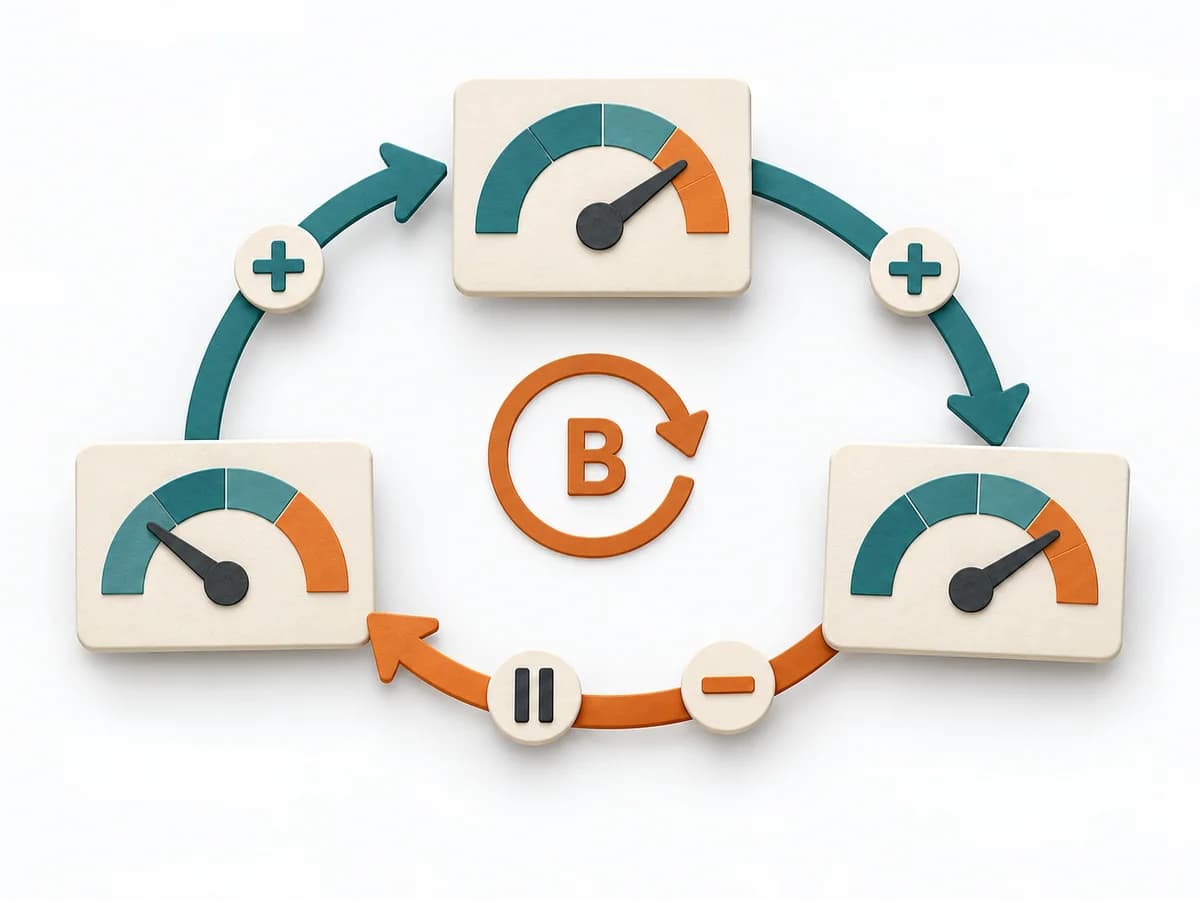 Systems Thinking Causal Loop Diagram |  Operations Gemba Walk |  Systems Thinking Stock and Flow Diagram |
|---|---|---|---|
Purposedifferent | A Causal Loop Diagram makes feedback, reinforcement, and balance in a system legible. It uncovers side effects and self-reinforcement that stay hidden in linear explanations. | When there is uncertainty about the real course of a process, the method brings observation to the place where work happens. It combines perception, follow-up questions, and process knowledge so decisions rest on actual workflows instead of assumptions. | A Stock and Flow Diagram shows how stocks, inflows, and outflows shape a system over time. It is especially suited when growth, delays, or capacity limits determine the dynamics. |
Complexitydifferent | Medium | Low | High |
Timedifferent | 1-3 h | 30-120 min | 2-6 h |
Participantsdifferent | 2-8 | 2-6 | 1-6 |
Formatdifferent | Workshop | Workshop | Workshop + async |
Outputdifferent | Causal Loop Diagram, Feedback Notes, Leverage Points | Observation Notes, Improvement Ideas | Stock and Flow Model, Dynamics Notes, Simulation Hypotheses |
Tagsno overlap | FeedbackSystems thinkingCausalityDynamics | LeanObservationProcessOperations | DynamicsSimulationFeedbackSystems thinking |
Often compared together
Methods with strong topical overlap with the current selection, not yet in the comparison.