View methods side by side.
Choose up to four methods. Add them using the search and share the comparison by copying its link.
| Criterion | 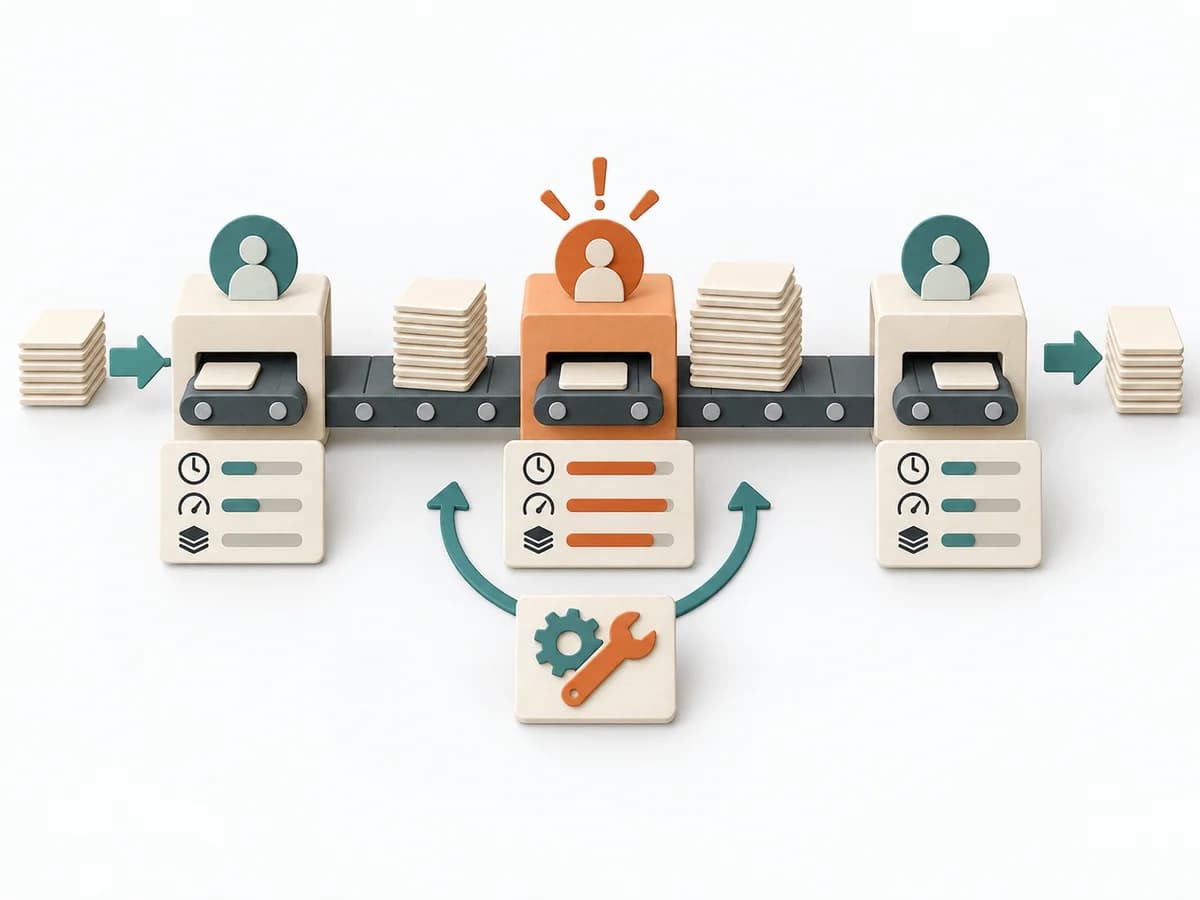 Operations Bottleneck Analysis | 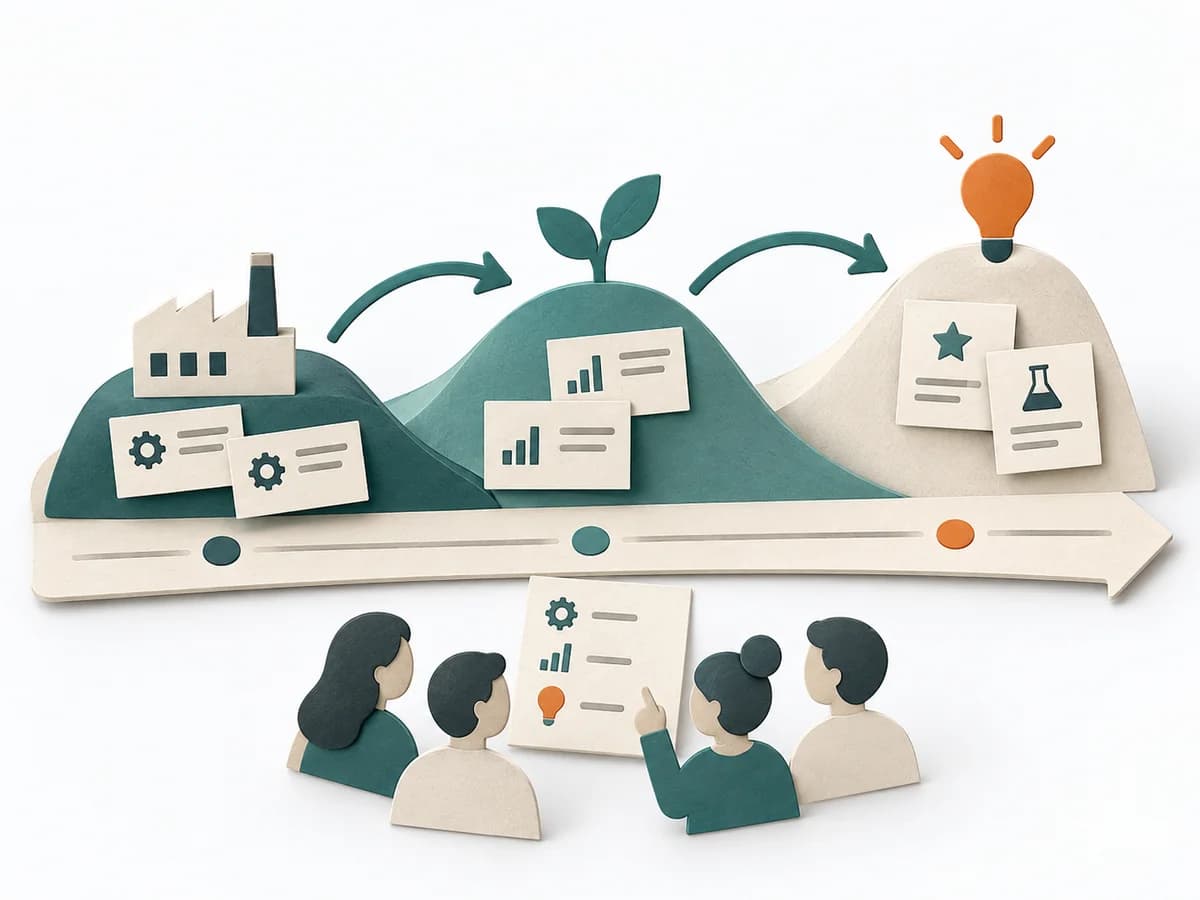 Business Strategy Three Horizons |  Facilitation Alignment Mapping |
|---|---|---|---|
Purposedifferent | For a flow that backs up at one point, the method looks for the capacity limit with the greatest leverage. It explains why extra effort elsewhere barely improves throughput. | Three Horizons helps clarify strategic options across different timeframes. It compares strengths, risks, market logic, and investment choices, and captures the result as a horizon map, portfolio view, and initiatives per horizon. | When several people work toward one goal but hold different mental maps, Alignment Mapping makes the discrepancies visible. It arranges goals, assumptions, and priorities so shared direction becomes verifiable. |
Complexitysame | Medium | Medium | Medium |
Timedifferent | 1-3 h | Halbtags-Workshop, dann iterativ | 1-2 h |
Participantsdifferent | 3-8 | 3-12 | 4-12 |
Formatdifferent | Workshop + async | Workshop | Workshop |
Outputdifferent | Bottleneck Map, Flow Metrics, Improvement Options, Follow-up Measures | Horizon map, Portfolio view, Initiatives per horizon, Resource plan | Alignment Map, Open Issues, Decision Questions |
Tagsno overlap | FlowMeasurementConstraints | StrategyInnovationPortfolioForesight | AlignmentStakeholdersStrategyFacilitation |
Often compared together
Methods with strong topical overlap with the current selection, not yet in the comparison.