methodatlas
Playbook

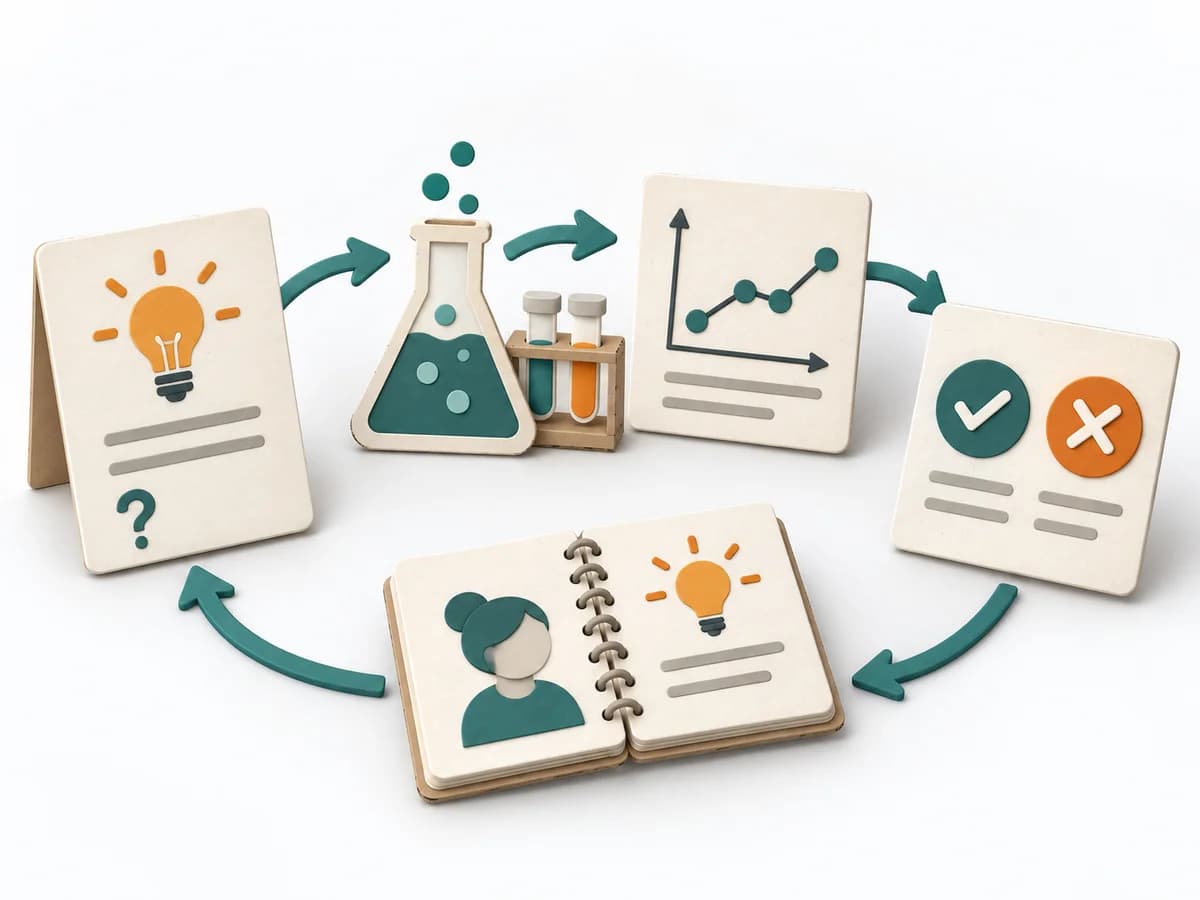
Set Up a Growth Experiment Loop

Move from a funnel problem to hypothesis, experiment, measurement, and next growth decision.

Steps4 methods
Time1-3 weeks per loop
FormatHybrid
Outcome

A measurable experiment loop with hypothesis, baseline, test design, outcome, and decision.

At the end you have

AARRR FunnelFunnel AnalysisExperiment BriefTest Result

Decision point

You can decide which growth lever should be scaled, adapted, or dropped.

Next step

Document experiment results, derive the next hypothesis, and refine tracking or segmentation.
Ideal for

  • Activation, retention, and conversion questions
  • data-enabled digital products
  • Growth teams with experimentation mandate

Not good for

  • missing tracking
  • problems without a controllable lever
Preparation

What should be clear before you start

Roles

  • Growth or product owners
  • Analytics or data owner
  • Engineering or marketing depending on lever

Inputs

  • funnel data and baselines
  • growth problem or target metric
  • available experimentation surfaces

Setup

  • Verify tracking
  • Set segment and success criteria
  • Clarify experimentation mandate and risk
Flow

Method path

4 methods
  1. 1GrowthAARRR Funnel

    Pirate Metrics AARRR

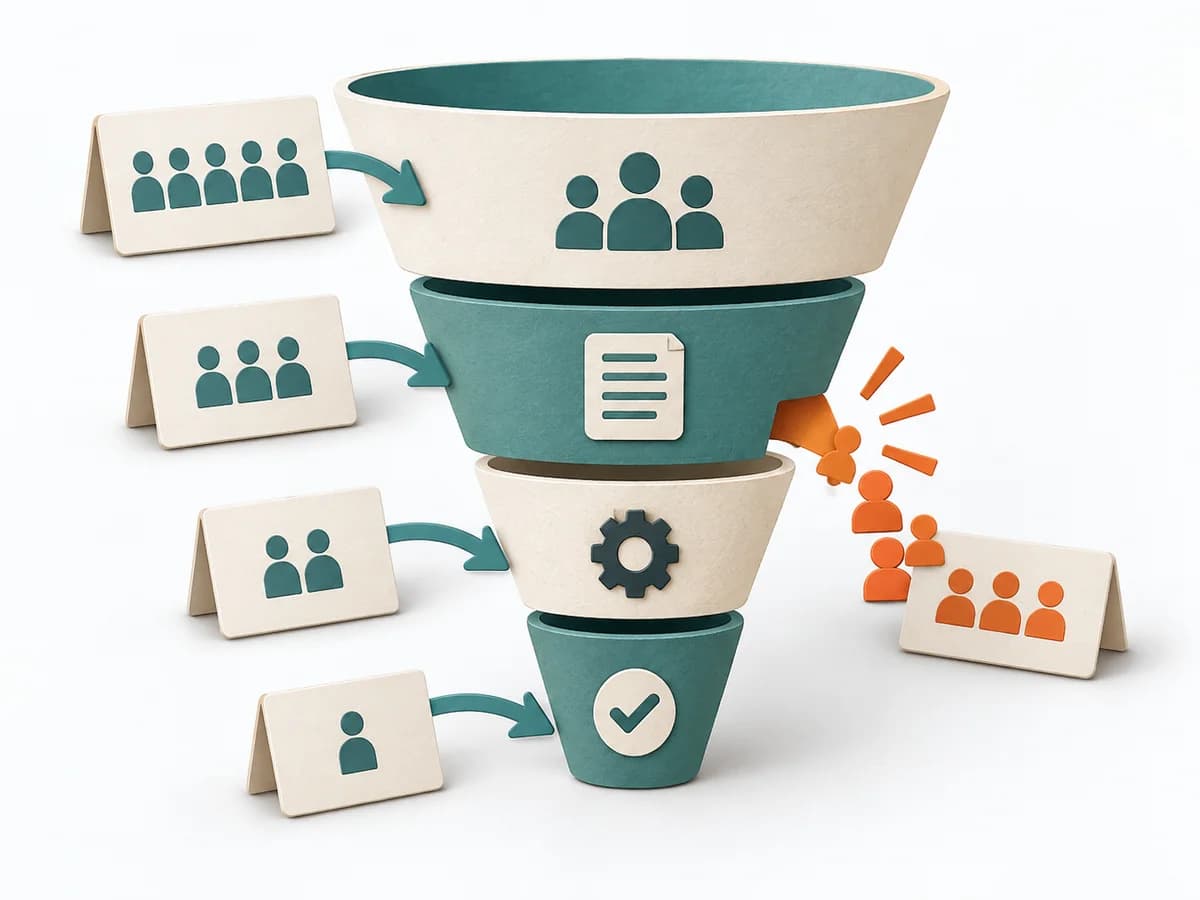
    Where does the customer funnel lose people, and which stage should improve?

    Why this step?

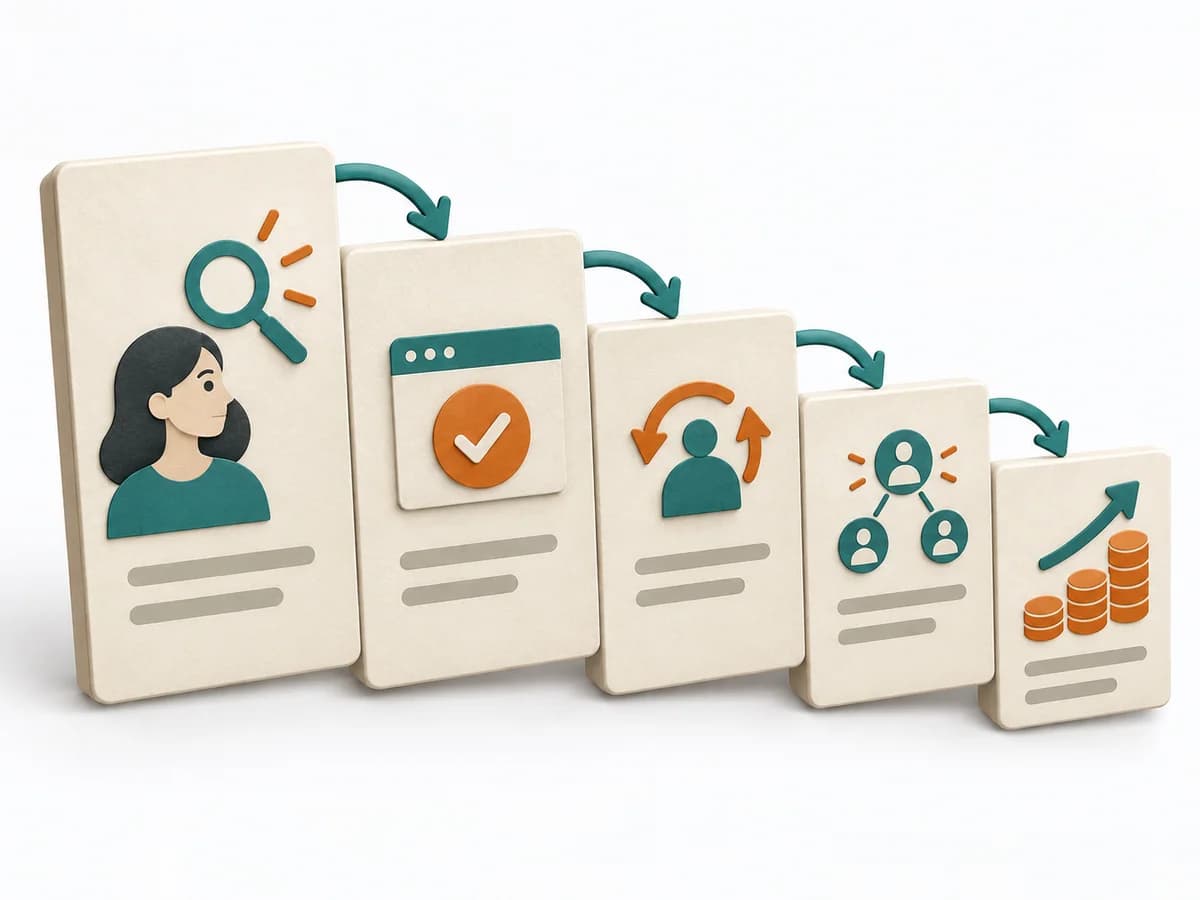
    Pirate Metrics locate whether the issue is in Acquisition, Activation, Retention, Revenue, or Referral.

    The affected funnel phase is then analyzed based on data.

    A paper-based illustration representing Pirate Metrics (AARRR) with its core stages and visible working result.
  2. 2GrowthFunnel Analysis

    Funnel Analysis

    At which step and for which cohort does the transition rate fall most?

    Why this step?

    Funnel Analysis shows baseline, drop-offs, and segments before forming a hypothesis.

    The notable drop-offs are translated into a testable experiment hypothesis.

    Funnel Analysis workspace showing the question, observations, and next decision.
  3. 3GrowthExperiment Brief

    Growth Experiment

    Which uncertain growth assumption will we test, and what result changes our next decision?

    Why this step?

    The Growth Experiment defines hypothesis, target group, treatment, and success criterion before implementation.

    The experiment design is then measured and monitored.

    Growth Experiment workspace showing the question, observations, and next decision.
  4. 4GrowthTest Result

    A/B Testing

    Does B produce the pre-defined meaningful effect over A without breaching guardrails?

    Why this step?

    A/B testing separates measured effect from chance, seasonality, or intuition.

    The result decides whether to scale, iterate, or stop the growth lever.

    A/B Testing workspace showing the question, observations, and next decision.
Completion criteria
Templates

Artifacts for this playbook

Artifacts stay collapsed until you actually need them.

MarkdownShow template

Experiment Plan

Short plan for hypothesis, test design, success criteria, and decision.

# Experiment Plan

## Hypothesis

We believe that ...

## Target audience

Who are we testing for?

## Test design

What exactly will participants or users do?

## Success criterion

We count the test as positive if ...

## Risks and limits

What can the test not prove?

## Decision afterward

If positive: ...
If negative: ...

## Owner and date

...