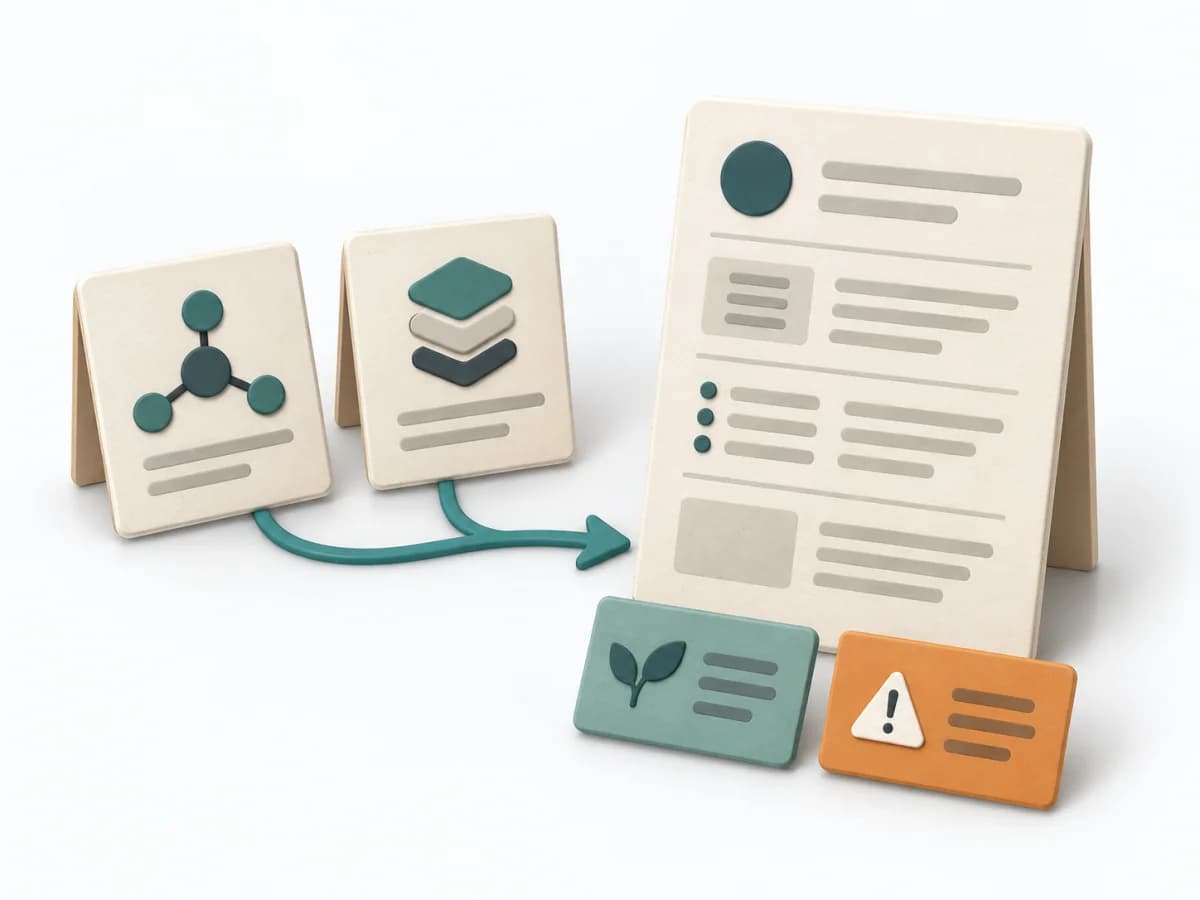
Complete firstComparable subject
Set architecture boundary, current diagram version, quality goals, and operating condition; invite required perspectives.
Without a common frame, values are not comparable.
A practical method guide: clarify prerequisites and materials, understand the complete process, and look up outputs, pitfalls, and stop criteria.
What needs to be finished first
Set architecture boundary, current diagram version, quality goals, and operating condition; invite required perspectives.
Current C4/architecture diagrams, quality goals and constraints, risk stickies, evidence, action and decision log
What needs to be ready before start
Current C4/architecture diagrams, quality goals and constraints, risk stickies, evidence, action and decision log
Architecture/tech lead · developers · operations/security · domain/product · facilitator · risk owners
Set architecture boundary, current diagram version, quality goals, and operating condition; invite required perspectives.
90–150 minutes for one architecture view; action tracking separate.
Prepare a workspace with Context · Solo · Share · Assess · Treat · Review; separate example from live data.
The one question this method answers
Which concrete failure scenarios sit where in the architecture, which matter collectively, and how will we reduce or test them?
Phases with goal, actions, output and pitfall
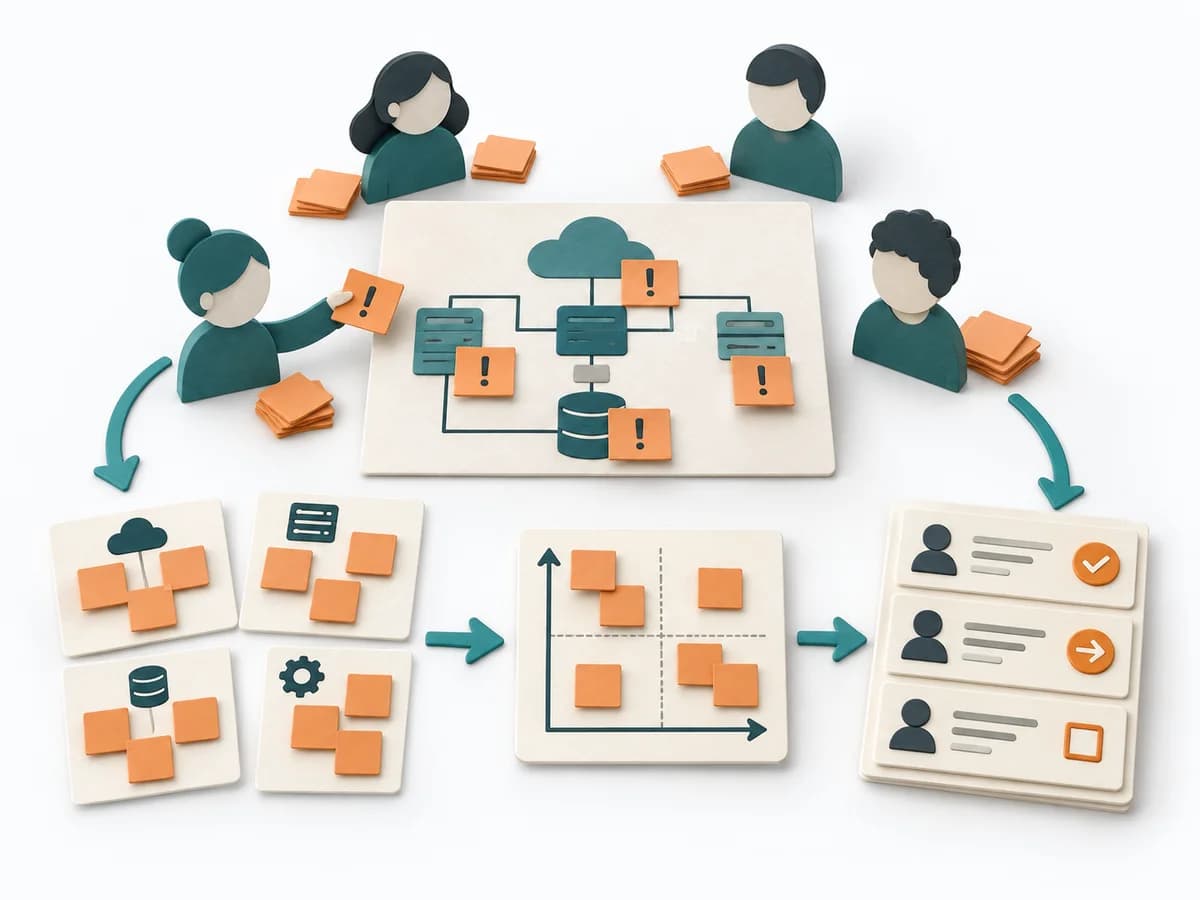
The team places the architecture picture at the centre and gathers risks in a silent phase. The cards are then clustered, prioritised, and given owners or next steps. The review becomes a concrete action plan around the architecture.
Fictional example
Fictional values show the actual method fields.
| Risk | Location | Scenario | Quality goal | Evidence | Exposure | Treatment | Owner/review |
|---|---|---|---|---|---|---|---|
| R1 · Payment latencyAdd evidence and rationale. | Payment API → checkout pool | API slows → threads wait → pool exhausts → pickup fails | Availability; p80 wait | Load test: pool95%, errors 8% | High | Separate pool; GameDay ≤5% | Noor · 15 Nov |
| R2 · Retry stormAdd evidence and rationale. | Checkout → Payment API | Timeout → unbounded retries → partner overload | Resilience; partner limit | Retry limit untested | Medium/unknown | Retry budget and chaos test | Lea · 22 Nov |
All values are fictional.
Context
Goal
Shared map: Read diagram, scope, quality goals, and assumptions together; resolve comprehension questions.
Inputs for this step
Actions
Output
Shared map
Read diagram, scope, quality goals, and assumptions together; resolve comprehension questions.
Quality check
Does everyone understand elements, relationships, and critical quality goals alike?
Pitfall
Risks are collected on an outdated or unclear diagram. Mark version and model gaps before generating risks.
Timing: 15–25 minutes
Solo
Goal
Risk stickies: Each person silently identifies concrete risk scenarios and locates them on an element or relationship.
Inputs for this step
Actions
Output
Risk stickies
Each person silently identifies concrete risk scenarios and locates them on an element or relationship.
Quality check
Does every note contain trigger, event, and impact?
Pitfall
Stickies say only security or database. Write each as cause → event → effect.
Timing: 15–25 minutes
Share
Goal
Risk clusters: Explain notes in turn, cluster duplicates, and preserve different perspectives.
Inputs for this step
Actions
Output
Risk clusters
Explain notes in turn, cluster duplicates, and preserve different perspectives.
Quality check
Do distinct scenarios stay separate and common causes remain visible?
Pitfall
Majority opinion removes a rare expert perspective. Merge only identical trigger, path, and impact.
Timing: 20–30 minutes
Assess
Goal
Priority view: Justify qualitative exposure from plausible occurrence and consequence; mark evidence and unknowns.
Inputs for this step
Actions
Output
Priority view
Justify qualitative exposure from plausible occurrence and consequence; mark evidence and unknowns.
Quality check
Is high exposure grounded in scenario and evidence rather than calculated points?
Pitfall
Invented 1–5 scores create false precision. Justify categories with evidence, uncertainty, and red lines.
Timing: 15–25 minutes
Treat
Goal
Treatment plan: For material risks avoid, reduce, transfer, or accept; assign experiment/ADR and owner.
Inputs for this step
Actions
Output
Treatment plan
For material risks avoid, reduce, transfer, or accept; assign experiment/ADR and owner.
Quality check
Does every action state expected risk effect and proof?
Pitfall
Add monitoring counts as a solution without signal and response. Specify control, measure, stop rule, and owner.
Timing: 15–25 minutes
Review
Goal
Risk decision: Approve residual risk, update diagram/ADR, and set trigger for another risk storm.
Inputs for this step
Actions
Output
Risk decision
Approve residual risk, update diagram/ADR, and set trigger for another risk storm.
Quality check
Is acceptance owned by an authorised person with review date?
Pitfall
Risk list disappears after the workshop. Link register and revisit on architecture, load, or incident change.
Timing: 10–20 minutes
What comes out at the end
Sketch: what the artifact looks like
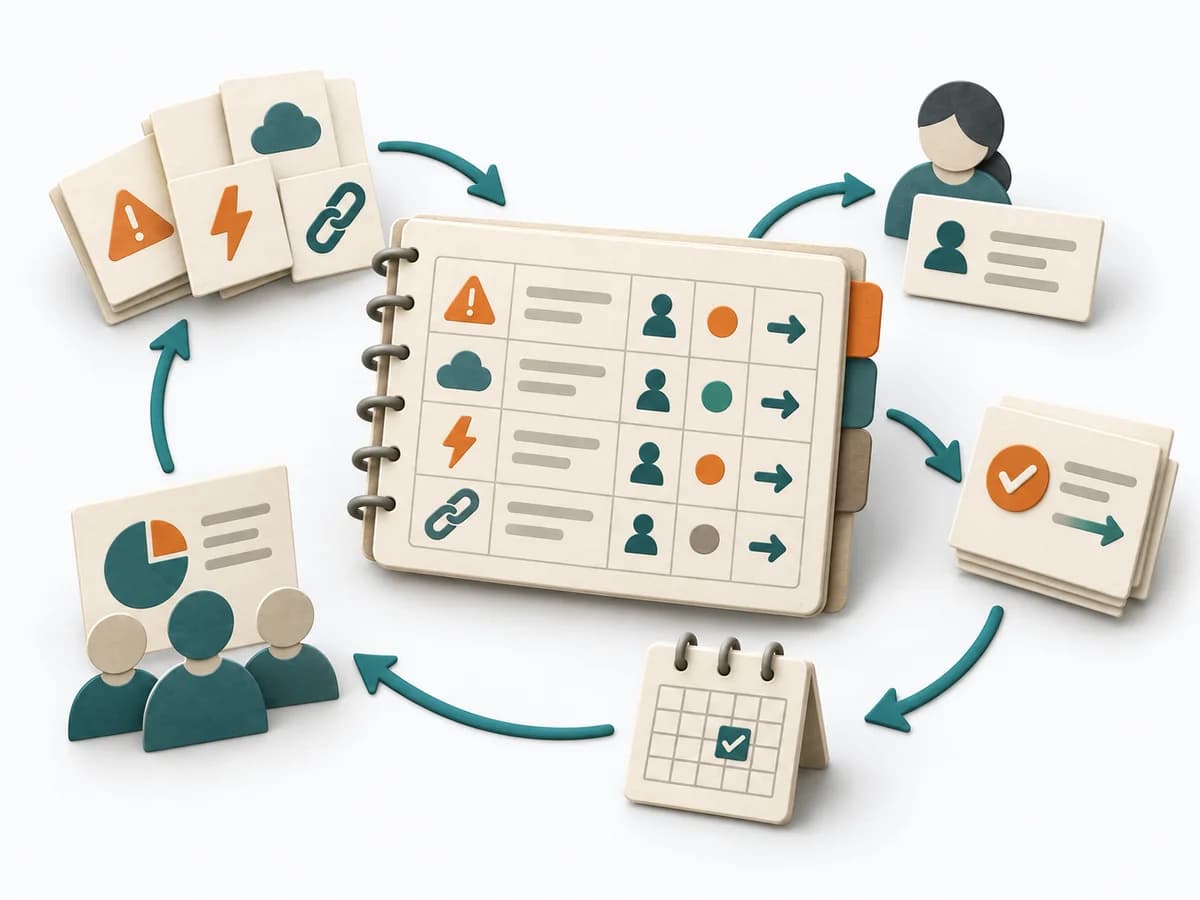
Annotated architecture risk map with scenarios, affected elements/relationships, evidence, qualitative exposure, actions, owners, and review.
Record date, team, data state, and review date; preserve prior versions.
Set subject, data, roles, flow, and review.
To be confirmed
To be confirmed
Complete run Time: 90–150 minutes for one architecture view; action tracking separate.
Complete this worksheet on paper or in your own document during the work.
| Risk | Location | Scenario | Quality goal | Evidence | Exposure | Treatment | Owner/review |
|---|---|---|---|---|---|---|---|
| R1 · Payment latency | |||||||
| R2 · Retry storm |
The blank worksheet contains prompts only.
Reference · original teaching example
Expected artifact: Shared map
Read diagram, scope, quality goals, and assumptions together; resolve comprehension questions.
Entry:
...
Expected artifact: Risk stickies
Each person silently identifies concrete risk scenarios and locates them on an element or relationship.
Entry:
...
Expected artifact: Risk clusters
Explain notes in turn, cluster duplicates, and preserve different perspectives.
Entry:
...
Expected artifact: Priority view
Justify qualitative exposure from plausible occurrence and consequence; mark evidence and unknowns.
Entry:
...
Expected artifact: Treatment plan
For material risks avoid, reduce, transfer, or accept; assign experiment/ADR and owner.
Entry:
...
Expected artifact: Risk decision
Approve residual risk, update diagram/ADR, and set trigger for another risk storm.
Entry:
...
...
Method guide: https://methodatlas.meierhoff-systems.de/en/methods/risk-storming/run-sheet
Concrete filled scenario, fictional example
Fictional example for orientation. Counts and timings describe this case and are not universal requirements.
Concrete filled scenario, fictional example
| Risk | Location | Scenario | Quality goal | Evidence | Exposure | Treatment | Owner/review |
|---|---|---|---|---|---|---|---|
| R1 · Payment latency | Payment API → checkout pool | API slows → threads wait → pool exhausts → pickup fails | Availability; p80 wait | Load test: pool95%, errors 8% | High | Separate pool; GameDay ≤5% | Noor · 15 Nov |
| R2 · Retry storm | Checkout → Payment API | Timeout → unbounded retries → partner overload | Resilience; partner limit | Retry limit untested | Medium/unknown | Retry budget and chaos test | Lea · 22 Nov |
Recognize symptoms and steer against them
Quick overview, the full text is in the matching phase in the flow
Risks are collected on an outdated or unclear diagram.
Mark version and model gaps before generating risks.
Stickies say only security or database.
Write each as cause → event → effect.
Majority opinion removes a rare expert perspective.
Merge only identical trigger, path, and impact.
Invented 1–5 scores create false precision.
Justify categories with evidence, uncertainty, and red lines.
Add monitoring counts as a solution without signal and response.
Specify control, measure, stop rule, and owner.
Risk list disappears after the workshop.
Link register and revisit on architecture, load, or incident change.
When to pause, resolve prerequisites, or choose another approach
Go to the profile for purpose, similar methods, and sources or continue to the next method in the catalog.