methodatlas
Session Builder

Plan my session

Plan a concrete work block with agenda, roles, preparation, and a copyable result artifact.

Method session15-45 minWorkshop or asyncPERT Estimate

Session: PERT Estimation

The plan translates the method into a concrete facilitated work block. Your inputs flow directly into the session brief and work artifact.

Derived automatically

Method session with 1-8. The plan uses the existing method logic and the runsheet.

Runsheet
Participation logic
Team round, shared work and alignment

Use the session for shared understanding. Contributions are collected visibly, assumptions are aligned, and open differences remain traceable in the artifact.

Outcome logic
Finish artifact

The session works directly toward PERT Estimate. After the session, the artifact should be shareable, reviewable, or reusable.

  1. 1

    Phase 1: Capture three values

    10-20 min

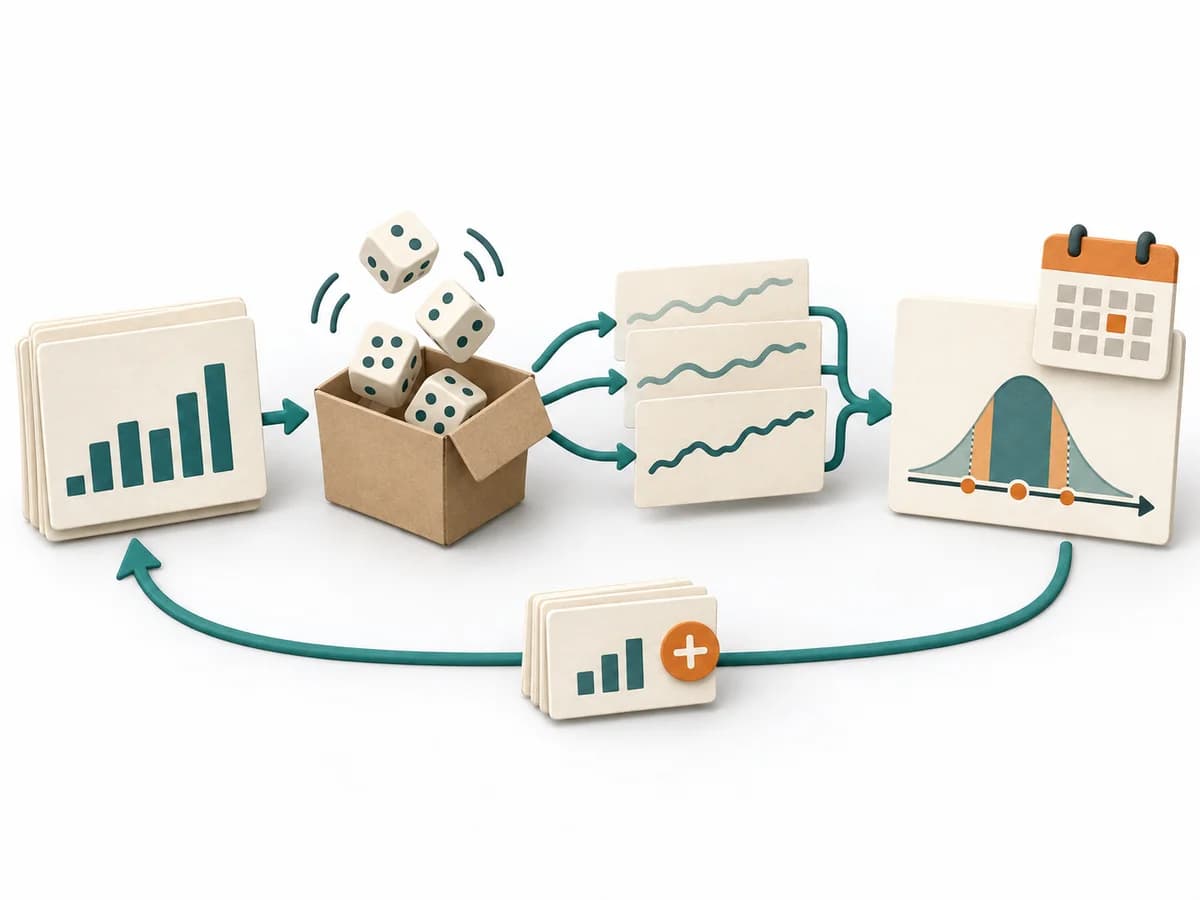
    Collect O, M, P per item with the estimation team (see Three-Point Estimation runsheet). Document assumptions for each value. Hint: If O/M/P values are taken from a prior estimate, update assumptions. Outdated assumptions lead to a wrong expected value.

    FacilitatorPERT Estimate
  2. 2

    Phase 2: Apply formula

    5 min

    Per item, calculate expected value with (O + 4M + P) / 6. Calculate standard deviation with (P - O) / 6. Enter values in the sheet. Hint: 4M weighting is the core heuristic of the method. Equal weighting produces Three-Point, not PERT.

    FacilitatorExpected Value
  3. 3

    Phase 3: Derive confidence interval

    10 min

    Calculate expected value ± 1 sigma (68% confidence) or ± 2 sigma (95%) and choose the level that fits the planning situation. Hint: Normal distribution assumptions are sensitive for single items. The confidence interval is a guide, not a statistical guarantee.

    FacilitatorRisk Notes
  4. 4

    Phase 4: Aggregate and align risk

    10-15 min

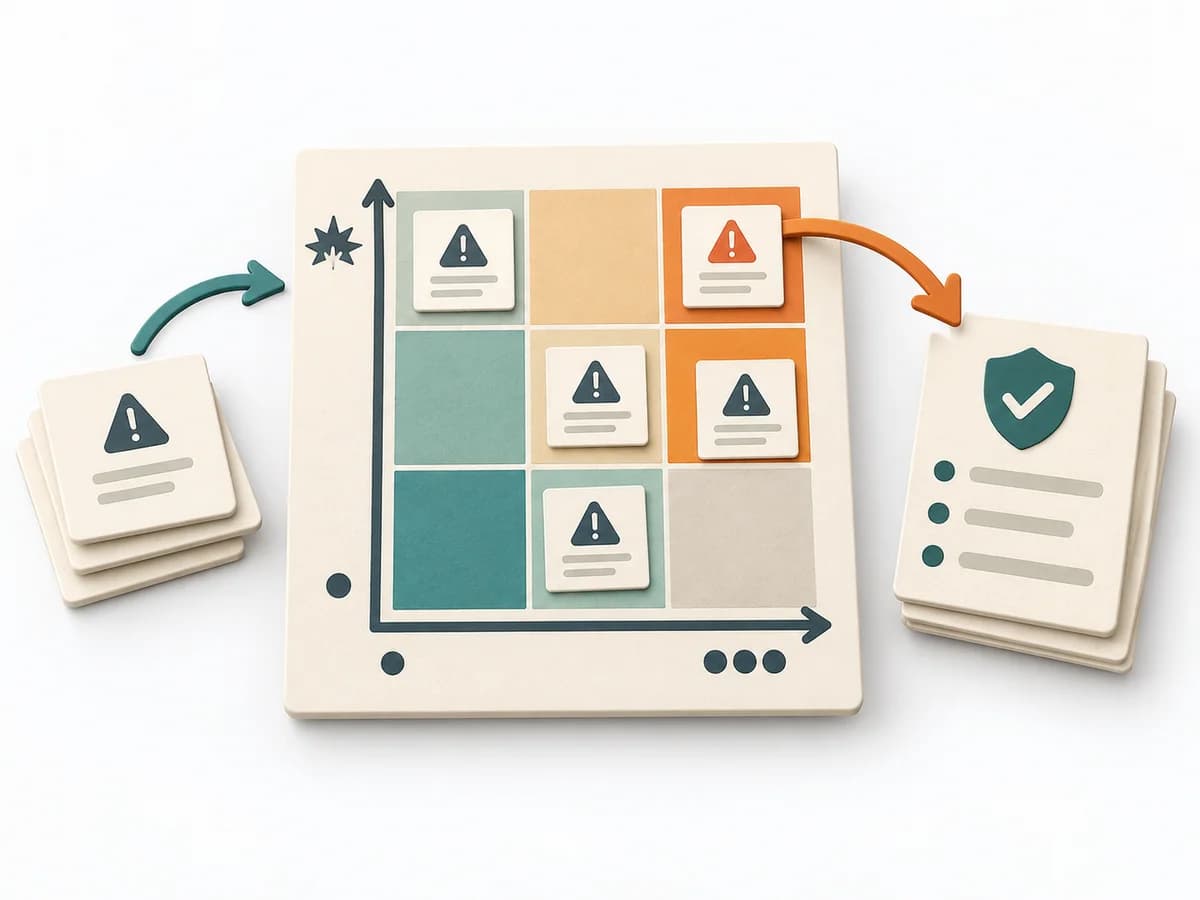
    For project-level estimation, sum expected values. Calculate standard deviation of the total (square root of the sum of variances). Compare with the risk list: do assumptions match the risk assessment? Hint: Summed standard deviation is only valid for independent items. With dependencies (all items share the same engineer), dispersion is higher and assumptions must be documented.

    OwnerPERT Estimate
  5. 5

    Publish artifact

    10 min

    Check the artifact for completeness, define location, set version or status, and name review recipients.

    OwnerPERT Estimate
Usable artifact

Session Brief

For invitations, boards, tickets, PR descriptions, or workshop notes.

session-brief.md

Session Brief: PERT Estimation

Goal

Artifact: PERT Estimate

Working Question

What weighted expected value and confidence interval result from the three estimate values, and is that enough for the planning decision at hand?

Context

Estimate-item description; assumptions per O/M/P; list of risks that drive P; desired confidence level (1, 2, or 3 sigma).

Setup

  • Format: Method session
  • Duration: 15-45 min
  • Mode: Workshop or async
  • Participants: A facilitator who collects values and makes the formula transparent; an estimation team (1-8 people); a scribe for assumptions and risk classification.
  • Owner: A facilitator who collects values and makes the formula transparent
  • Participation mode: Team round, shared work and alignment
  • Outcome logic: Finish artifact

Participation Logic

Use the session for shared understanding. Contributions are collected visibly, assumptions are aligned, and open differences remain traceable in the artifact.

Outcome Logic

The session works directly toward PERT Estimate. After the session, the artifact should be shareable, reviewable, or reusable.

Input

Estimation sheet with columns for item, O, M, P, expected value (PERT), standard deviation; estimate-item document; assumption list; calculator or sheet formula.

Preparation

Prepare a sheet with formulas: expected value = (O + 4M + P) / 6, standard deviation = (P - O) / 6, range with ±1 sigma (68%), ±2 sigma (95%). Make each column definition visible.

Agenda

  1. Phase 1: Capture three values (10-20 min) Owner: Facilitator Action: Collect O, M, P per item with the estimation team (see Three-Point Estimation runsheet). Document assumptions for each value. Hint: If O/M/P values are taken from a prior estimate, update assumptions. Outdated assumptions lead to a wrong expected value. Output: PERT Estimate

  2. Phase 2: Apply formula (5 min) Owner: Facilitator Action: Per item, calculate expected value with (O + 4M + P) / 6. Calculate standard deviation with (P - O) / 6. Enter values in the sheet. Hint: 4M weighting is the core heuristic of the method. Equal weighting produces Three-Point, not PERT. Output: Expected Value

  3. Phase 3: Derive confidence interval (10 min) Owner: Facilitator Action: Calculate expected value ± 1 sigma (68% confidence) or ± 2 sigma (95%) and choose the level that fits the planning situation. Hint: Normal distribution assumptions are sensitive for single items. The confidence interval is a guide, not a statistical guarantee. Output: Risk Notes

  4. Phase 4: Aggregate and align risk (10-15 min) Owner: Owner Action: For project-level estimation, sum expected values. Calculate standard deviation of the total (square root of the sum of variances). Compare with the risk list: do assumptions match the risk assessment? Hint: Summed standard deviation is only valid for independent items. With dependencies (all items share the same engineer), dispersion is higher and assumptions must be documented. Output: PERT Estimate

  5. Publish artifact (10 min) Owner: Owner Action: Check the artifact for completeness, define location, set version or status, and name review recipients. Output: PERT Estimate

Closeout

  • Update result artifact: PERT Estimate
  • Define location, version, and review recipients.
  • Define owner, next step, and review date.
Usable artifact

Work artifact

Pre-filled starting point based on the matching template.

work-artifact.md

PERT Estimate: PERT Estimation

Working Question

What weighted expected value and confidence interval result from the three estimate values, and is that enough for the planning decision at hand?

Context

Estimate-item description; assumptions per O/M/P; list of risks that drive P; desired confidence level (1, 2, or 3 sigma).

Participants

  • Owner: A facilitator who collects values and makes the formula transparent
  • Participants: A facilitator who collects values and makes the formula transparent; an estimation team (1-8 people); a scribe for assumptions and risk classification.

Input

Estimation sheet with columns for item, O, M, P, expected value (PERT), standard deviation; estimate-item document; assumption list; calculator or sheet formula.

Template

PERT Estimation Working Template

Goal

Weights three-point estimates, typically with the formula O plus 4M plus P divided by 6.

Context

When and for what do we use this method?

Input

Which data, observations, decisions, or materials are available?

Execution

Short notes along the runsheet.

Output artifacts

  • PERT Estimate:
  • Expected Value:
  • Risk Notes:

Assumptions and open questions

  • ...

Decision / Next step

Owner, date, and success signal.

Completion Check

  • PERT Estimate is complete enough for review:
  • Location:
  • Version / status:
  • Review by:
  • Next step:

Next Step

  • Review result
  • Mark open questions
  • Schedule review or decision
Template base

PERT Estimation Working Template

View templateCompact working template for PERT Estimation with context, input, output artifacts, and next step.
markdown

pert-estimation-working-template.md

Compact working template for PERT Estimation with context, input, output artifacts, and next step.

PERT Estimation Working Template

Goal

Weights three-point estimates, typically with the formula O plus 4M plus P divided by 6.

Context

When and for what do we use this method?

Input

Which data, observations, decisions, or materials are available?

Execution

Short notes along the runsheet.

Output artifacts

  • PERT Estimate:
  • Expected Value:
  • Risk Notes:

Assumptions and open questions

  • ...

Decision / Next step

Owner, date, and success signal.

Ready to use when
  • Working question, owner, and target artifact are visible.
  • The result fits PERT Estimate.
  • Create a snapshot for each estimation round with date and assumptions version. For re-estimation, add a new row and keep old values with status. Aggregated values must be reproducible from item-level data.
  • Open questions are noted as follow-ups.
  • The next review or decision point is scheduled.