Complete firstClear scope
Agree the subject, boundary and decision before filling the model.
A broad or mixed scope produces a misleading model.
A practical method guide: clarify prerequisites and materials, understand the complete process, and look up outputs, pitfalls, and stop criteria.
What needs to be finished first
Agree the subject, boundary and decision before filling the model.
Bring source material and people who know the work; distinguish facts from assumptions.
What needs to be ready before start
Shared visual workspace, source evidence, and an agreed decision question.
Team lead, team members, dependency owners, organizational sponsor.
Collect existing data, examples, constraints and relevant stakeholder perspectives.
2–4 h to draft a team set; align dependencies and check-ins separately.
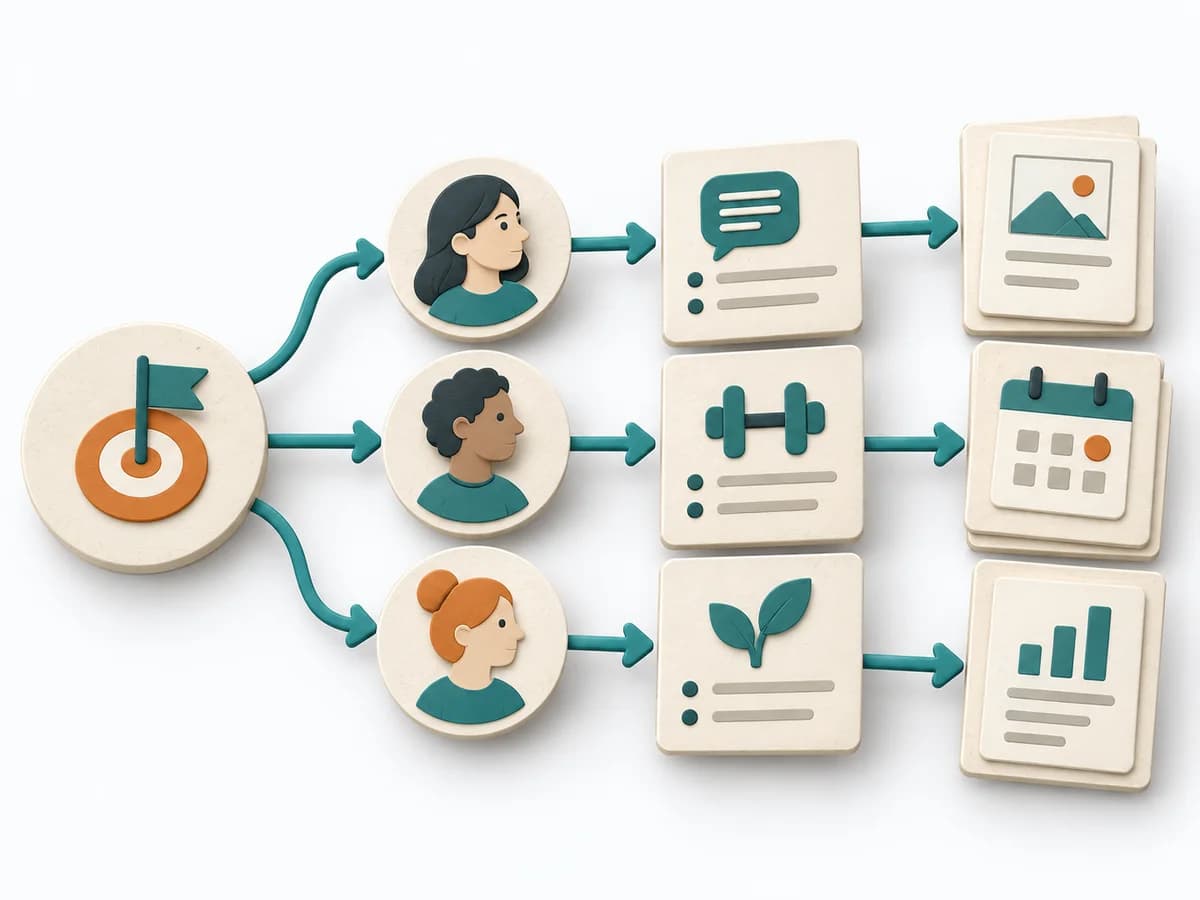
Set a bounded cycle and connect team focus to organizational direction. Write a concise, meaningful Objective that states the desired change. Define measurable outcome Key Results with baselines, targets, units and data sources. Name owners and distinguish initiatives (work) from Key Results (outcomes). Review signals regularly; discuss confidence, blockers and learning, then close the cycle.
The one question this method answers
What measurable outcome will this team achieve in the cycle?
Phases with goal, actions, output and pitfall
Connects a qualitative objective with measurable key results and a recurring review practice.
Fictional worked example
Fictional quarterly OKR: Objective “Make follow-up appointments easy and reliable for patients.” KR1: raise share of follow-ups booked self-serve from 18% to 35%. KR2: reduce bookings requiring staff intervention from 22% to 10%. “Send an SMS link” is an initiative, not a Key Result. Agree metric definition, baseline and data owner before starting.
| Scenario | Objective | Key Result | Baseline → target | Initiative |
|---|---|---|---|---|
| Objective 1Record an observation or example for this row. | Make follow-ups easy and reliable | Increase self-serve bookings | 18% → 35% | Send SMS link |
Fictional quarterly OKR: Objective “Make follow-up appointments easy and reliable for patients.” KR1: raise share of follow-ups booked self-serve from 18% to 35%. KR2: reduce bookings requiring staff intervention from 22% to 10%. “Send an SMS link” is an initiative, not a Key Result. Agree metric definition, baseline and data owner before starting.
Cycle

Goal
Cycle and alignment
Inputs for this step
Actions
Output
Cycle and alignment
Cycle and alignment
Quality check
Can the team explain its contribution?
Pitfall
Objectives arrive as an assigned task list. Agree the outcome contribution with the team.
Timing: Allow time according to scope and evidence; no universal duration.
Objective
Goal
Understandable Objective
Inputs for this step
Actions
Output
Understandable Objective
Understandable Objective
Quality check
Does it describe an intended impact?
Pitfall
Objective is a KPI without meaning or a project name. State the change first, then define its evidence.
Timing: Allow time according to scope and evidence; no universal duration.
Key Results
Goal
Measurable Key Results
Inputs for this step
Actions
Output
Measurable Key Results
Measurable Key Results
Quality check
Could another person calculate progress consistently?
Pitfall
Launches and delivery dates are used as KRs. List work as initiatives and define the expected outcome as the KR.
Timing: Allow time according to scope and evidence; no universal duration.
Review
Goal
Reviewable OKR and initiatives
Inputs for this step
Actions
Output
Reviewable OKR and initiatives
Reviewable OKR and initiatives
Quality check
Can teams influence KRs and see shared dependencies?
Pitfall
Targets are pursued despite missing data or changed assumptions. Check instrumentation and revise the hypothesis transparently.
Timing: Allow time according to scope and evidence; no universal duration.
What comes out at the end
Sketch: what the artifact looks like
Connects a qualitative objective with measurable key results and a recurring review practice. Record scope, evidence, assumptions, owner and next review in the versioned artifact.
Record scope, date, participants, source version and owner. Note changed assumptions and the reason for each revision.
Plan objective setting, ongoing check-ins and review.
To be confirmed
To be confirmed
Objective cycle Time: Set cycle length to the team cadence, usually several weeks; schedule the workshop and check-ins separately.
Complete this worksheet on paper or in your own document during the work.
| Scenario | Objective | Key Result | Baseline → target | Initiative |
|---|---|---|---|---|
| Objective 1 |
Key Results describe outcomes; initiatives describe work.
Set goals with OKRs · Google re:Work
Expected artifact: Cycle and alignment
Cycle and alignment
Entry:
...
Expected artifact: Understandable Objective
Understandable Objective
Entry:
...
Expected artifact: Measurable Key Results
Measurable Key Results
Entry:
...
Expected artifact: Reviewable OKR and initiatives
Reviewable OKR and initiatives
Entry:
...
...
Method guide: https://methodatlas.meierhoff-systems.de/en/methods/okr/run-sheet
Concrete filled scenario, fictional example
Fictional example for orientation. Counts and timings describe this case and are not universal requirements.
Concrete filled scenario, fictional example
Fictional quarterly OKR: Objective “Make follow-up appointments easy and reliable for patients.” KR1: raise share of follow-ups booked self-serve from 18% to 35%. KR2: reduce bookings requiring staff intervention from 22% to 10%. “Send an SMS link” is an initiative, not a Key Result. Agree metric definition, baseline and data owner before starting.
Recognize symptoms and steer against them
Quick overview, the full text is in the matching phase in the flow
Objectives arrive as an assigned task list.
Agree the outcome contribution with the team.
Objective is a KPI without meaning or a project name.
State the change first, then define its evidence.
Launches and delivery dates are used as KRs.
List work as initiatives and define the expected outcome as the KR.
Targets are pursued despite missing data or changed assumptions.
Check instrumentation and revise the hypothesis transparently.
When to pause, resolve prerequisites, or choose another approach
Go to the profile for purpose, similar methods, and sources or continue to the next method in the catalog.