methodatlas
Session Builder

Plan my session

Plan a concrete work block with agenda, roles, preparation, and a copyable result artifact.

Async work run24 to 72 hasynchronousLanding Page

Session: Landing Page Test

The plan distributes preparation, review, and outcome work across an asynchronous work run. Your inputs flow directly into the session brief and work artifact.

Derived automatically

Async work run with Nutzertraffic. The plan uses the existing method logic and the runsheet.

Runsheet
Participation logic
Team round, shared work and alignment

Use the session for shared understanding. Contributions are collected visibly, assumptions are aligned, and open differences remain traceable in the artifact.

Outcome logic
Finish artifact

The session works directly toward Landing Page. After the session, the artifact should be shareable, reviewable, or reusable.

  1. 1

    Prepare brief

    15-30 min

    Prepare the working question, input, target artifact, and review deadline for Landing Page Test. Link relevant data, sources, and existing artifacts.

    OwnerSession brief
  2. 2

    Work asynchronously

    24 to 72 h

    Participants work through the method along the template. Focus: add contributions directly to the artifact, mark assumptions, and link evidence.

    ParticipantsLanding Page
  3. 3

    Consolidate review

    20-30 min

    Cluster comments, contradictions, and open questions. Sort unclear points into decisions, risks, or follow-ups.

    FacilitatorReview notes
  4. 4

    Finalize artifact

    15-30 min

    Create the integrated version, set status, and schedule the next review or decision point.

    OwnerConversion Data
  5. 5

    Publish artifact

    10 min

    Check the artifact for completeness, define location, set version or status, and name review recipients.

    OwnerLanding Page
Usable artifact

Session Brief

For invitations, boards, tickets, PR descriptions, or workshop notes.

session-brief.md

Session Brief: Landing Page Test

Goal

Artifact: Landing Page

Working Question

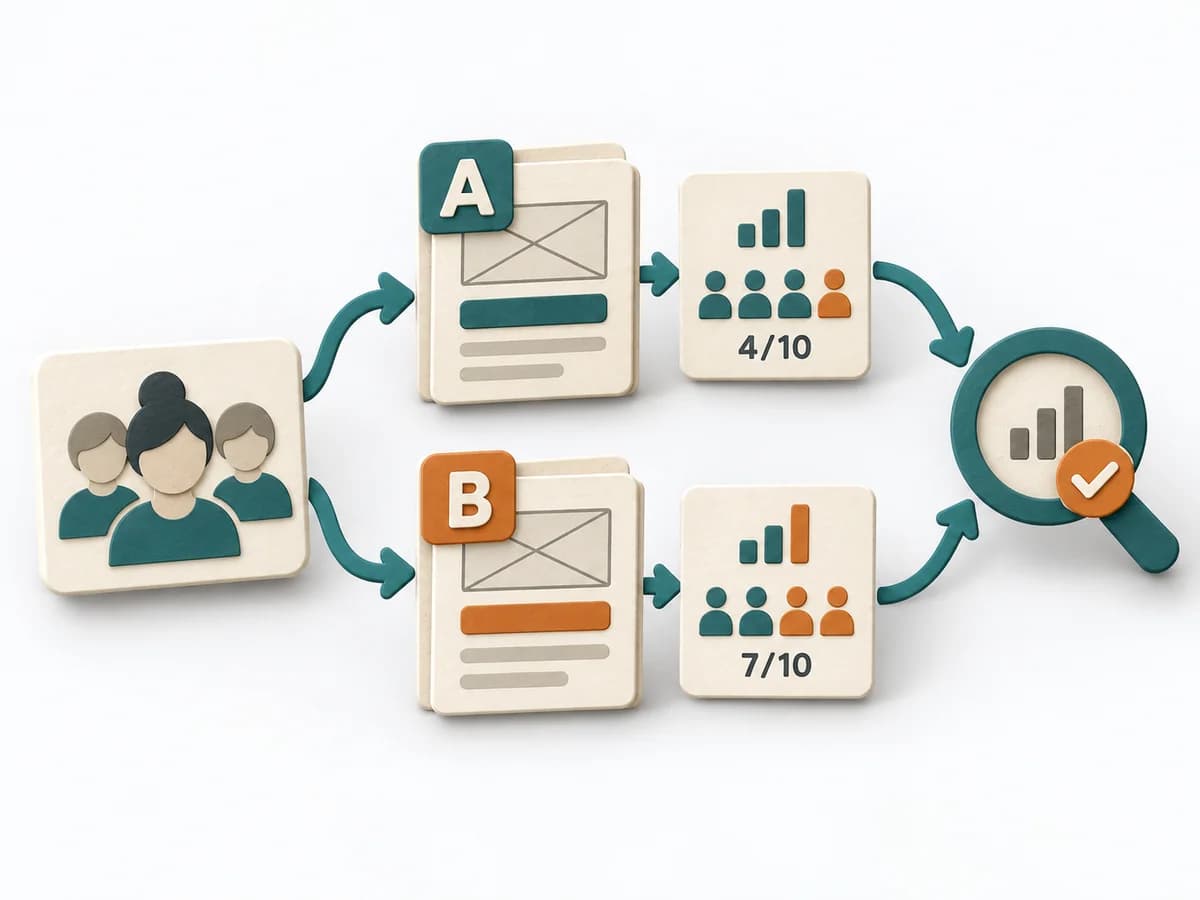
Does the formulated value proposition convert enough target-visitor traffic into leads to support the hypothesis?

Context

Value proposition in one sentence; target audience and persona; success threshold (conversion rate); budget for traffic; A/B hypotheses if variants are tested.

Setup

  • Format: Async work run
  • Duration: 24 to 72 h
  • Mode: asynchronous
  • Participants: A marketer for messaging and traffic; a web producer for page structure; an analyst for evaluation; possibly a UX researcher for qualitative feedback.
  • Owner: A marketer for messaging and traffic
  • Participation mode: Team round, shared work and alignment
  • Outcome logic: Finish artifact

Participation Logic

Use the session for shared understanding. Contributions are collected visibly, assumptions are aligned, and open differences remain traceable in the artifact.

Outcome Logic

The session works directly toward Landing Page. After the session, the artifact should be shareable, reviewable, or reusable.

Input

Landing page with headline, subheadline, value proposition, CTA, and lead form; tracking (page views, clicks, conversion); traffic source (ads, newsletter, outreach); offer status notice if not self-explanatory.

Preparation

Page with clear hero (headline + subheadline + CTA), 2-3 proof bullets, lead form. Mobile-optimized. Tracking set up and tested. Status notice if offer is still in build.

Agenda

  1. Prepare brief (15-30 min) Owner: Owner Action: Prepare the working question, input, target artifact, and review deadline for Landing Page Test. Link relevant data, sources, and existing artifacts. Output: Session brief

  2. Work asynchronously (24 to 72 h) Owner: Participants Action: Participants work through the method along the template. Focus: add contributions directly to the artifact, mark assumptions, and link evidence. Output: Landing Page

  3. Consolidate review (20-30 min) Owner: Facilitator Action: Cluster comments, contradictions, and open questions. Sort unclear points into decisions, risks, or follow-ups. Output: Review notes

  4. Finalize artifact (15-30 min) Owner: Owner Action: Create the integrated version, set status, and schedule the next review or decision point. Output: Conversion Data

  5. Publish artifact (10 min) Owner: Owner Action: Check the artifact for completeness, define location, set version or status, and name review recipients. Output: Landing Page

Closeout

  • Update result artifact: Landing Page
  • Define location, version, and review recipients.
  • Define owner, next step, and review date.
Usable artifact

Work artifact

Pre-filled starting point based on the matching template.

work-artifact.md

Landing Page: Landing Page Test

Working Question

Does the formulated value proposition convert enough target-visitor traffic into leads to support the hypothesis?

Context

Value proposition in one sentence; target audience and persona; success threshold (conversion rate); budget for traffic; A/B hypotheses if variants are tested.

Participants

  • Owner: A marketer for messaging and traffic
  • Participants: A marketer for messaging and traffic; a web producer for page structure; an analyst for evaluation; possibly a UX researcher for qualitative feedback.

Input

Landing page with headline, subheadline, value proposition, CTA, and lead form; tracking (page views, clicks, conversion); traffic source (ads, newsletter, outreach); offer status notice if not self-explanatory.

Template

Landing Page Test Working Template

Goal

Validates the offer, target audience, or message through a simple landing page.

Context

When and for what do we use this method?

Input

Which data, observations, decisions, or materials are available?

Execution

Short notes along the runsheet.

Output artifacts

  • Landing Page:
  • Conversion Data:
  • Learning Summary:

Assumptions and open questions

  • ...

Decision / Next step

Owner, date, and success signal.

Completion Check

  • Landing Page is complete enough for review:
  • Location:
  • Version / status:
  • Review by:
  • Next step:

Next Step

  • Review result
  • Mark open questions
  • Schedule review or decision
Template base

Landing Page Test Working Template

View templateCompact working template for Landing Page Test with context, input, output artifacts, and next step.
markdown

landing-page-test-working-template.md

Compact working template for Landing Page Test with context, input, output artifacts, and next step.

Landing Page Test Working Template

Goal

Validates the offer, target audience, or message through a simple landing page.

Context

When and for what do we use this method?

Input

Which data, observations, decisions, or materials are available?

Execution

Short notes along the runsheet.

Output artifacts

  • Landing Page:
  • Conversion Data:
  • Learning Summary:

Assumptions and open questions

  • ...

Decision / Next step

Owner, date, and success signal.

Ready to use when
  • Working question, owner, and target artifact are visible.
  • The result fits Landing Page.
  • One entry per test with date, page version, and traffic source. For A/B tests, document both variants and statistical outcome. Link follow-up experiments to previous learning.
  • Open questions are noted as follow-ups.
  • The next review or decision point is scheduled.