Plan my session
Plan a concrete work block with agenda, roles, preparation, and a copyable result artifact.
Session: Hypothesis-Driven Troubleshooting
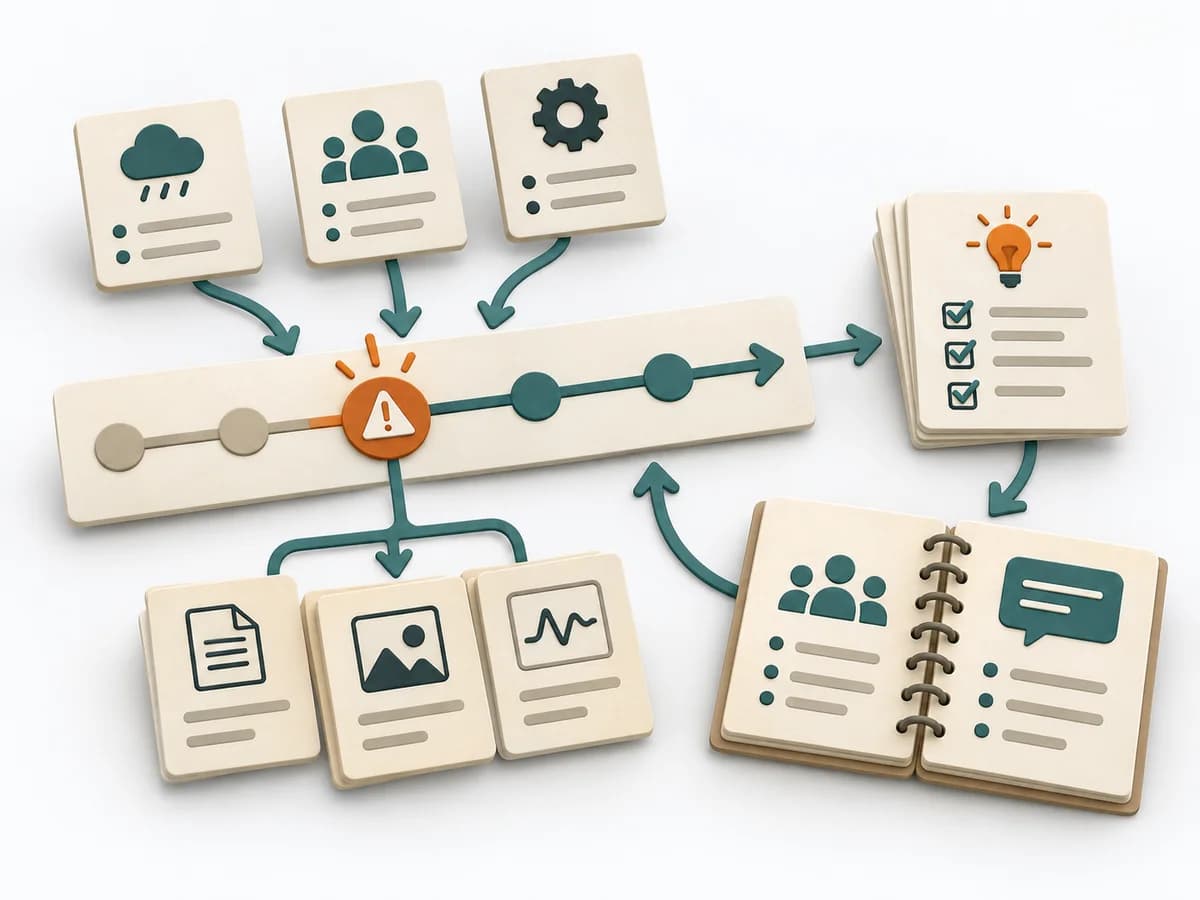
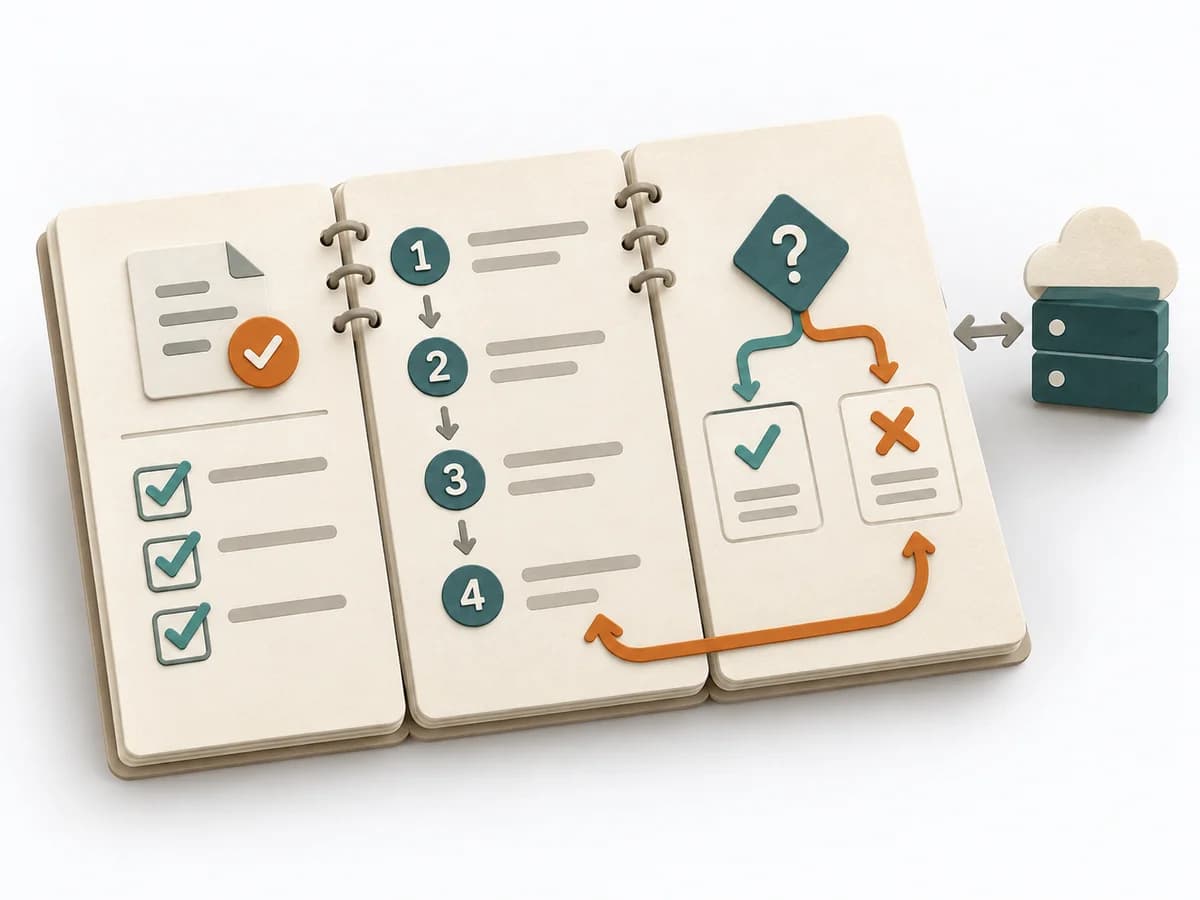
The plan translates the method into a concrete facilitated work block. Your inputs flow directly into the session brief and work artifact.
Method session with 1-6. The plan uses the existing method logic and the runsheet.
RunsheetUse the session for shared understanding. Contributions are collected visibly, assumptions are aligned, and open differences remain traceable in the artifact.
The session works directly toward Hypothesis Log. After the session, the artifact should be shareable, reviewable, or reusable.
- 1
Fix the scope
10-20 minDefine the trigger event, objective, and boundaries of analysis. Collect off-scope topics in a parking lot. Hint: A narrow scope produces better outcomes than a full but diffuse sweep.
FacilitatorHypothesis Log - 2
Collect raw material
20-40 minGather facts, events, options, constraints, and assumptions and make them visible. Hint: Keep facts and interpretations separate. Mark uncertain points rather than smoothing them over.
FacilitatorTest Plan - 3
Build the structure
30-60 minFill the Hypothesis Log step by step, clarify relationships between elements, and make contradictions visible. Hint: Do not evaluate too early. First stabilize the structure, then draw conclusions.
FacilitatorEvidence Notes - 4
Check and compress
20-40 minMark gaps, weak assumptions, counterexamples, and critical paths. Check the result for clarity. Hint: If no one can explain the logic in two minutes, the artifact is not complete yet.
FacilitatorDiagnosis Summary - 5
Define next steps
15-20 minDocument decision, experiment, test, measure, or follow-up with owner and date. Hint: A strong artifact without next action remains knowledge work without impact.
OwnerHypothesis Log - 6
Publish artifact
10 minCheck the artifact for completeness, define location, set version or status, and name review recipients.
OwnerHypothesis Log
Session Brief
For invitations, boards, tickets, PR descriptions, or workshop notes.
session-brief.md
Session Brief: Hypothesis-Driven Troubleshooting
Goal
Artifact: Hypothesis Log
Working Question
Which hypothesis best explains the symptom, and which test delivers the highest information value?
Context
Scope, trigger event, known facts, relevant constraints, existing options or incidents, and the desired meeting outcome.
Setup
- Format: Method session
- Duration: 60-180 min
- Mode: Workshop or async
- Participants: A facilitator; technical experts from the affected area; one owner for outcome and follow-up; a named decider when decisions are required.
- Owner: A facilitator
- Participation mode: Team round, shared work and alignment
- Outcome logic: Finish artifact
Participation Logic
Use the session for shared understanding. Contributions are collected visibly, assumptions are aligned, and open differences remain traceable in the artifact.
Outcome Logic
The session works directly toward Hypothesis Log. After the session, the artifact should be shareable, reviewable, or reusable.
Input
Working board or document for a Hypothesis Log; available notes, data, decisions, and assumptions; markers for uncertainty, owner, and next steps.
Preparation
Prepare an empty template for the Hypothesis Log. Make scope and working question visible at the top. Mark each assumption as an assumption, not as a fact.
Agenda
-
Fix the scope (10-20 min) Owner: Facilitator Action: Define the trigger event, objective, and boundaries of analysis. Collect off-scope topics in a parking lot. Hint: A narrow scope produces better outcomes than a full but diffuse sweep. Output: Hypothesis Log
-
Collect raw material (20-40 min) Owner: Facilitator Action: Gather facts, events, options, constraints, and assumptions and make them visible. Hint: Keep facts and interpretations separate. Mark uncertain points rather than smoothing them over. Output: Test Plan
-
Build the structure (30-60 min) Owner: Facilitator Action: Fill the Hypothesis Log step by step, clarify relationships between elements, and make contradictions visible. Hint: Do not evaluate too early. First stabilize the structure, then draw conclusions. Output: Evidence Notes
-
Check and compress (20-40 min) Owner: Facilitator Action: Mark gaps, weak assumptions, counterexamples, and critical paths. Check the result for clarity. Hint: If no one can explain the logic in two minutes, the artifact is not complete yet. Output: Diagnosis Summary
-
Define next steps (15-20 min) Owner: Owner Action: Document decision, experiment, test, measure, or follow-up with owner and date. Hint: A strong artifact without next action remains knowledge work without impact. Output: Hypothesis Log
-
Publish artifact (10 min) Owner: Owner Action: Check the artifact for completeness, define location, set version or status, and name review recipients. Output: Hypothesis Log
Closeout
- Update result artifact: Hypothesis Log
- Define location, version, and review recipients.
- Define owner, next step, and review date.
Work artifact
Pre-filled starting point based on the matching template.
work-artifact.md
Hypothesis Log: Hypothesis-Driven Troubleshooting
Working Question
Which hypothesis best explains the symptom, and which test delivers the highest information value?
Context
Scope, trigger event, known facts, relevant constraints, existing options or incidents, and the desired meeting outcome.
Participants
- Owner: A facilitator
- Participants: A facilitator; technical experts from the affected area; one owner for outcome and follow-up; a named decider when decisions are required.
Input
Working board or document for a Hypothesis Log; available notes, data, decisions, and assumptions; markers for uncertainty, owner, and next steps.
Template
Hypothesis-Driven Troubleshooting Working Template
Goal
Troubleshooting approach that turns symptoms into testable hypotheses and focused tests.
Context
When and for what do we use this method?
Input
Which data, observations, decisions, or materials are available?
Execution
Short notes along the runsheet.
Output artifacts
- Hypothesis Log:
- Test Plan:
- Evidence Notes:
- Diagnosis Summary:
Assumptions and open questions
- ...
Decision / Next step
Owner, date, and success signal.
Completion Check
- Hypothesis Log is complete enough for review:
- Location:
- Version / status:
- Review by:
- Next step:
Next Step
- Review result
- Mark open questions
- Schedule review or decision
Hypothesis-Driven Troubleshooting Working Template
View templateCompact working template for Hypothesis-Driven Troubleshooting with context, input, output artifacts, and next step.markdown
hypothesis-driven-troubleshooting-working-template.md
Compact working template for Hypothesis-Driven Troubleshooting with context, input, output artifacts, and next step.
Hypothesis-Driven Troubleshooting Working Template
Goal
Troubleshooting approach that turns symptoms into testable hypotheses and focused tests.
Context
When and for what do we use this method?
Input
Which data, observations, decisions, or materials are available?
Execution
Short notes along the runsheet.
Output artifacts
- Hypothesis Log:
- Test Plan:
- Evidence Notes:
- Diagnosis Summary:
Assumptions and open questions
- ...
Decision / Next step
Owner, date, and success signal.
- Working question, owner, and target artifact are visible.
- The result fits Hypothesis Log.
- Store artifact with date, scope, and participants. For new evidence create a new version or change note so decision logic remains traceable.
- Open questions are noted as follow-ups.
- The next review or decision point is scheduled.