Plan my session
Plan a concrete work block with agenda, roles, preparation, and a copyable result artifact.
Session: Business Model Stress Test
The plan translates the method into a concrete facilitated work block. Your inputs flow directly into the session brief and work artifact.
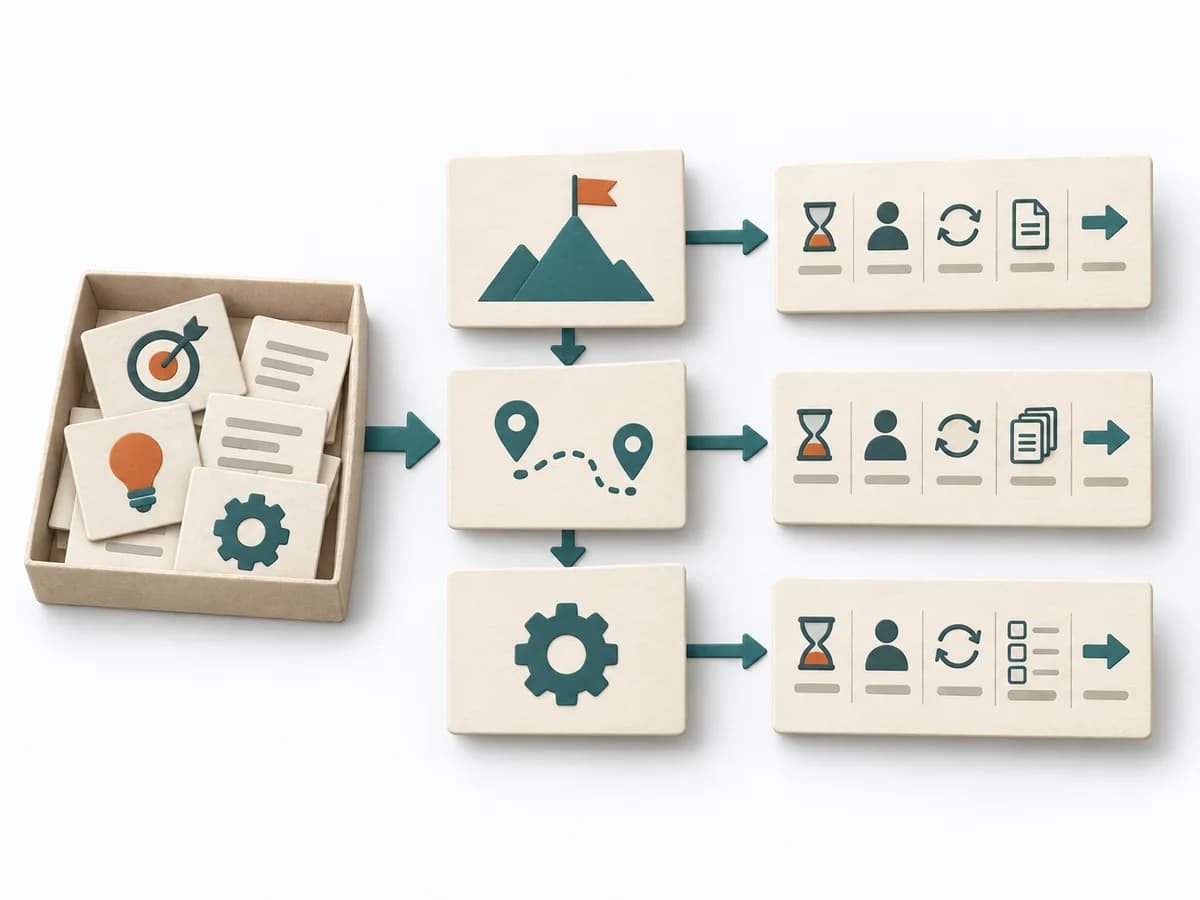
Method session with 3-8. The plan uses the existing method logic and the runsheet.
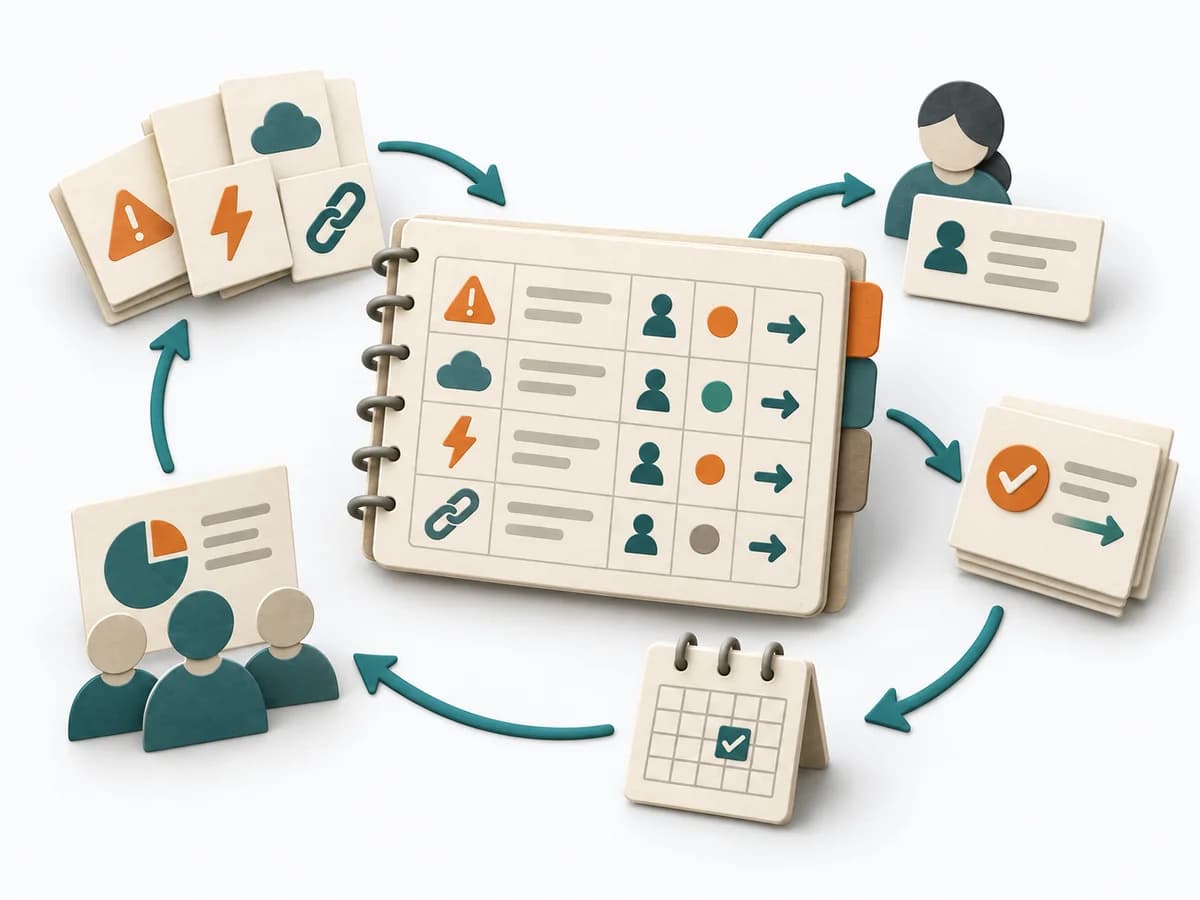
RunsheetUse the session for shared understanding. Contributions are collected visibly, assumptions are aligned, and open differences remain traceable in the artifact.
The session works directly toward Stress-Test-Bericht. After the session, the artifact should be shareable, reviewable, or reusable.
- 1
Phase 1: Frame the model
15 minConfirm the scope, the current business model, and the decision context. Put the canvas in the middle and agree on the parts that must be tested. Hint: If the scope is still fuzzy, the group starts debating the business model itself instead of testing it. Decide the frame before any stress test starts.
FacilitatorStress-Test-Bericht - 2
Phase 2: Define scenarios
20 minDefine two to three scenarios that are truly different, for example downturn, regulation shift, or growth spike. Write each scenario as a short sentence with a trigger and expected pressure. Hint: Small variations are not scenarios. If the differences do not change behavior or economics, the test will not reveal anything useful.
FacilitatorAktionsplan pro Szenario - 3
Phase 3: Test the blocks
30 minWalk through the canvas block by block for each scenario. Mark which assumptions hold, which weaken, and which break completely. Hint: Do not score only the full model. The value sits in the block-level view, because that is where the first cracks appear.
FacilitatorStress-Test-Bericht - 4
Phase 4: Rank vulnerabilities
20 minRank the most fragile assumptions across all scenarios. Separate structural weaknesses from one-off issues and cluster related risks. Hint: If everything looks equally risky, the group has not sharpened the test enough. Force a top three list so the next step becomes actionable.
FacilitatorAktionsplan pro Szenario - 5
Phase 5: Derive actions
15 minAssign hedges, pivots, or experiments to the highest-risk assumptions. Name an owner and the next validation step for each action. Hint: A stress test without follow-up actions is just a discussion. Every marked weakness needs an owner or it will be forgotten.
OwnerStress-Test-Bericht - 6
Publish artifact
10 minCheck the artifact for completeness, define location, set version or status, and name review recipients.
OwnerStress-Test-Bericht
Session Brief
For invitations, boards, tickets, PR descriptions, or workshop notes.
session-brief.md
Session Brief: Business Model Stress Test
Goal
Artifact: Stress-Test-Bericht
Working Question
Which parts of the business model hold up across different scenarios, and which actions should follow from the weak spots?
Context
Current business model description; recent market or customer signals; top assumptions and known risks; any existing scenario logic, if available.
Setup
- Format: Method session
- Duration: 90-120 min
- Mode: Workshop
- Participants: One facilitator; one business owner or sponsor; three to six people from product, finance, operations, and sales; one person who documents decisions and assumptions.
- Owner: One facilitator
- Participation mode: Team round, shared work and alignment
- Outcome logic: Finish artifact
Participation Logic
Use the session for shared understanding. Contributions are collected visibly, assumptions are aligned, and open differences remain traceable in the artifact.
Outcome Logic
The session works directly toward Stress-Test-Bericht. After the session, the artifact should be shareable, reviewable, or reusable.
Input
Business Model Canvas printout or board; scenario cards or a scenario matrix; sticky notes in two or three colors; markers; a simple risk ranking sheet.
Preparation
Place the Business Model Canvas in the center. Prepare two to three scenarios on separate columns or cards. Mark the assumptions that will be stressed first. Keep the action backlog visible.
Agenda
-
Phase 1: Frame the model (15 min) Owner: Facilitator Action: Confirm the scope, the current business model, and the decision context. Put the canvas in the middle and agree on the parts that must be tested. Hint: If the scope is still fuzzy, the group starts debating the business model itself instead of testing it. Decide the frame before any stress test starts. Output: Stress-Test-Bericht
-
Phase 2: Define scenarios (20 min) Owner: Facilitator Action: Define two to three scenarios that are truly different, for example downturn, regulation shift, or growth spike. Write each scenario as a short sentence with a trigger and expected pressure. Hint: Small variations are not scenarios. If the differences do not change behavior or economics, the test will not reveal anything useful. Output: Aktionsplan pro Szenario
-
Phase 3: Test the blocks (30 min) Owner: Facilitator Action: Walk through the canvas block by block for each scenario. Mark which assumptions hold, which weaken, and which break completely. Hint: Do not score only the full model. The value sits in the block-level view, because that is where the first cracks appear. Output: Stress-Test-Bericht
-
Phase 4: Rank vulnerabilities (20 min) Owner: Facilitator Action: Rank the most fragile assumptions across all scenarios. Separate structural weaknesses from one-off issues and cluster related risks. Hint: If everything looks equally risky, the group has not sharpened the test enough. Force a top three list so the next step becomes actionable. Output: Aktionsplan pro Szenario
-
Phase 5: Derive actions (15 min) Owner: Owner Action: Assign hedges, pivots, or experiments to the highest-risk assumptions. Name an owner and the next validation step for each action. Hint: A stress test without follow-up actions is just a discussion. Every marked weakness needs an owner or it will be forgotten. Output: Stress-Test-Bericht
-
Publish artifact (10 min) Owner: Owner Action: Check the artifact for completeness, define location, set version or status, and name review recipients. Output: Stress-Test-Bericht
Closeout
- Update result artifact: Stress-Test-Bericht
- Define location, version, and review recipients.
- Define owner, next step, and review date.
Work artifact
Pre-filled starting point based on the matching template.
work-artifact.md
Stress-Test-Bericht: Business Model Stress Test
Working Question
Which parts of the business model hold up across different scenarios, and which actions should follow from the weak spots?
Context
Current business model description; recent market or customer signals; top assumptions and known risks; any existing scenario logic, if available.
Participants
- Owner: One facilitator
- Participants: One facilitator; one business owner or sponsor; three to six people from product, finance, operations, and sales; one person who documents decisions and assumptions.
Input
Business Model Canvas printout or board; scenario cards or a scenario matrix; sticky notes in two or three colors; markers; a simple risk ranking sheet.
Template
Business Model Stress Test Working Template
Goal
Tests a Business Model against multiple future scenarios.
Context
When and for what do we use this method?
Input
Which data, observations, decisions, or materials are available?
Execution
Short notes along the runsheet.
Output artifacts
- Stress test report:
- Action plan by scenario:
Assumptions and open questions
- ...
Decision / next step
Owner, date, and success signal.
Completion Check
- Stress-Test-Bericht is complete enough for review:
- Location:
- Version / status:
- Review by:
- Next step:
Next Step
- Review result
- Mark open questions
- Schedule review or decision
Business Model Stress Test Working Template
View templateCompact working template for Business Model Stress Test with context, input, output artifacts, and next step.markdown
business-model-stress-test-working-template.md
Compact working template for Business Model Stress Test with context, input, output artifacts, and next step.
Business Model Stress Test Working Template
Goal
Tests a Business Model against multiple future scenarios.
Context
When and for what do we use this method?
Input
Which data, observations, decisions, or materials are available?
Execution
Short notes along the runsheet.
Output artifacts
- Stress test report:
- Action plan by scenario:
Assumptions and open questions
- ...
Decision / next step
Owner, date, and success signal.
- Working question, owner, and target artifact are visible.
- The result fits Stress-Test-Bericht.
- Create one version per stress-test round. Keep the scenario set, the risk ranking, and the action backlog together with the date and sponsor. For larger shifts, start a new version instead of overwriting the previous one.
- Open questions are noted as follow-ups.
- The next review or decision point is scheduled.