Complete firstCompleted event
The event is over or the reviewed segment has a clear end.
Interrupting active work can distort the account and leave facts provisional.
A practical method guide: clarify prerequisites and materials, understand the complete process, and look up outputs, pitfalls, and stop criteria.
What needs to be finished first
The event is over or the reviewed segment has a clear end.
Participants and available records can reconstruct the sequence together.
What needs to be ready before start
Goal or plan, timeline data and relevant work records; a safe conversation space, facilitator, and shared notes.
Facilitation keeps the questions clear and invites participation. Participants reconstruct events. A recorder captures lessons, actions, owners, and a later review.
Gather the goal, plan, timeline, decisions, and observable facts. Mark uncertainty explicitly.
20–45 minutes for a bounded review. Deep investigation, formal incident reports, and implementation take additional work.
Start with four questions: What was supposed to happen? What actually happened? What worked or hindered the task, and why? What will we change next time? Compare the plan and event before explaining causes. Ask open questions, separate facts from hypotheses, and finish with a few owned actions. Army doctrine is the historical reference; adapt the process and language to civilian contexts.
The one question this method answers
What was meant to happen, what actually happened, what can we learn, and what should we change or sustain?
Phases with goal, actions, output and pitfall
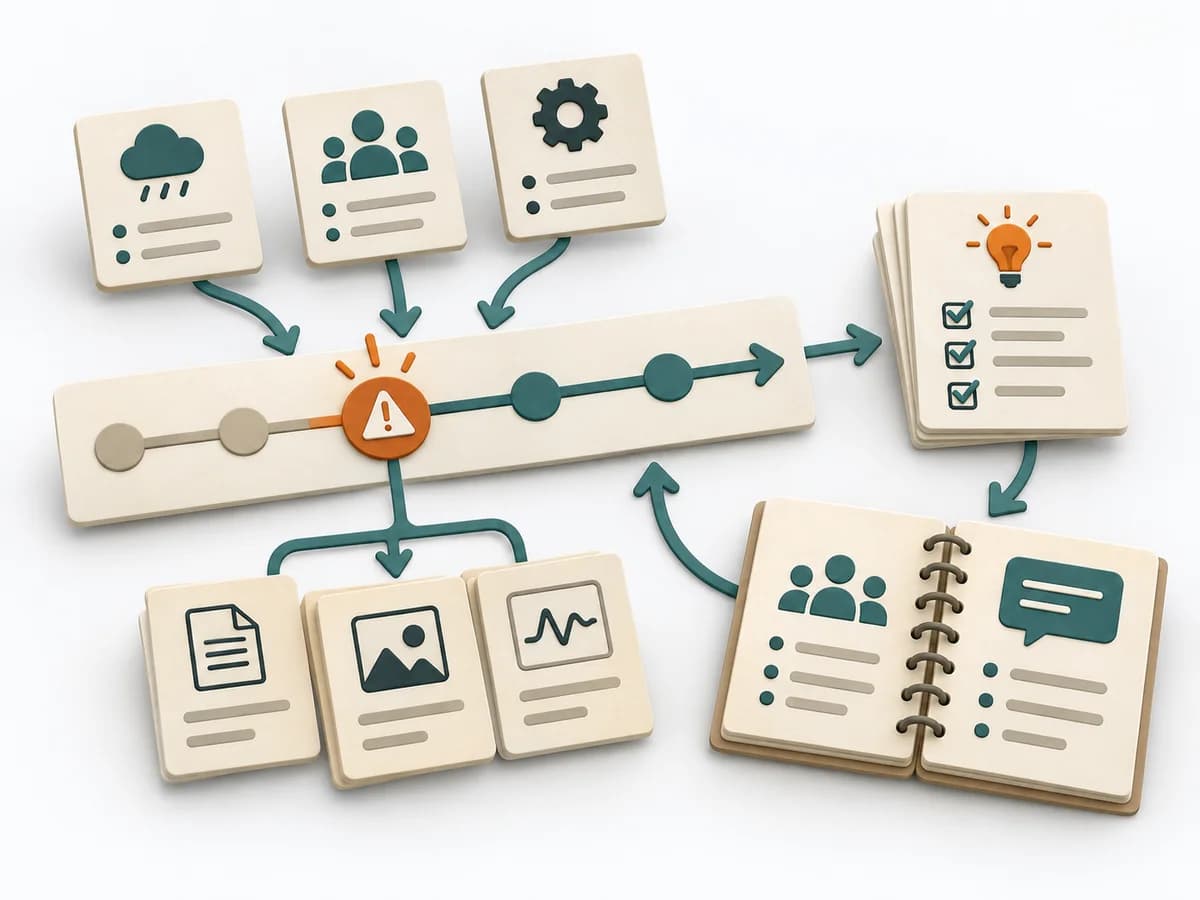
An After-Action Review reconstructs a completed activity against its goal, plan, and actual course. The group examines differences, helpful conditions, and opportunities to improve. Discussion focuses on the work and its conditions, not personal blame. The outcome is a set of actions to check in a comparable future situation.
Fictional teaching example
Fictional review of a delayed booking test, separating intent, sequence, conditions, and actions.
What should happen, by when, and with what expected result? Bound the period under review.
Fictional: Test the booking confirmation with two people from October 5; privacy approval by October 3.
Which observable events, decisions, and dates are supported? Mark what is unknown.
Fictional: The text was ready. The review had no confirmed owner; testing began on October 9.
What differed from the plan? Which helpful or difficult conditions are supported by sources?
Fictional: Four-day delay. The task list showed the review but no owner field. The cause remains open.
What should we sustain or change? Which explanation is evidenced, and which still needs a check?
Fictional: Complete review steps help; an explicit assignment may improve planning. Hypothesis.
Which few changes have an owner, date, and observable signal in a relevant future event?
Fictional: Sam adds an owner and review window. Before the next test, check that every review step is scheduled.
The Army guide structures a review around intended execution, actual events, assessment, and next improvement. This civilian blueprint adds evidenced work conditions, actions, and a later effectiveness check; it is not military operating guidance.
U.S. Army, NTC EXOP Annex A: After Action Review Standards, adapted for civilian work
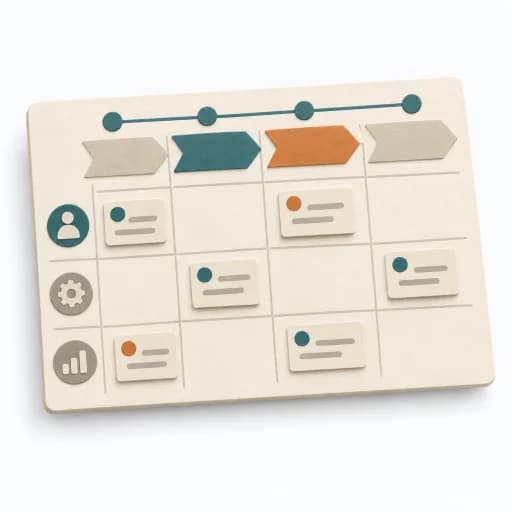
Intent
Goal
The group shares the intent and period being examined.
Inputs for this step
Actions
Output
Shared starting point
Without a clear expectation, differences are hard to interpret.
Quality check
The review opens with general opinions about the event.
Pitfall
The expected execution or review boundary is unclear. Make the goal and time period concrete.
Timing: 4–6 minutes
Sequence
Goal
The group has a shared picture of what happened.
Inputs for this step
Actions
Output
Evidence-based timeline
A plausible explanation is not yet a verified event.
Quality check
Memories conflict and are judged immediately.
Pitfall
The timeline and memory are mixed without checking sources. Name sources and leave open facts visible.
Timing: 5–8 minutes
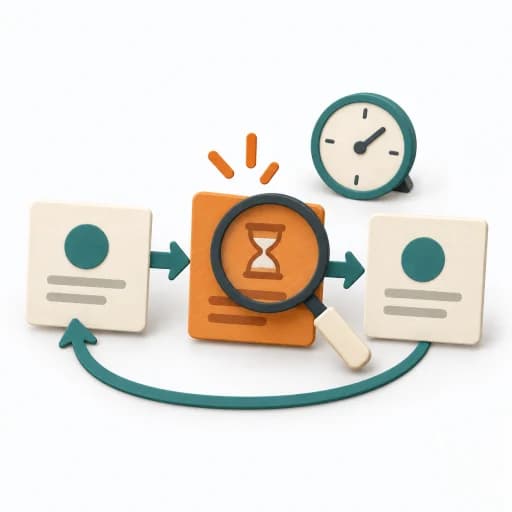
Compare
Goal
Differences and helpful conditions become visible.
Inputs for this step
Actions
Output
Comparison with differences
A difference is a learning prompt, not personal blame.
Quality check
Discussion jumps from a difference to an accusation.
Pitfall
Differences are attributed to people instead of work conditions. Ask which work conditions and information mattered.
Timing: 5–8 minutes
Learn

Goal
Lessons relate to work and evidenced conditions.
Inputs for this step
Actions
Output
Lessons and open questions
A single explanation can miss systemic or situational conditions.
Quality check
The first explanation is accepted as the cause.
Pitfall
A plausible explanation is treated as an evidenced cause. Look for evidence or label the statement as an open hypothesis.
Timing: 5–10 minutes
Adapt

Goal
Learning is tried in the next comparable event.
Inputs for this step
Actions
Output
Improvement plan
An action without a later check has no measured effect.
Quality check
The action list grows too long or lacks owners.
Pitfall
Sorted tasks receive no owned action. Prioritize a few feasible actions and check them later.
Timing: 4–7 minutes
What comes out at the end
Sketch: what the artifact looks like
Review record with event and intent, expected and actual course, evidenced conditions, lessons, concrete actions, owners, and a later effectiveness check.
Save date, reviewed period, sources, open factual questions, and actions. Revisit outcomes in the next comparable event.
Plan a protected review of a completed event with an intent, timeline, and follow-up.
To be confirmed
To be confirmed
Review one event together Time: 20–45 minutes after the event; investigation and implementation are additional
Complete this worksheet on paper or in your own document during the work.
What should happen, by when, and with what expected result? Bound the period under review.
...
Which observable events, decisions, and dates are supported? Mark what is unknown.
...
What differed from the plan? Which helpful or difficult conditions are supported by sources?
...
What should we sustain or change? Which explanation is evidenced, and which still needs a check?
...
Which few changes have an owner, date, and observable signal in a relevant future event?
...
Blank worksheet: keep the prompts and record your own facts, observations, and actions. The fictional example is not copied over.
U.S. Army, NTC EXOP Annex A: After Action Review Standards, adapted for civilian work
Expected artifact: Shared starting point
Without a clear expectation, differences are hard to interpret.
Entry:
...
Expected artifact: Evidence-based timeline
A plausible explanation is not yet a verified event.
Entry:
...
Expected artifact: Comparison with differences
A difference is a learning prompt, not personal blame.
Entry:
...
Expected artifact: Lessons and open questions
A single explanation can miss systemic or situational conditions.
Entry:
...
Expected artifact: Improvement plan
An action without a later check has no measured effect.
Entry:
...
...
Method guide: https://methodatlas.meierhoff-systems.de/en/methods/after-action-review/run-sheet
Concrete filled scenario, fictional example
Fictional example for orientation. Counts and timings describe this case and are not universal requirements.
Concrete filled scenario, fictional example
All participants, dates, and causes are invented. A small team planned to start testing its booking confirmation on October 5. Testing began on October 9.
What was supposed to happen? Privacy review by October 3, then a test with two people.
What actually happened? The text was ready. The privacy review had no confirmed owner and was scheduled only after a reminder. The first two tests happened four days later.
What worked or hindered the work? The task list revealed the missing review step but had no owner field. A fictional message and calendar entry support the timeline. The cause remains an open explanation, not a proven single cause.
What will we change or sustain? Sam adds an owner and planned review window to the release checklist. Before the next test, the team checks whether all review steps are assigned and scheduled. The review does not rate individual team members.
Recognize symptoms and steer against them
Quick overview, the full text is in the matching phase in the flow
The expected execution or review boundary is unclear.
Make the goal and time period concrete.
The timeline and memory are mixed without checking sources.
Name sources and leave open facts visible.
Differences are attributed to people instead of work conditions.
Ask which work conditions and information mattered.
A plausible explanation is treated as an evidenced cause.
Look for evidence or label the statement as an open hypothesis.
Sorted tasks receive no owned action.
Prioritize a few feasible actions and check them later.
When to pause, resolve prerequisites, or choose another approach
Go to the profile for purpose, similar methods, and sources or continue to the next method in the catalog.