View methods side by side.
Choose up to four methods. Add them using the search and share the comparison by copying its link.
| Criterion | 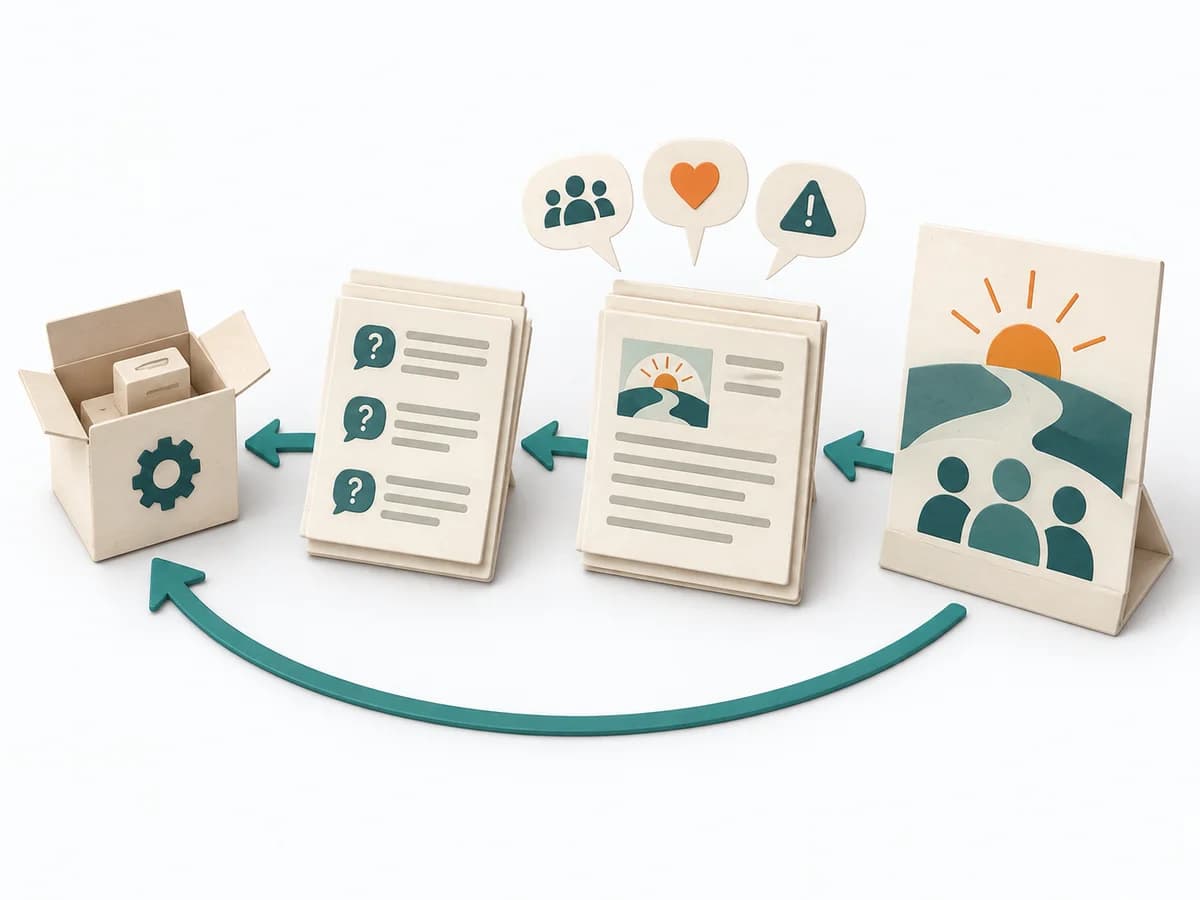 Product Discovery Working Backwards | 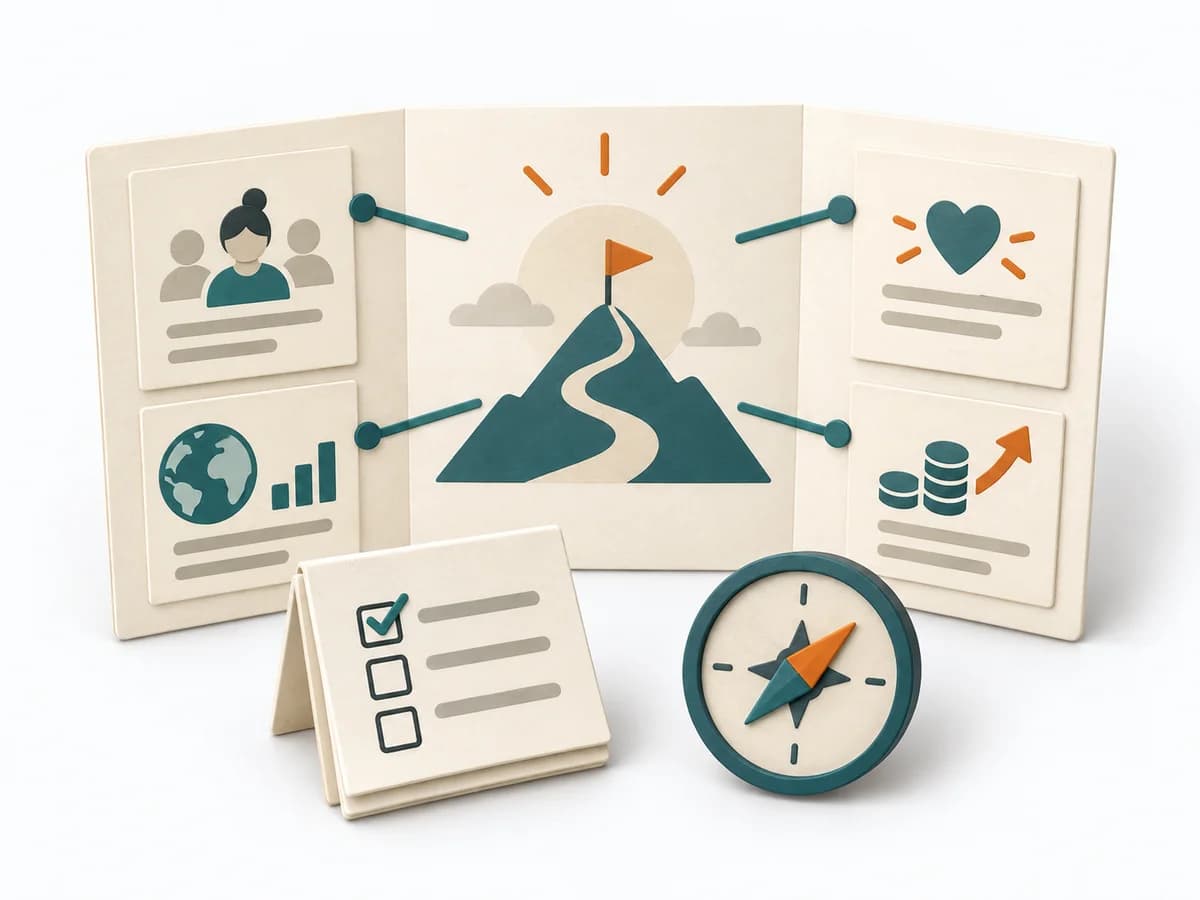 Product Strategy Product Vision Board | 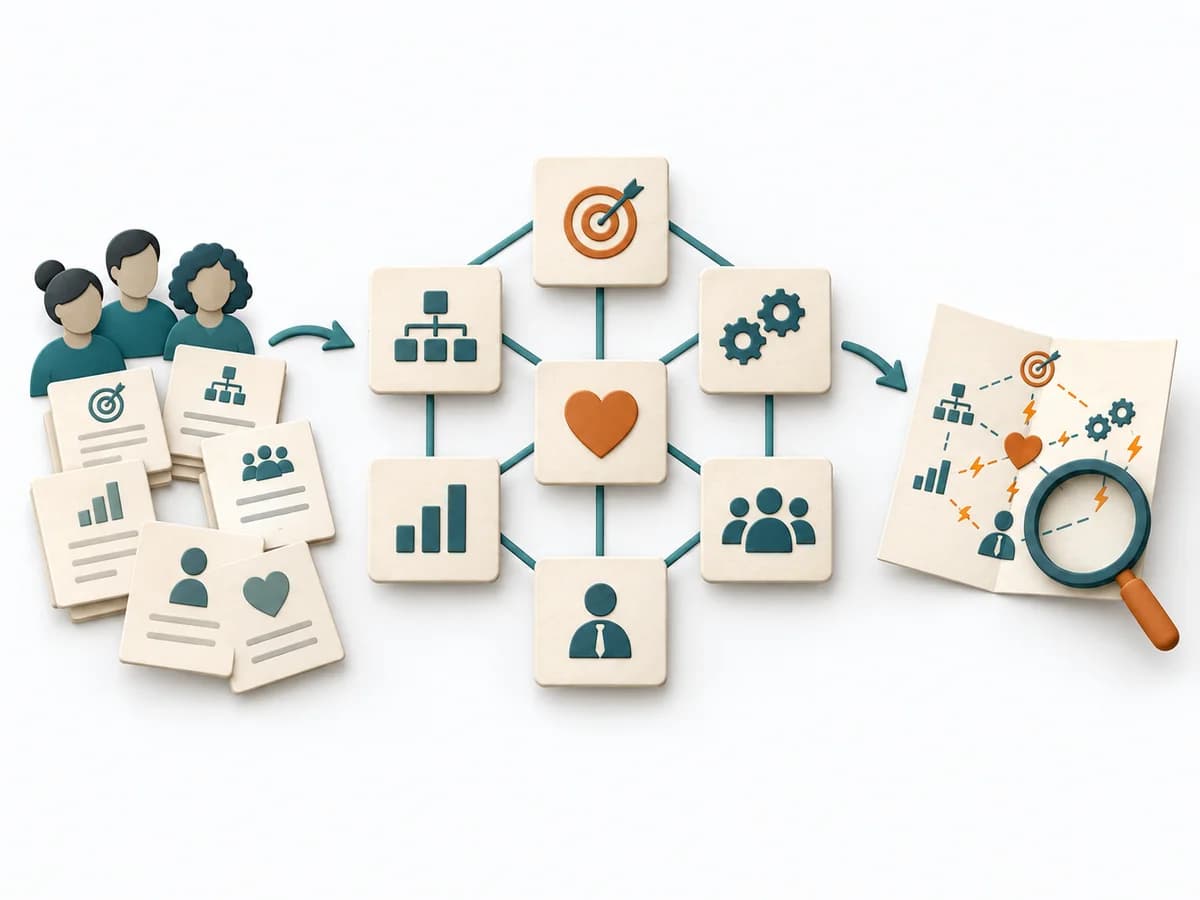 Business Strategy McKinsey 7S |  Facilitation Alignment Mapping |
|---|---|---|---|---|
Purposedifferent | When the target state and benefit need to be clear first, it thinks backward from the desired outcome into the product logic. It sharpens vision, objections, and value proposition before elaboration. | When a product needs a shared direction, it connects target audience, benefit, and business picture in a clear vision. It makes the envisioned future legible for the team. | McKinsey 7S checks whether Strategy, Structure, Systems, Shared Values, Skills, Style, and Staff fit together. Organizational misalignments become visible across multiple levers as a result. | When several people work toward one goal but hold different mental maps, Alignment Mapping makes the discrepancies visible. It arranges goals, assumptions, and priorities so shared direction becomes verifiable. |
Complexitydifferent | Medium | Low | Medium | Medium |
Timedifferent | 4-8 h, mehrere Iterationen | 1-2 h | 2-4 h | 1-2 h |
Participantsdifferent | 2-6 | 2-8 | 3-12 | 4-12 |
Formatdifferent | Workshop + async | Workshop + async | Workshop | Workshop |
Outputdifferent | Future Press Release, FAQ, Vision Statement | Product Vision Board, Vision Statement, Assumptions and Validation Questions | 7S Assessment, Alignment Gaps, Change Actions | Alignment Map, Open Issues, Decision Questions |
Tags1 shared | VisionNarrativeAlignment | VisionCanvasStrategyAlignment | OrganizationStrategyAlignmentChange | AlignmentStakeholdersStrategyFacilitation |