View methods side by side.
Choose up to four methods. Add them using the search and share the comparison by copying its link.
| Criterion | 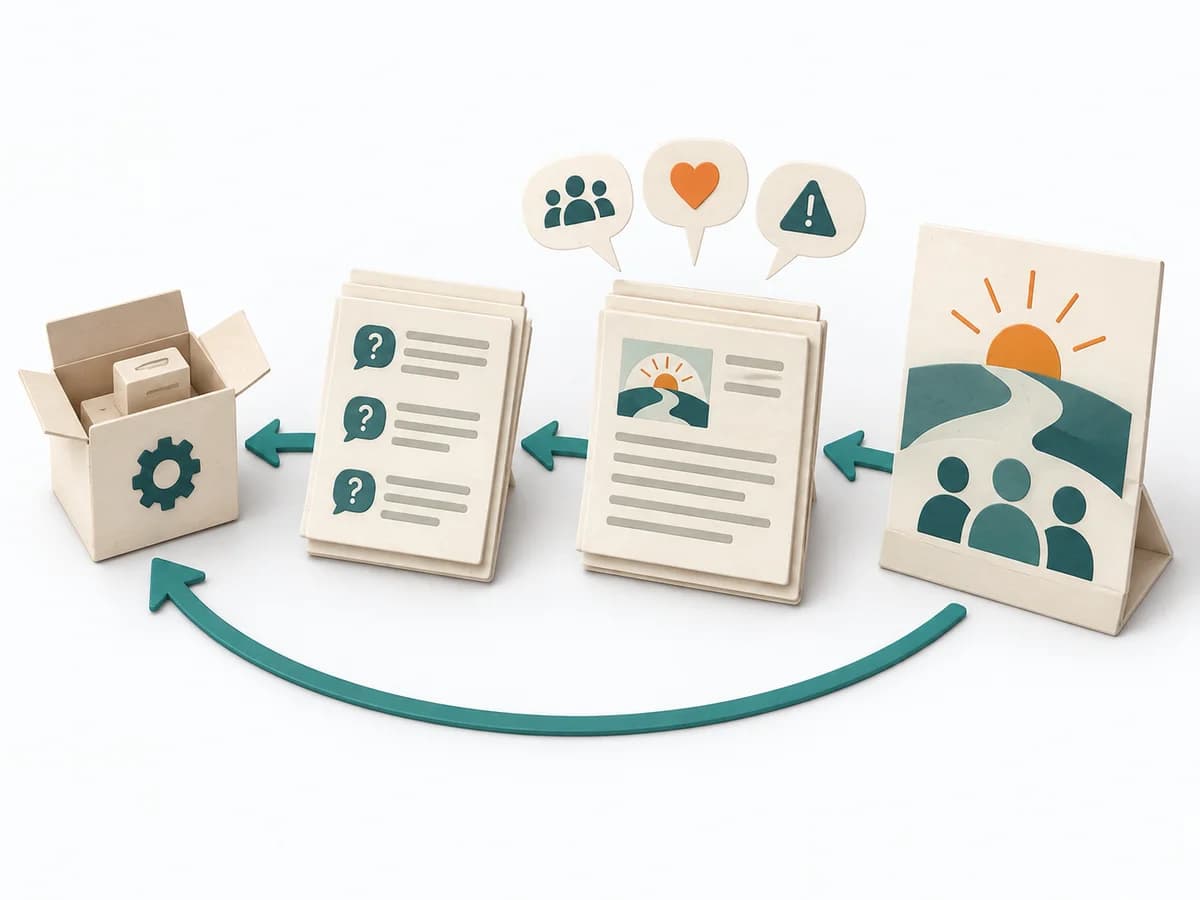 Product Discovery Working Backwards |  UX Design Lean UX Canvas |  Product Discovery Assumption Mapping | 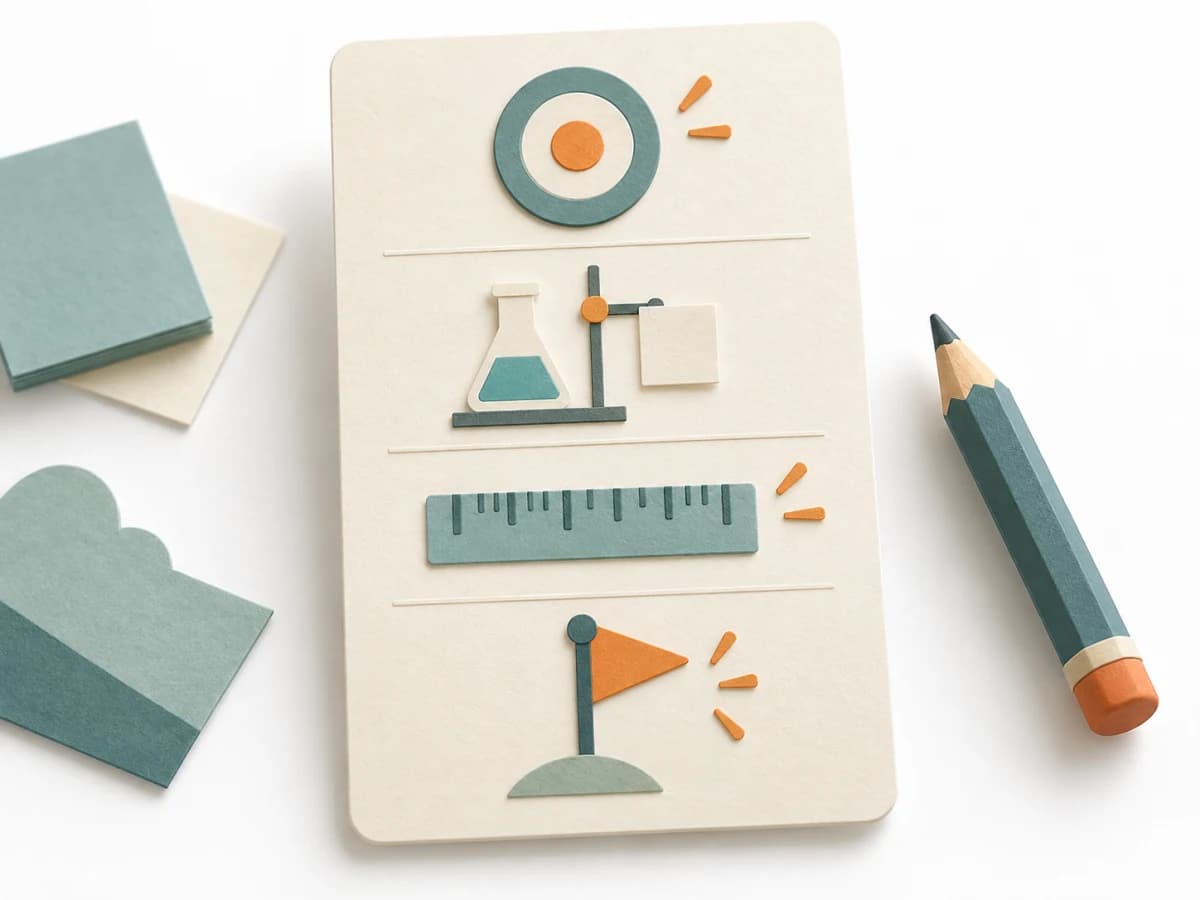 Product Discovery Test Card |
|---|---|---|---|---|
Purposedifferent | When the target state and benefit need to be clear first, it thinks backward from the desired outcome into the product logic. It sharpens vision, objections, and value proposition before elaboration. | The Lean UX Canvas helps clarify user behavior, touchpoints, and concept decisions. It makes assumptions and desired outcomes visible and captures the result as a completed canvas, hypothesis list, and first experiment. | When assumptions still sit unordered in the room, it weighs uncertainty against leverage. It makes visible which hypotheses should be checked first. | The Test Card turns a critical assumption into a testable claim and specifies in advance which result counts as success. |
Complexitydifferent | Medium | Medium | Medium | Low |
Timedifferent | 4-8 h, mehrere Iterationen | 2-3 h | 45-60 min | 20-35 min |
Participantsdifferent | 2-6 | 3-8 | 2-8 | 1-5 |
Formatsame | Workshop + async | Workshop + async | Workshop + async | Workshop + async |
Outputdifferent | Future Press Release, FAQ, Vision Statement | Completed Lean UX Canvas, Hypothesis list, First experiment | Assumption map, Test backlog, Risk ranking | Test Card with a pre-set threshold |
Tagsno overlap | VisionNarrativeAlignment | CanvasHypothesisOutcomesDiscovery | AssumptionsRiskExperimentsValidation | ExperimentsValidationDiscoveryHypothesis |