View methods side by side.
Choose up to four methods. Add them using the search and share the comparison by copying its link.
| Criterion | 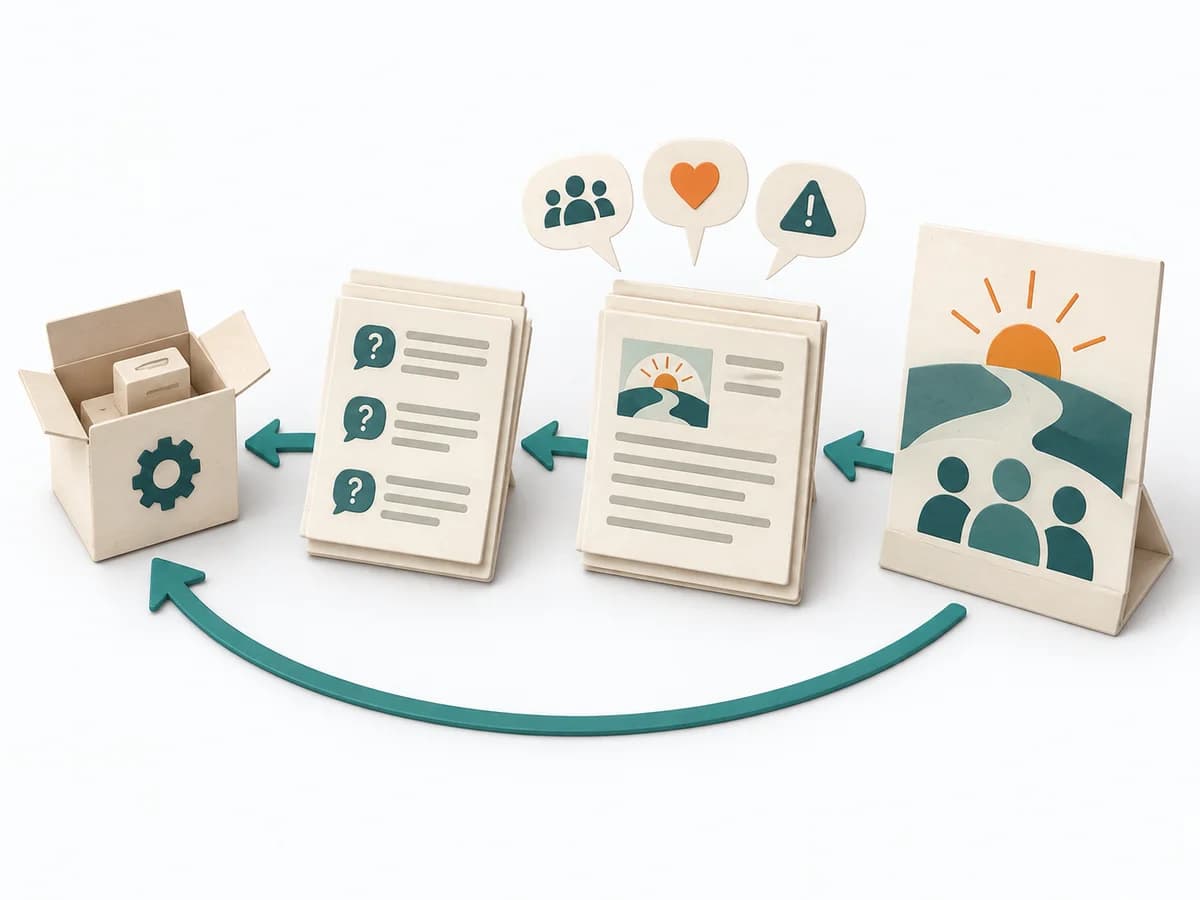 Product Discovery Working Backwards | 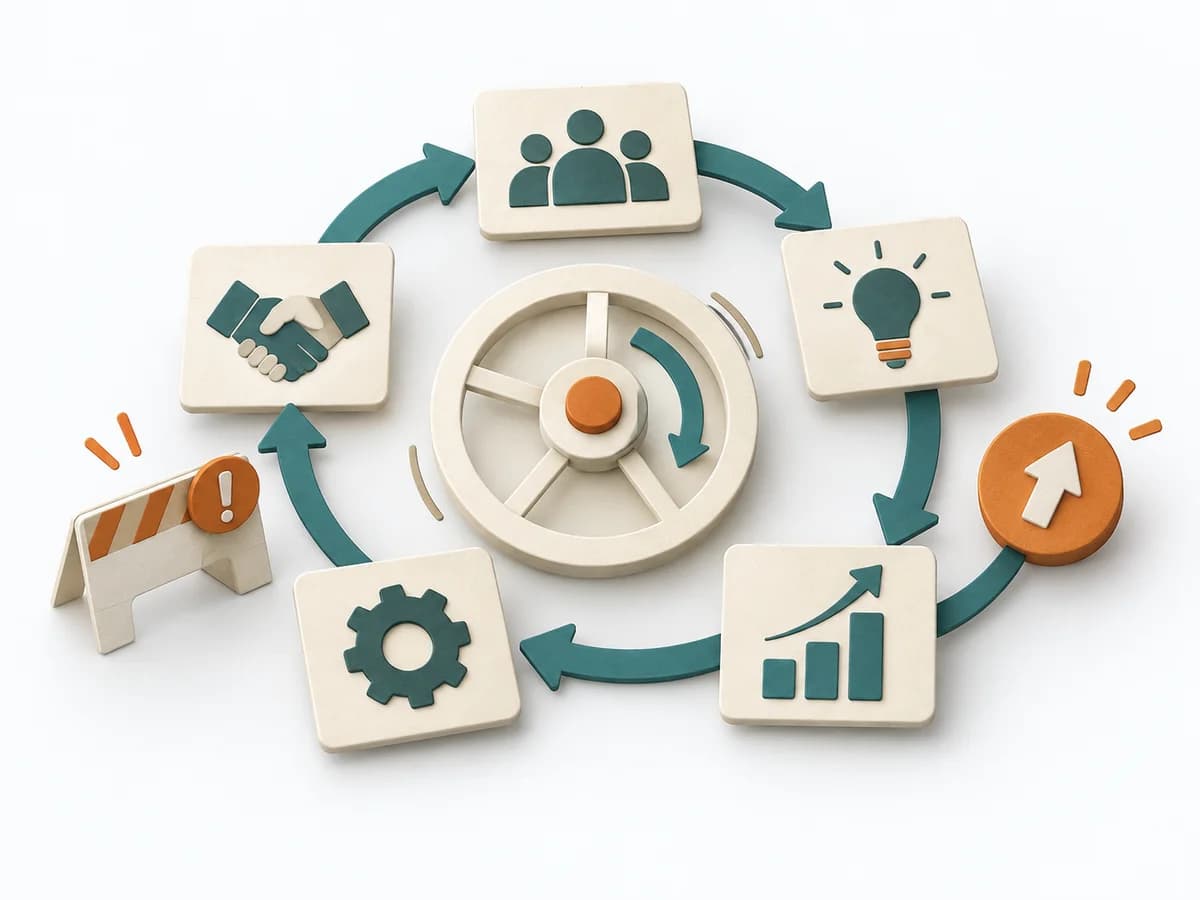 Growth Flywheel |  Product Discovery Fake Door Test |  Product Discovery Experiment Canvas |
|---|---|---|---|---|
Purposedifferent | When the target state and benefit need to be clear first, it thinks backward from the desired outcome into the product logic. It sharpens vision, objections, and value proposition before elaboration. | Growth often breaks down where a reinforcing mechanism builds up too much friction. A Flywheel shows the cycle of value, repetition, and reinforcement meant to sustain growth. | When demand is still unclear, it measures interest in a feature before it is built. It separates real behavior from polite agreement and deliberately keeps build effort small. | When experiments become unreadable after the fact, it arranges hypothesis, signal, and learning goal on a single canvas. It separates problem, assumption, solution, and evidence. The result is captured as a Completed Experiment Canvas and a Success Metric. |
Complexitydifferent | Medium | Medium | Medium | Low |
Timedifferent | 4-8 h, mehrere Iterationen | 60-120 min | 1-5 Tage | 30-60 min |
Participantsdifferent | 2-6 | 3-8 | Nutzertraffic | 1-5 |
Formatdifferent | Workshop + async | Workshop | Async | Workshop + async |
Outputdifferent | Future Press Release, FAQ, Vision Statement | Flywheel Map, Friction Points, Growth Levers, Experiment Backlog | Click Data, Interest Signal, Learning Decision | Completed Experiment Canvas, Success Metric |
Tagsno overlap | VisionNarrativeAlignment | GrowthRetentionConversion | ValidationExperimentsDemandDiscovery | ExperimentsValidationDiscoveryHypothesis |