View methods side by side.
Choose up to four methods. Add them using the search and share the comparison by copying its link.
| Criterion |  Decision Making Wideband Delphi | 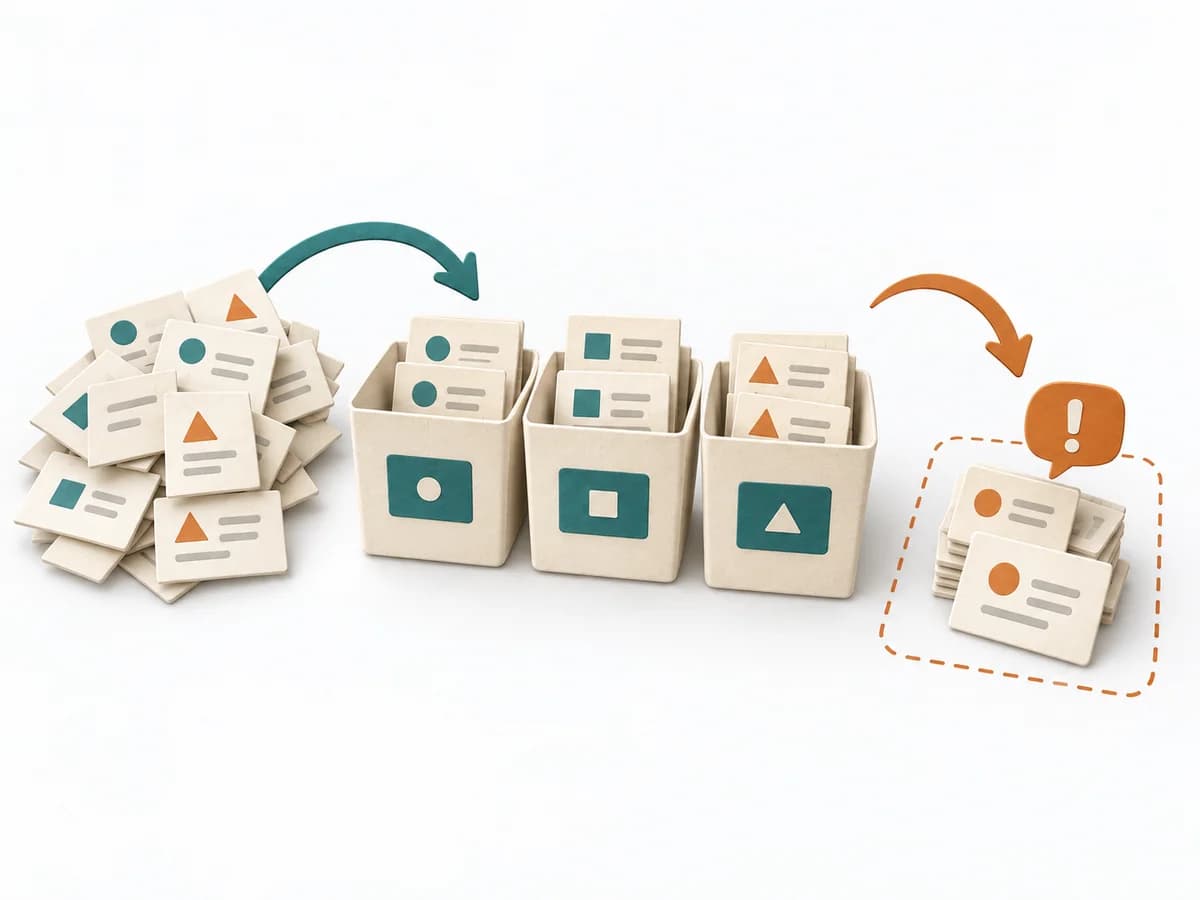 Agile Bucket System |  Systems Thinking Leverage Points |  Decision Making Delphi Method |
|---|---|---|---|---|
Purposedifferent | A single opinion rarely holds up for planning when the future is genuinely uncertain. It separates options, evaluation criteria, and open risks. The result is captured as an Estimate Range, Assumption Log, and Expert Consensus Notes. | When a large batch of work needs a fast, rough estimate, it sorts items into predefined size buckets. It sorts work by value, risk, and delivery ability. The result is captured as a Bucketed Backlog, Relative Estimates, and Split Candidates. | Leverage Points show exactly where interventions in a system produce a disproportionate effect. It draws relationships, patterns, and feedback loops. The result is captured as a leverage map and action strategy. | When knowledge is distributed and direct dominance should be avoided, groups quickly fall under the sway of their opinion leaders. The Delphi Method gathers assessments iteratively and gradually brings expert judgments closer together. |
Complexitydifferent | High | Medium | High | High |
Timedifferent | 1-4 h or multiple rounds | 30-90 min | Half day | 1-4 Wochen |
Participantsdifferent | 4-12 Experten | 3-12 | 3-12 | 6-30 Experten |
Formatdifferent | Workshop + async | Workshop | Workshop | Async |
Outputdifferent | Estimate Range, Assumption Log, Expert Consensus Notes | Bucketed Backlog, Relative Estimates, Split Candidates | Leverage Map, Action Strategy | Expert Forecast, Consensus Range, Assumption Notes |
Tagsno overlap | EstimationExpertsForecasting | EstimationBacklogRelative sizing | Systems thinkingChangeStrategy | ForecastingExpertsDecisionStrategy |