View methods side by side.
Choose up to four methods. Add them using the search and share the comparison by copying its link.
| Criterion | 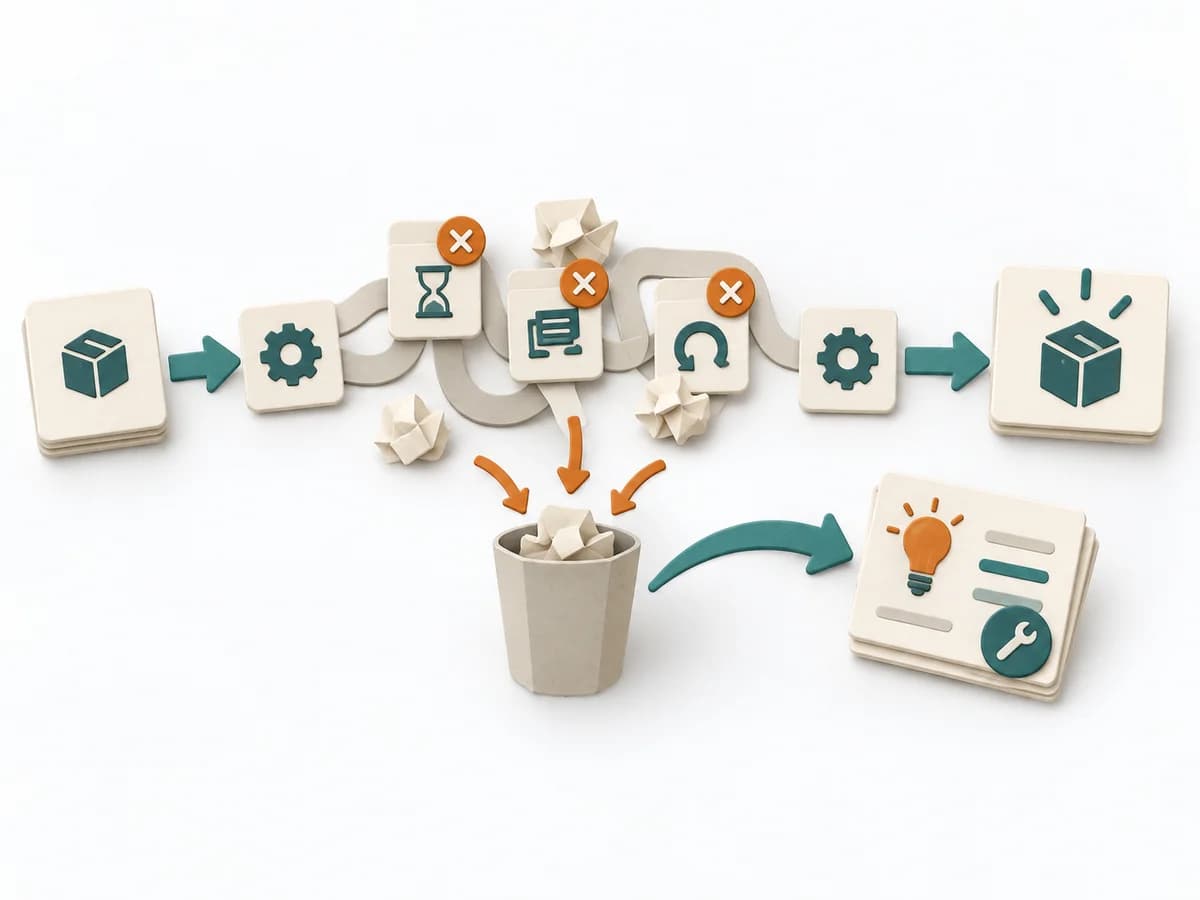 Operations Waste Analysis | 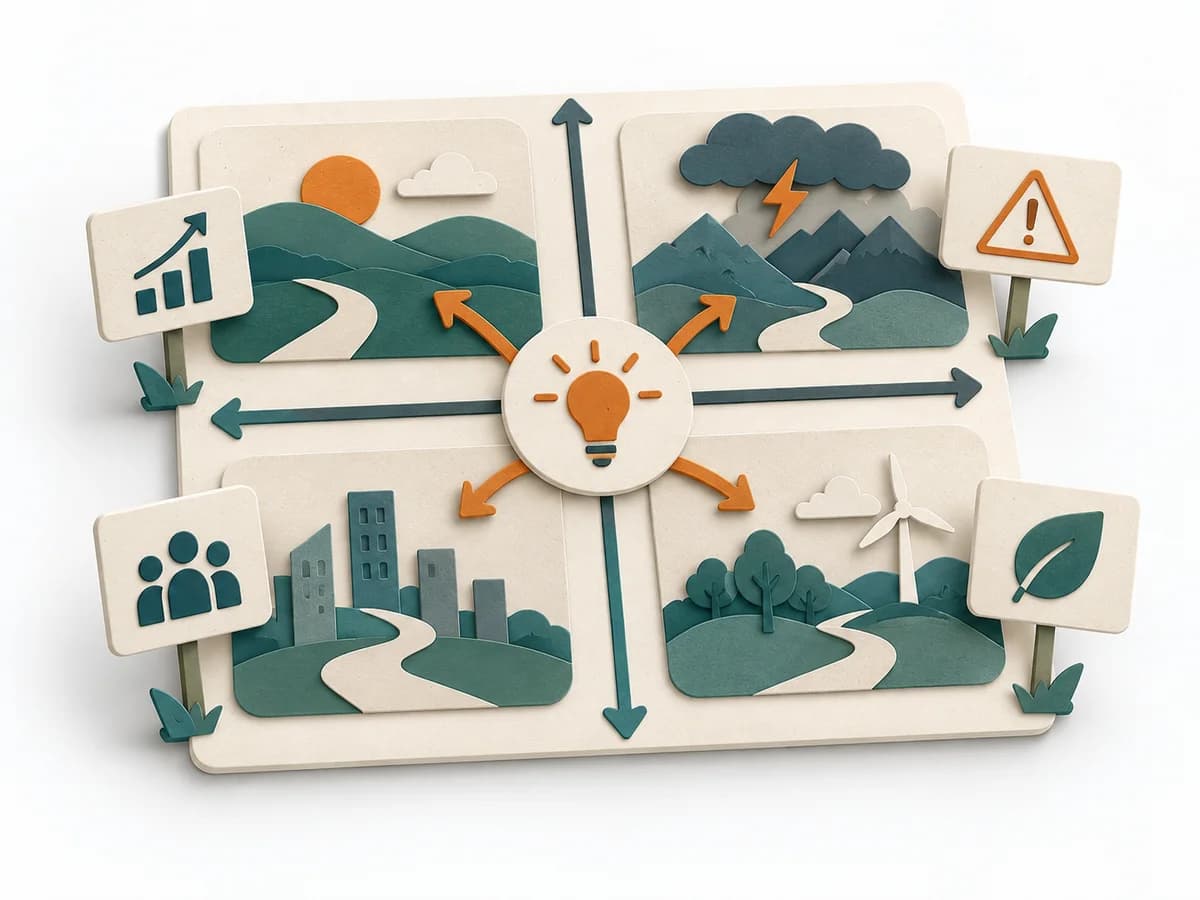 Business Strategy Scenario Planning | 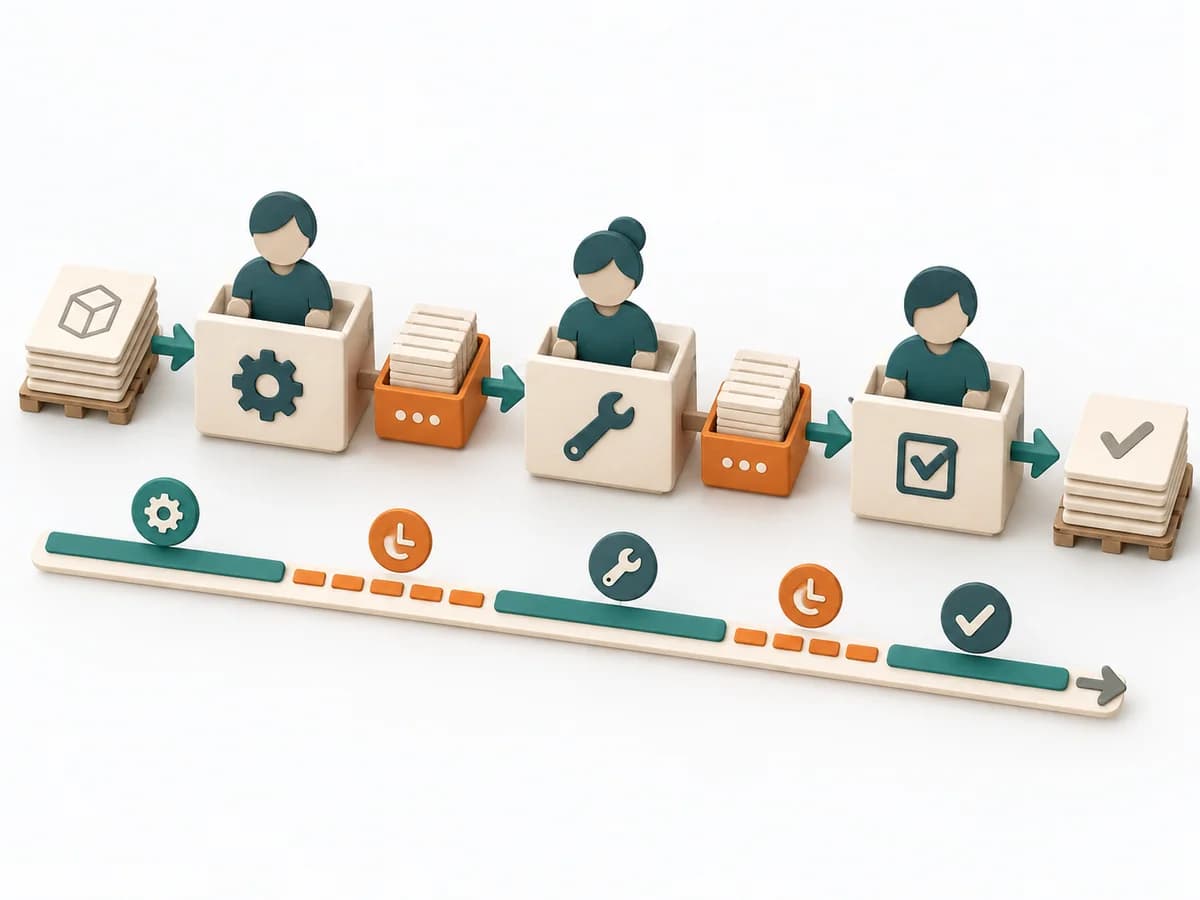 Delivery Value Stream Mapping |  Business Strategy GAP Analysis |
|---|---|---|---|---|
Purposedifferent | For a process that keeps people busy but creates little value, the method exposes waste. It directs attention to unnecessary movement, waiting times, rework, and overdelivery. | Scenario Planning opens the view to several plausible futures instead of a single forecast. The method protects strategies from depending on too narrow an expected path. | When delivery work dissolves into wait times, handoffs, and hidden effort, Value Stream Mapping makes the actual flow visible. The method exposes bottlenecks, idle time, and feedback loops so lead time and improvement levers become tangible. | GAP Analysis compares the current state with a target picture and makes the distance manageable. It becomes useful when, ahead of new initiatives, it must become clear which capabilities, processes, or resources are missing. |
Complexitydifferent | Low | High | Medium | Medium |
Timedifferent | 45-120 min | 0.5-2 Tage | 1-3 h | 1-3 h |
Participantsdifferent | 2-8 | 4-12 | 4-10 | 2-8 |
Formatdifferent | Workshop | Workshop | Workshop | Workshop + async |
Outputdifferent | Waste Map, Prioritized Waste, Improvement Backlog | Scenario Set, Strategic Implications, Robust Options | Current-state map, Future-state map, Bottleneck list | Gap Matrix, Action Plan, Risk Notes |
Tagsno overlap | WasteLeanProcess improvement | StrategyUncertaintyPlanning | LeanFlowWasteDelivery | StrategyAnalysisPlanning |