View methods side by side.
Choose up to four methods. Add them using the search and share the comparison by copying its link.
| Criterion | 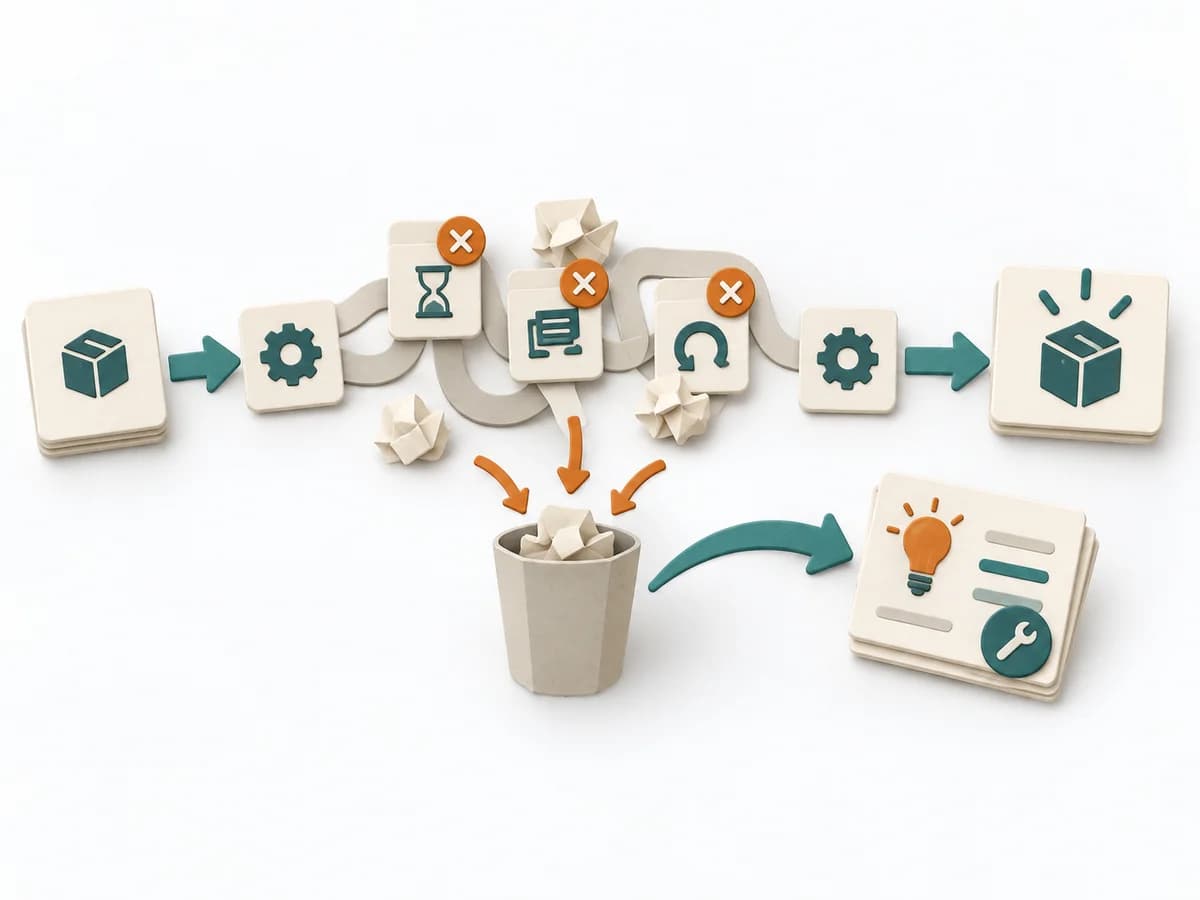 Operations Waste Analysis |  Decision Making OODA Loop |  Decision Making Delphi Method |  Systems Thinking Leverage Points |
|---|---|---|---|---|
Purposedifferent | For a process that keeps people busy but creates little value, the method exposes waste. It directs attention to unnecessary movement, waiting times, rework, and overdelivery. | In dynamic situations, decisions become outdated faster than they can be prepared. The OODA Loop holds observing, orienting, deciding, and acting together as a recurring rhythm so reaction does not slide into inertia. | When knowledge is distributed and direct dominance should be avoided, groups quickly fall under the sway of their opinion leaders. The Delphi Method gathers assessments iteratively and gradually brings expert judgments closer together. | Leverage Points show exactly where interventions in a system produce a disproportionate effect. It draws relationships, patterns, and feedback loops. The result is captured as a leverage map and action strategy. |
Complexitydifferent | Low | Medium | High | High |
Timedifferent | 45-120 min | 15-60 min je Zyklus | 1-4 Wochen | Half day |
Participantsdifferent | 2-8 | 1-8 | 6-30 Experten | 3-12 |
Formatdifferent | Workshop | Workshop + async | Async | Workshop |
Outputdifferent | Waste Map, Prioritized Waste, Improvement Backlog | Situation Assessment, Decision Loop, Action Updates | Expert Forecast, Consensus Range, Assumption Notes | Leverage Map, Action Strategy |
Tagsno overlap | WasteLeanProcess improvement | DecisionChangeLearningStrategy | ForecastingExpertsDecisionStrategy | Systems thinkingChangeStrategy |