View methods side by side.
Choose up to four methods. Add them using the search and share the comparison by copying its link.
| Criterion | 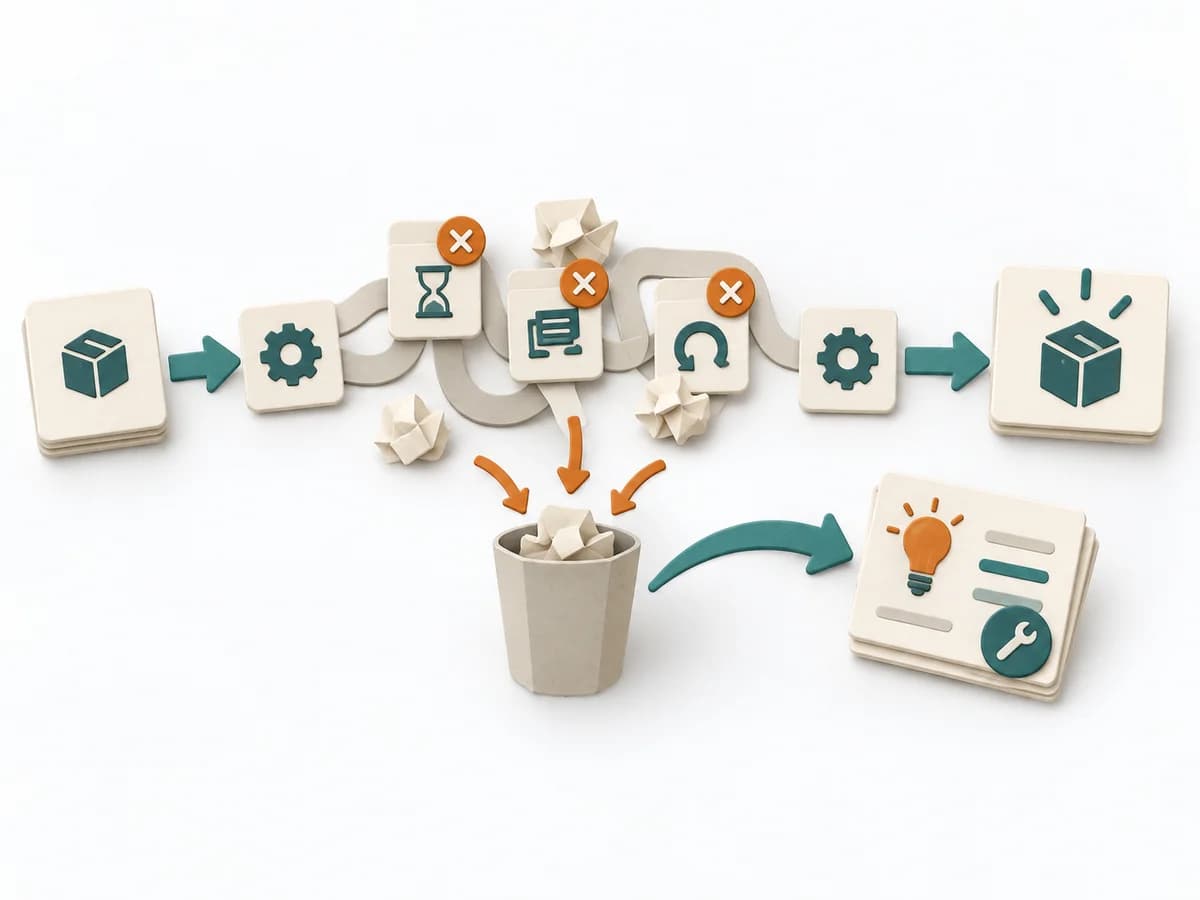 Operations Waste Analysis | 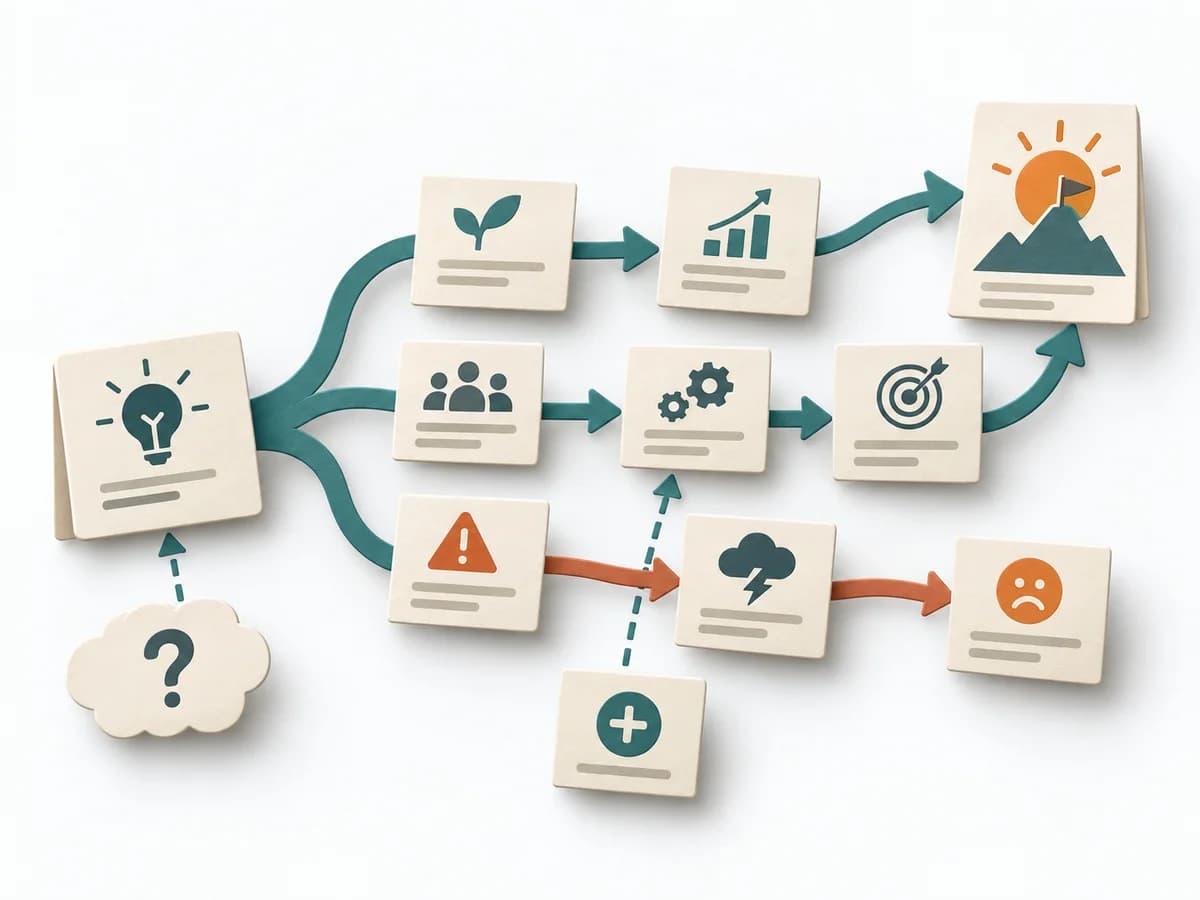 Systems Thinking Future Reality Tree | 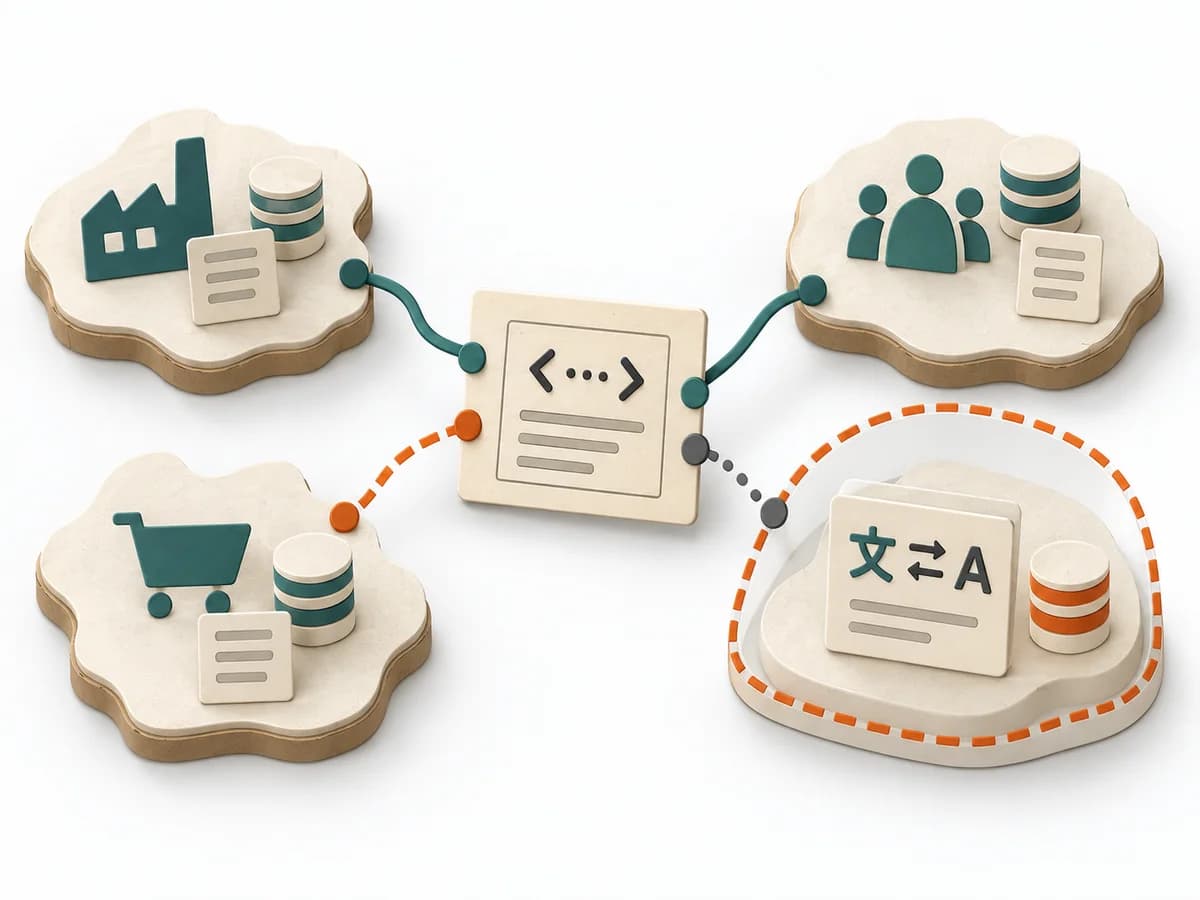 Domain Modeling Context Map | 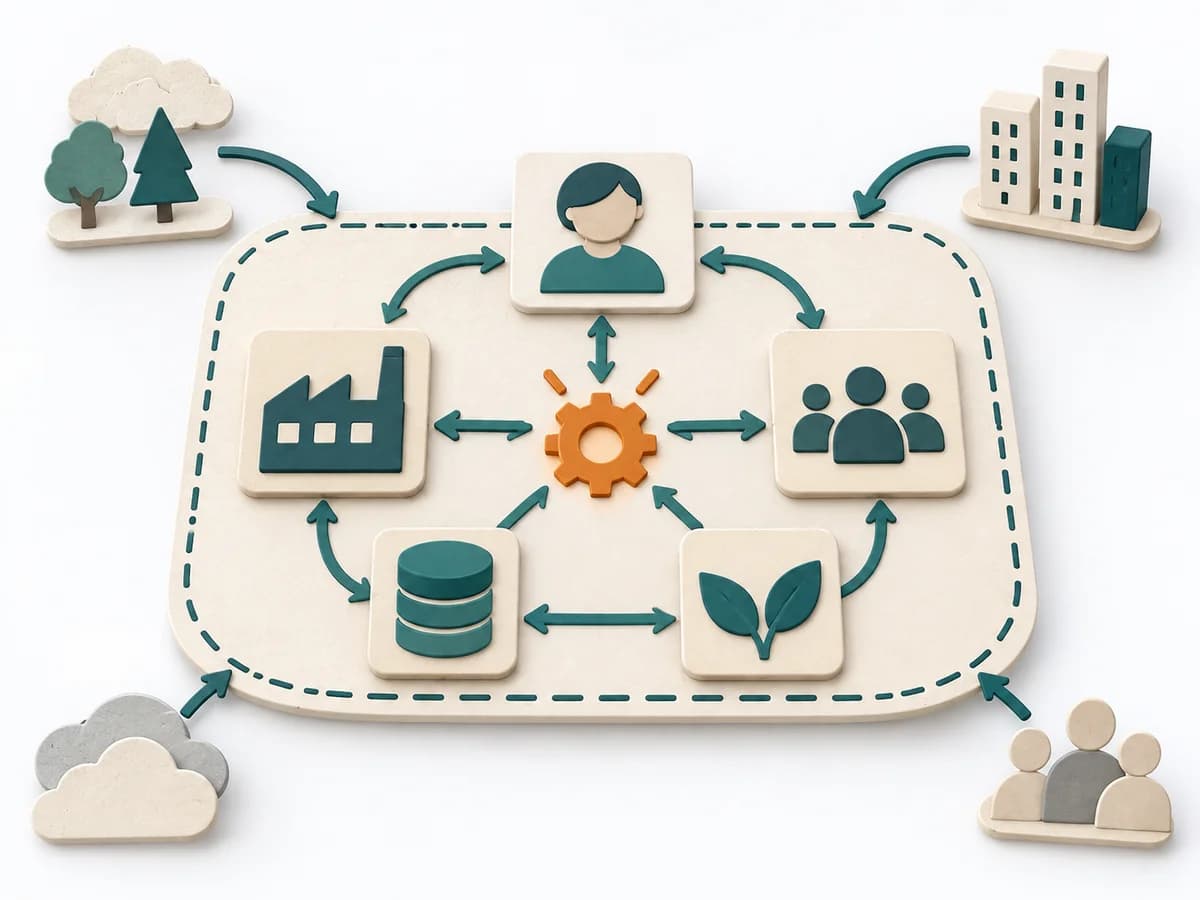 Systems Thinking Systems Mapping |
|---|---|---|---|---|
Purposedifferent | For a process that keeps people busy but creates little value, the method exposes waste. It directs attention to unnecessary movement, waiting times, rework, and overdelivery. | A Future Reality Tree shows how desired actions are meant to lead to a better system state. The method checks whether a path of change holds together logically before time flows into implementation. | When several contexts need to talk to each other, it makes their relationships and dependencies legible. It helps sort integration pressure and responsibilities across system boundaries. | Systems Mapping arranges elements, relationships, and boundaries so a complex field becomes legible at a glance. The overview stabilizes the overall picture before detail work or steering begins. |
Complexitydifferent | Low | High | Medium | Medium |
Timedifferent | 45-120 min | 2-4 h | 1-3 h | 1-3 h |
Participantsdifferent | 2-8 | 3-8 | 2-8 | 3-12 |
Formatdifferent | Workshop | Workshop | Workshop + async | Workshop + async |
Outputdifferent | Waste Map, Prioritized Waste, Improvement Backlog | Future Reality Tree, Negative Branches, Assumption List, Improved Injections | Context Map, Integration Patterns, Boundary Notes | System Map, Dependencies, Leverage Points |
Tagsno overlap | WasteLeanProcess improvement | Theory of ConstraintsSystems thinkingChange | Domain-Driven DesignBoundariesStrategy | Systems thinkingMappingBoundariesChange |