View methods side by side.
Choose up to four methods. Add them using the search and share the comparison by copying its link.
| Criterion | 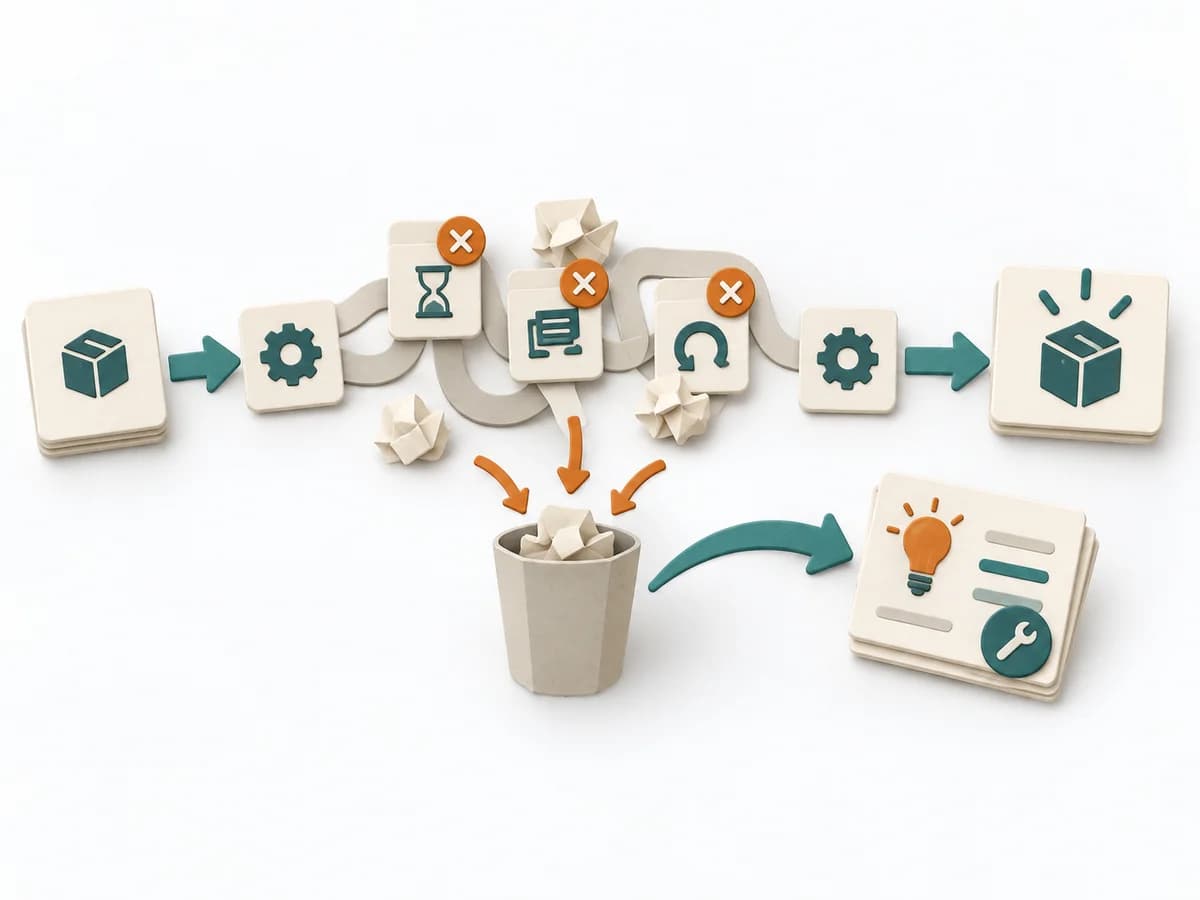 Operations Waste Analysis |  Domain Modeling Context Map | 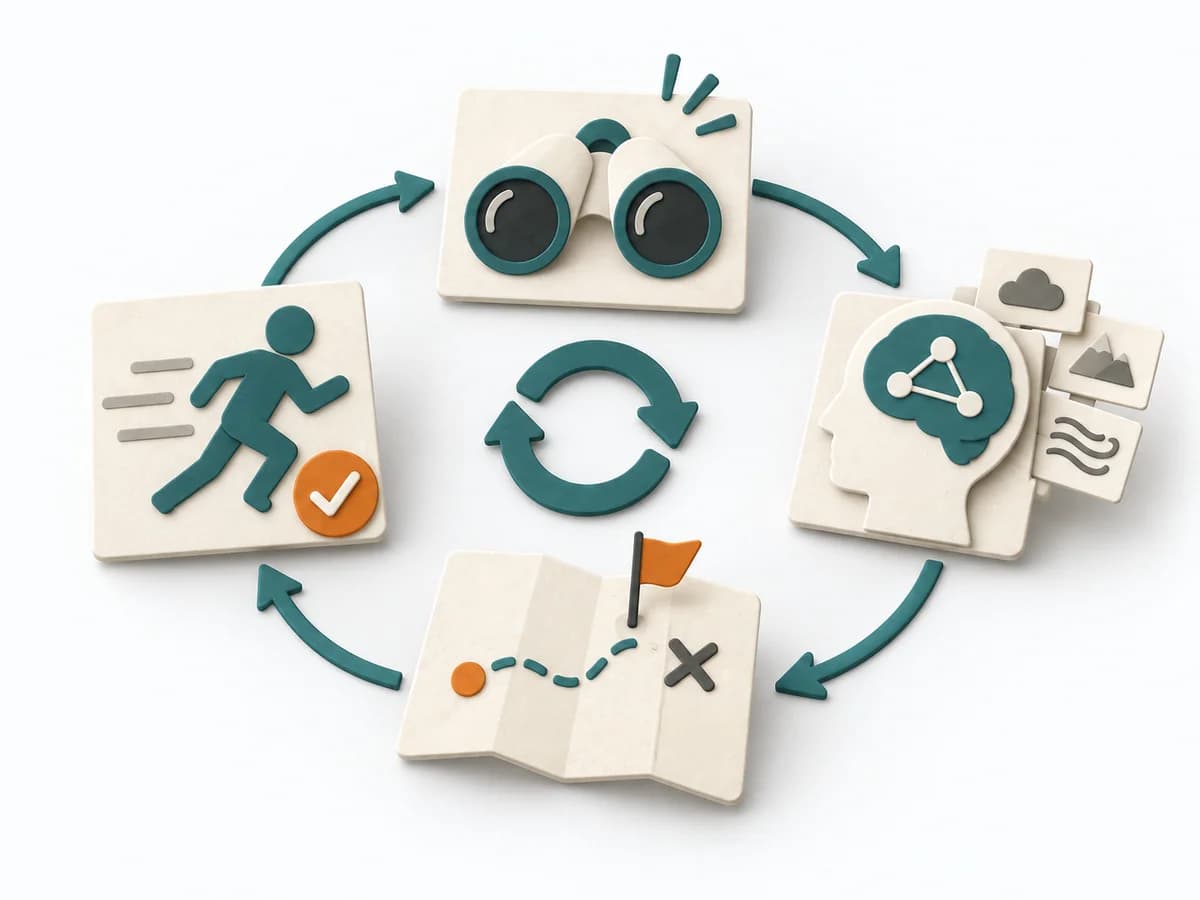 Decision Making OODA Loop |  Product Strategy DIBB |
|---|---|---|---|---|
Purposedifferent | For a process that keeps people busy but creates little value, the method exposes waste. It directs attention to unnecessary movement, waiting times, rework, and overdelivery. | When several contexts need to talk to each other, it makes their relationships and dependencies legible. It helps sort integration pressure and responsibilities across system boundaries. | In dynamic situations, decisions become outdated faster than they can be prepared. The OODA Loop holds observing, orienting, deciding, and acting together as a recurring rhythm so reaction does not slide into inertia. | DIBB helps clarify target groups, value, goals, and priorities by making the logic behind a decision explicit. It captures results as a DIBB document, belief list, bet list, and learning report. |
Complexitydifferent | Low | Medium | Medium | Low |
Timedifferent | 45-120 min | 1-3 h | 15-60 min je Zyklus | 1-2 h |
Participantsdifferent | 2-8 | 2-8 | 1-8 | 2-8 |
Formatdifferent | Workshop | Workshop + async | Workshop + async | Workshop + async |
Outputdifferent | Waste Map, Prioritized Waste, Improvement Backlog | Context Map, Integration Patterns, Boundary Notes | Situation Assessment, Decision Loop, Action Updates | DIBB document, Belief list, Bet list, Learning report |
Tagsno overlap | WasteLeanProcess improvement | Domain-Driven DesignBoundariesStrategy | DecisionChangeLearningStrategy | StrategyDecisionAssumptionsHypothesis |