View methods side by side.
Choose up to four methods. Add them using the search and share the comparison by copying its link.
| Criterion |  Systems Thinking Wardley Mapping |  Systems Thinking Evaporating Cloud | 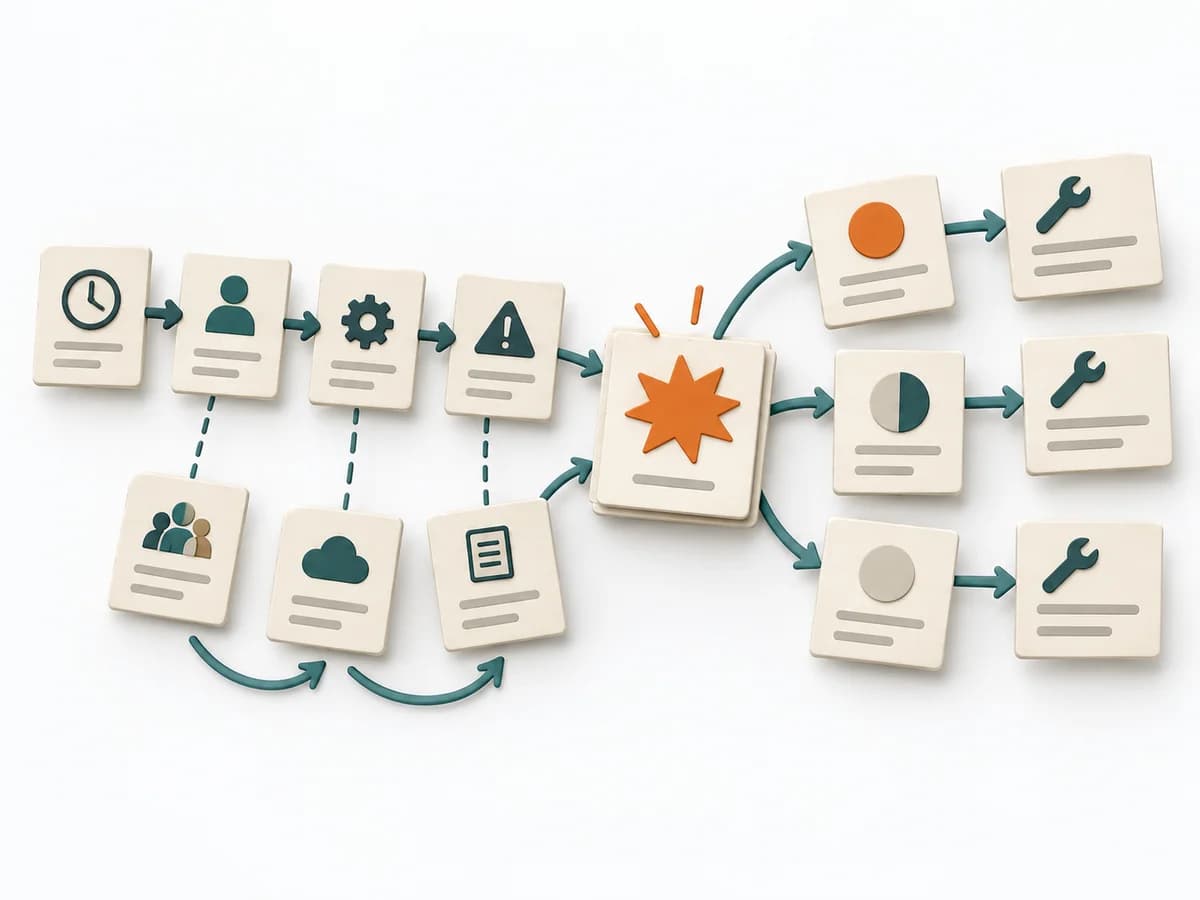 Operations Causal Factor Analysis |  Operations 5 Whys |
|---|---|---|---|---|
Purposedifferent | Wardley Mapping makes visible where an offering stands today and where it can evolve. The method connects user need, value chain, and evolution stages into a strategic basis for platform, build, or buy decisions. | The method makes visible why two seemingly incompatible demands arise and which assumption must be tested to resolve the conflict. | For an event with a complicated course, the method breaks down the contributing factors along the timeline. It shows how conditions, decisions, and reactions together produce a course of events. | For a single, hard-to-explain deviation, the method exposes the causal chain behind the visible symptom. It keeps the cause open until a controllable condition emerges instead of a mere description. |
Complexitydifferent | Medium | Medium | High | Low |
Timedifferent | 1-3 h | 60-120 min | 2-6 h | 15-30 min |
Participantsdifferent | 2-10 | 2-8 | 3-10 | 2-6 |
Formatdifferent | Workshop + async | Workshop | Workshop + async | Workshop |
Outputdifferent | Wardley Map, Strategic Options, Evolution Notes | Conflict Cloud, Assumption List, Breakthrough Ideas, Next Experiments | Event Timeline, Causal Factor Chart, Cause List, Corrective Actions | Root cause notes, Countermeasures |
Tagsno overlap | StrategySystems thinkingDynamics | Theory of ConstraintsAssumptionsSystems thinking | CausalityIncidentRoot causeTimeline | Root causeIncidentLeanProblem solving |