View methods side by side.
Choose up to four methods. Add them using the search and share the comparison by copying its link.
| Criterion | 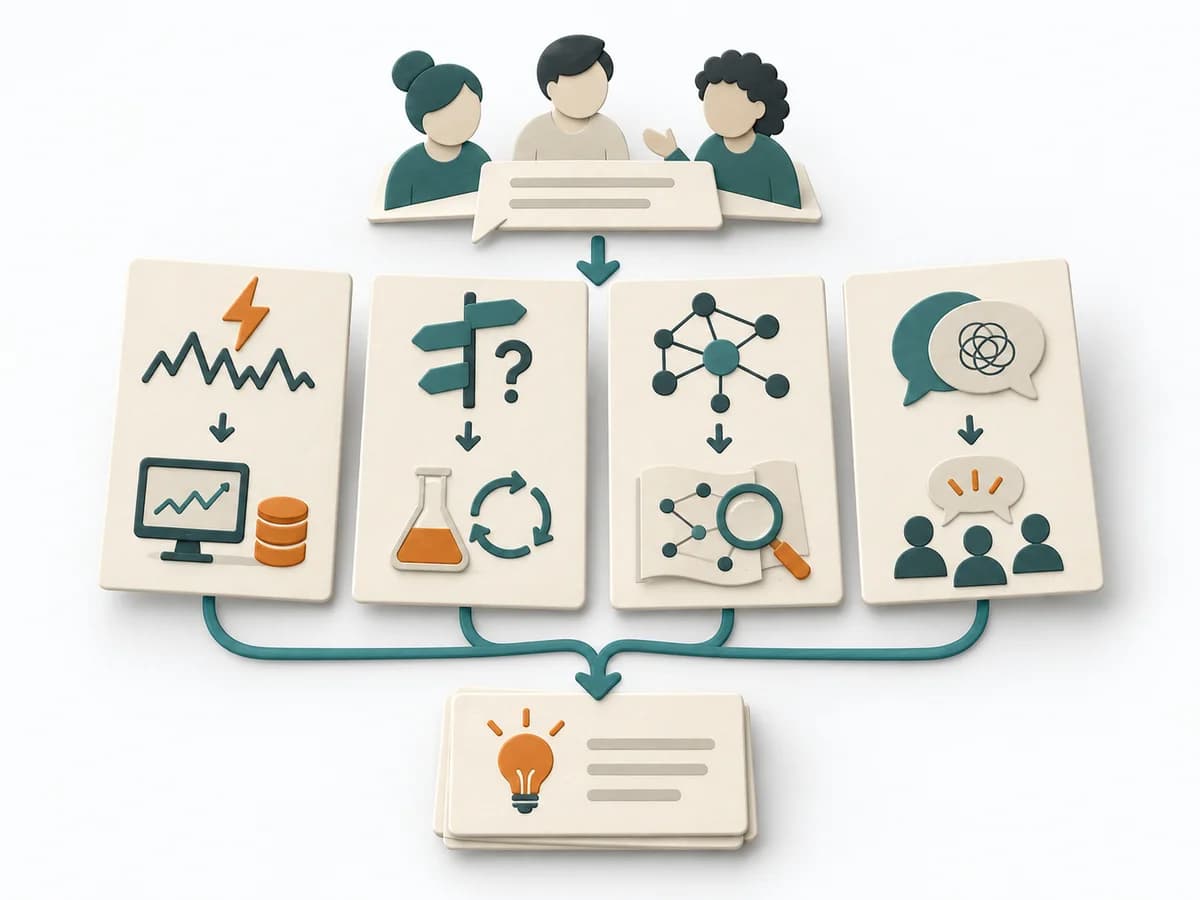 Systems Thinking VUCA Scan | 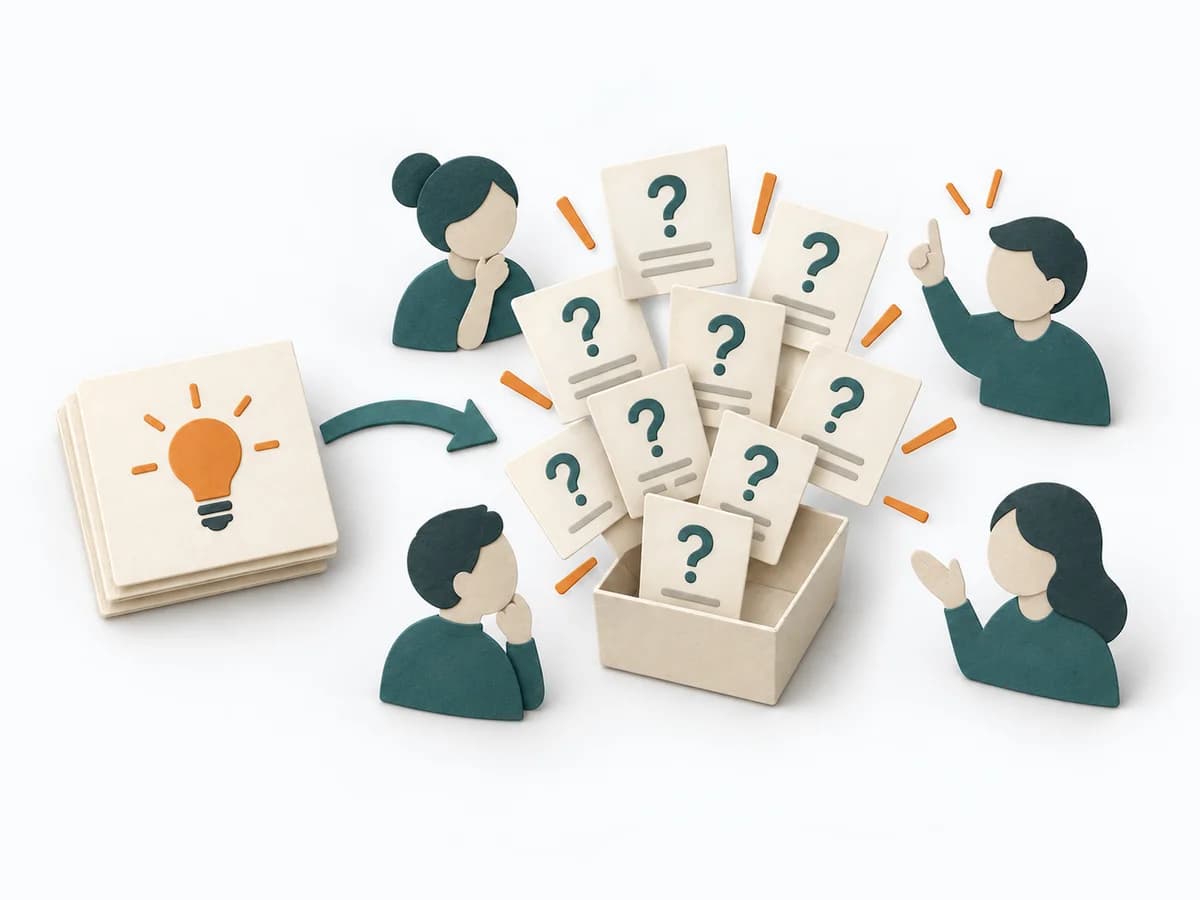 Facilitation Question Burst |  Decision Making Delphi Method |  Decision Making Argument Mapping |
|---|---|---|---|---|
Purposedifferent | The VUCA Scan helps read difficult situations more precisely. Instead of treating unclarity as generally complicated, the method separates fast change, missing knowledge, systemic entanglement, and ambiguous interpretation. | When a problem gets covered up too quickly with answers, Question Burst puts the better question at the center. The format opens the thinking space before the group commits to an interpretation. | When knowledge is distributed and direct dominance should be avoided, groups quickly fall under the sway of their opinion leaders. The Delphi Method gathers assessments iteratively and gradually brings expert judgments closer together. | When statements, evidence, and counterarguments get mixed up, a debate quickly loses its structure. Argument Mapping breaks a thesis down into its reasoning and makes visible what it really rests on. |
Complexitydifferent | Low | Low | High | Medium |
Timedifferent | 30-90 min | 15-30 min | 1-4 Wochen | 1-3 h |
Participantsdifferent | 1-10 | 2-8 | 6-30 Experten | 1-8 |
Formatdifferent | Workshop + async | Workshop | Async | Workshop + async |
Outputdifferent | VUCA Map, Response Options, Signal and Learning Plan | Question List, Reframed Challenge, Learning Prompts | Expert Forecast, Consensus Range, Assumption Notes | Argument Map, Evidence Gaps, Decision Rationale |
Tagsno overlap | SensemakingUncertaintyComplexityStrategyForesight | QuestionsReframingFacilitationSensemaking | ForecastingExpertsDecisionStrategy | SensemakingDecisionRationale |