View methods side by side.
Choose up to four methods. Add them using the search and share the comparison by copying its link.
| Criterion | 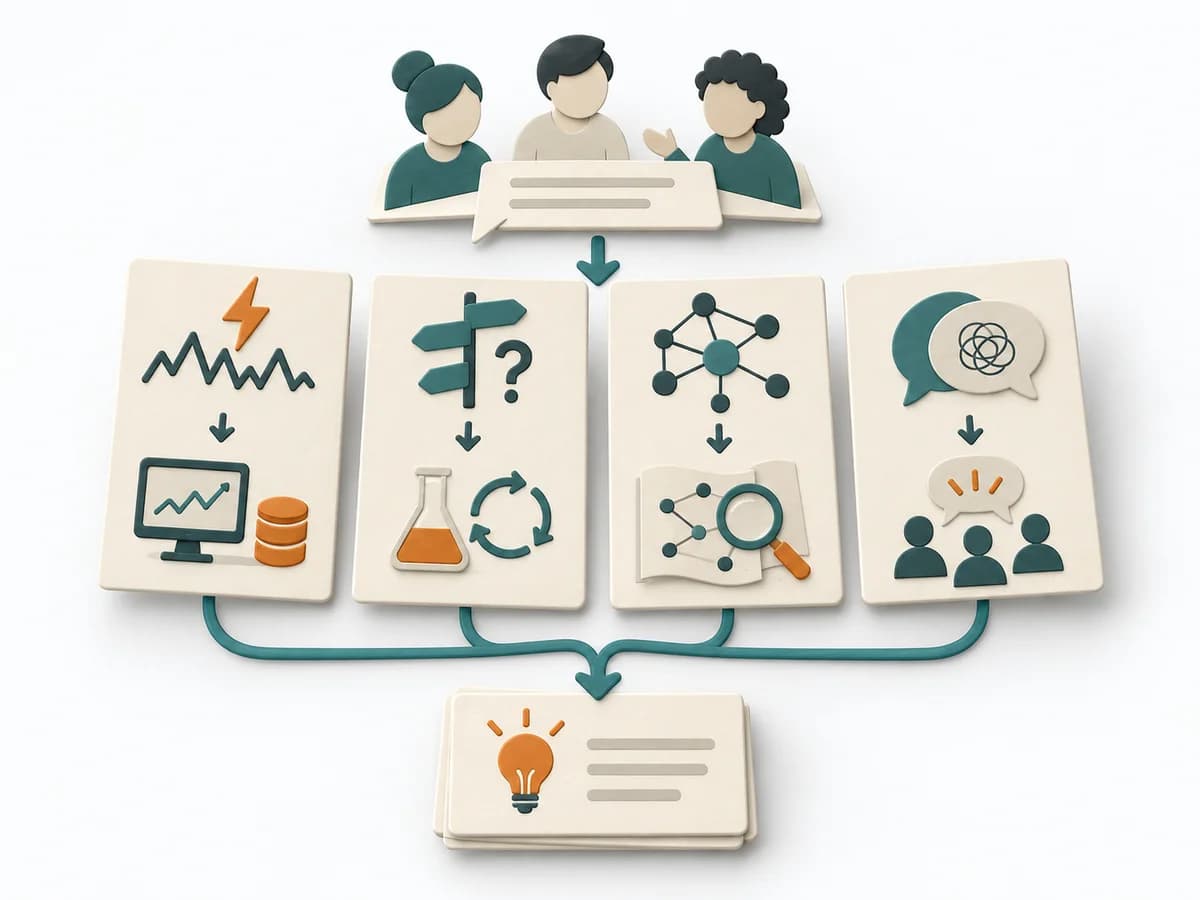 Systems Thinking VUCA Scan | 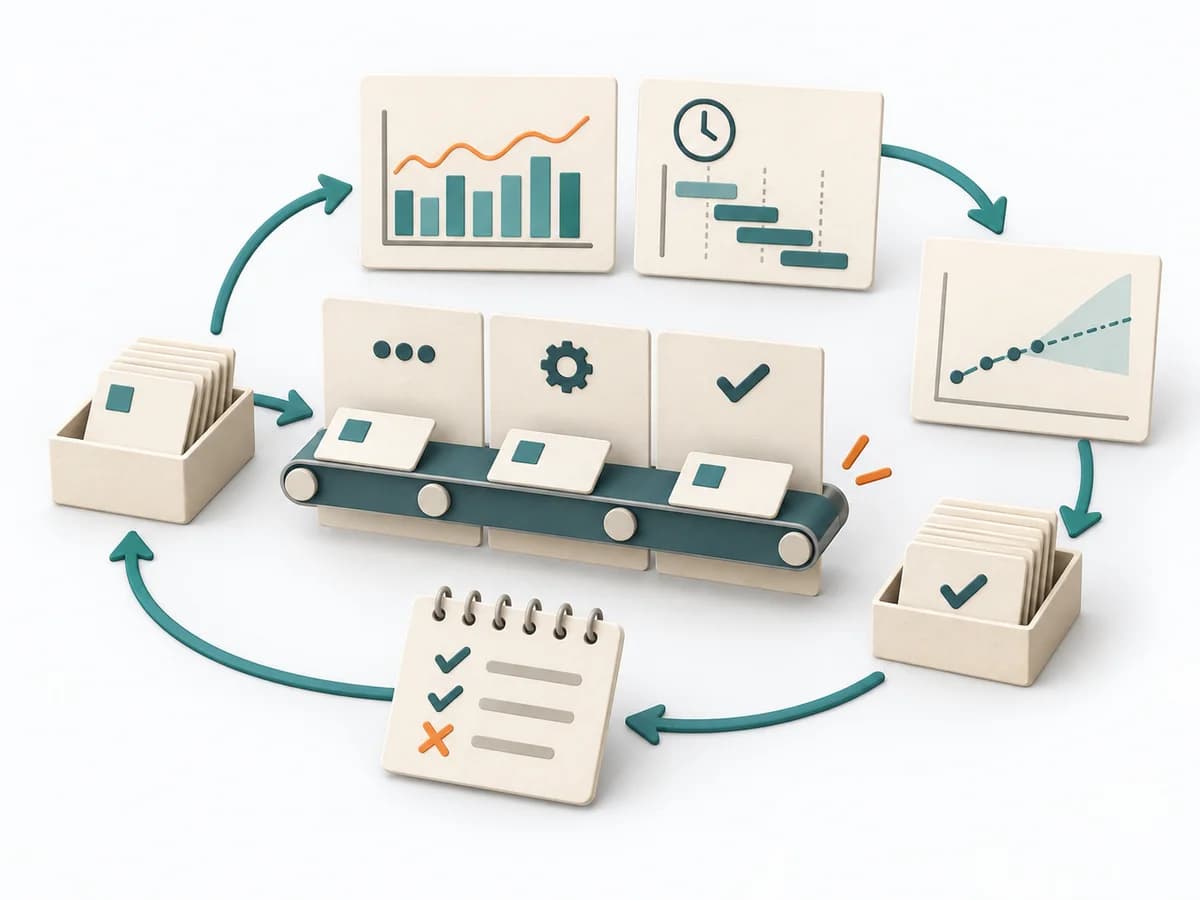 Agile NoEstimates |  Decision Making Argument Mapping | 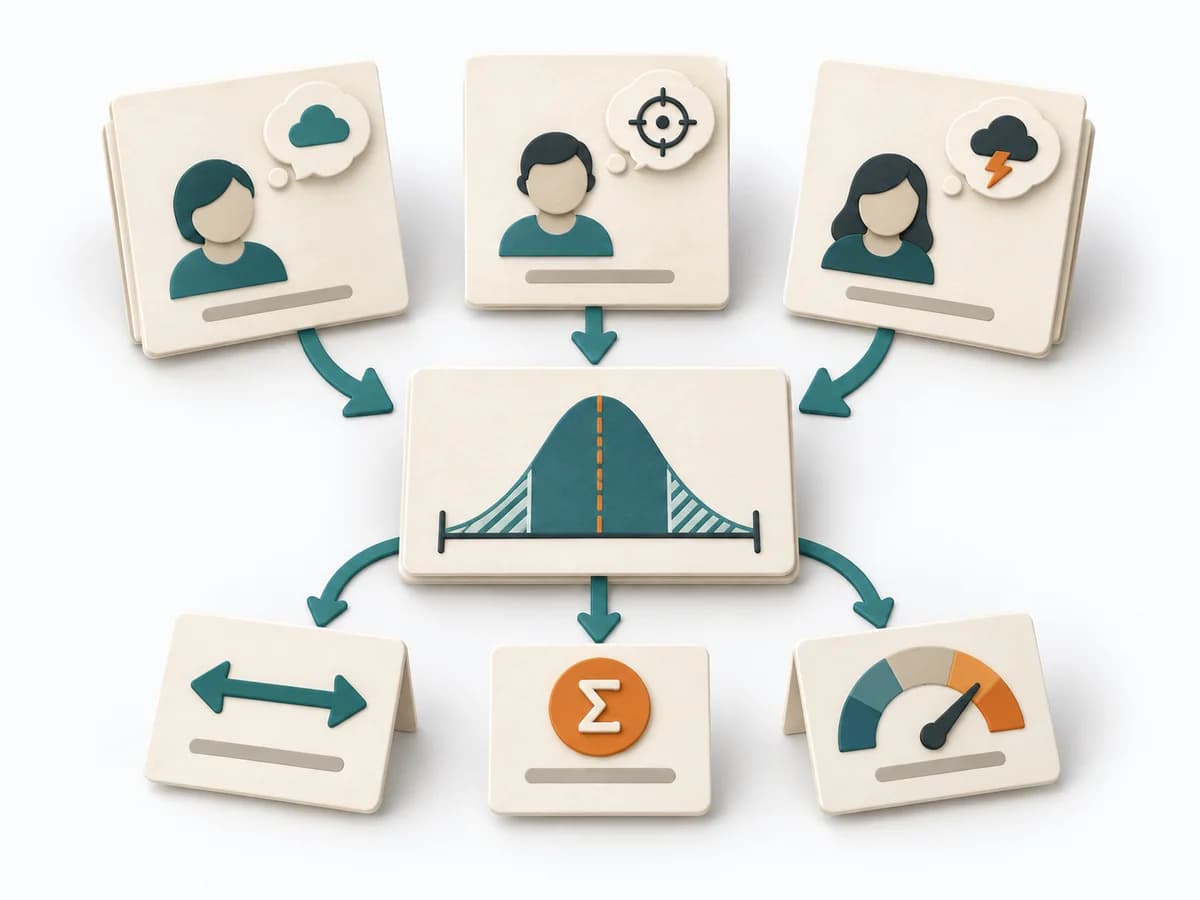 Decision Making Three-Point Estimation |
|---|---|---|---|---|
Purposedifferent | The VUCA Scan helps read difficult situations more precisely. Instead of treating unclarity as generally complicated, the method separates fast change, missing knowledge, systemic entanglement, and ambiguous interpretation. | When estimating slows a team down more than it helps, it shifts the focus to flow, small slices, and real lead time. It sorts work by value, risk, and delivery ability. The result is captured as Throughput Data, Flow Forecast, and Slicing Rules. | When statements, evidence, and counterarguments get mixed up, a debate quickly loses its structure. Argument Mapping breaks a thesis down into its reasoning and makes visible what it really rests on. | A single estimate for effort, time, or risk often looks too smooth for the real uncertainty behind it. It separates options, evaluation criteria, and open risks. The result is captured as a Three-Point Estimate, Risk Range, and Assumption Notes. |
Complexitydifferent | Low | Medium | Medium | Medium |
Timedifferent | 30-90 min | laufend | 1-3 h | 10-30 min je Item |
Participantsdifferent | 1-10 | 2-12 | 1-8 | 1-8 |
Formatsame | Workshop + async | Workshop + async | Workshop + async | Workshop + async |
Outputdifferent | VUCA Map, Response Options, Signal and Learning Plan | Throughput Data, Flow Forecast, Slicing Rules | Argument Map, Evidence Gaps, Decision Rationale | Three-Point Estimate, Risk Range, Assumption Notes |
Tagsno overlap | SensemakingUncertaintyComplexityStrategyForesight | EstimationForecastingFlow | SensemakingDecisionRationale | EstimationUncertaintyForecasting |