View methods side by side.
Choose up to four methods. Add them using the search and share the comparison by copying its link.
| Criterion |  Systems Thinking VUCA Scan | 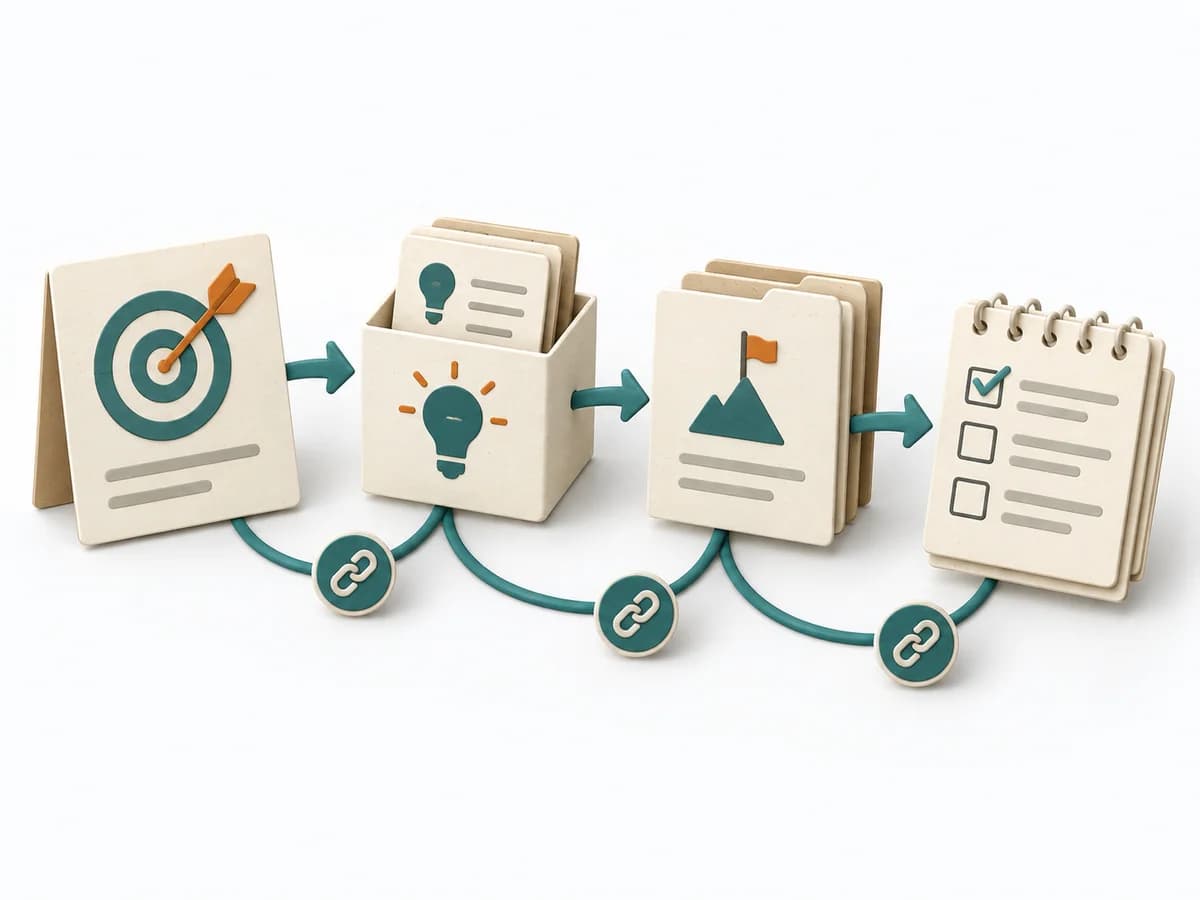 Product Strategy GIST Planning | 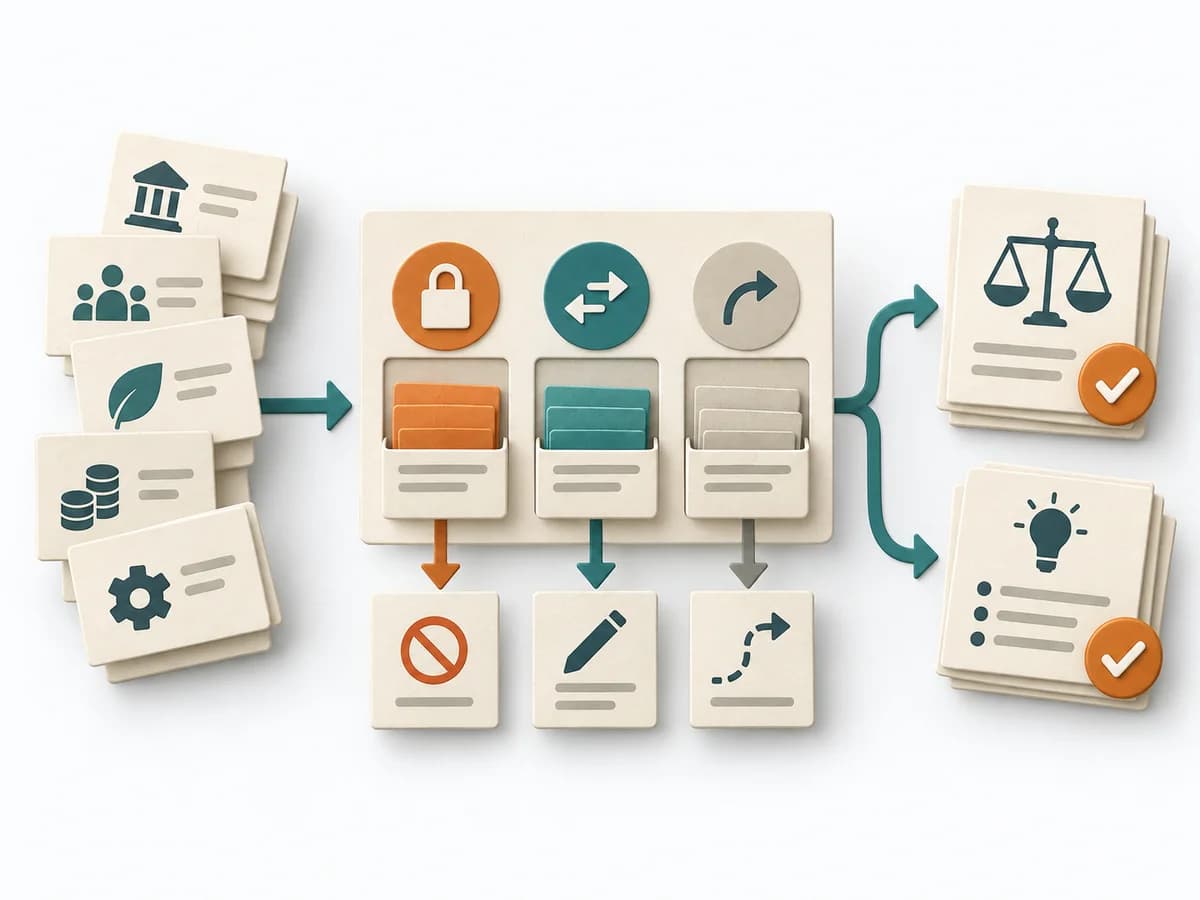 Decision Making Constraint Analysis |  Business Strategy Scenario Planning |
|---|---|---|---|---|
Purposedifferent | The VUCA Scan helps read difficult situations more precisely. Instead of treating unclarity as generally complicated, the method separates fast change, missing knowledge, systemic entanglement, and ambiguous interpretation. | GIST Planning helps clarify target groups, value, goals, and priorities. It links customer value, product logic, and decision priorities, and captures the result as goals, an idea bank, and a step-project list. | When an initiative stalls, the limit often lies not in the idea but in hard or soft boundary conditions. Constraint Analysis separates these limits and shows which of them can actually be shaped. | Scenario Planning opens the view to several plausible futures instead of a single forecast. The method protects strategies from depending on too narrow an expected path. |
Complexitydifferent | Low | Medium | Low | High |
Timedifferent | 30-90 min | Wochen bis Monate je Goal | 30-90 min | 0.5-2 Tage |
Participantsdifferent | 1-10 | 3-10 | 2-8 | 4-12 |
Formatdifferent | Workshop + async | Workshop + async | Workshop + async | Workshop |
Outputdifferent | VUCA Map, Response Options, Signal and Learning Plan | Goals, Idea bank, Step-project list, Tasks, Learning reports | Constraint List, Hard/Soft Classification, Option Impact Notes, Decision Boundaries | Scenario Set, Strategic Implications, Robust Options |
Tagsno overlap | SensemakingUncertaintyComplexityStrategyForesight | RoadmapOutcomesPlanningExperiments | ConstraintsDecisionPlanningOptions | StrategyUncertaintyPlanning |