View methods side by side.
Choose up to four methods. Add them using the search and share the comparison by copying its link.
| Criterion | 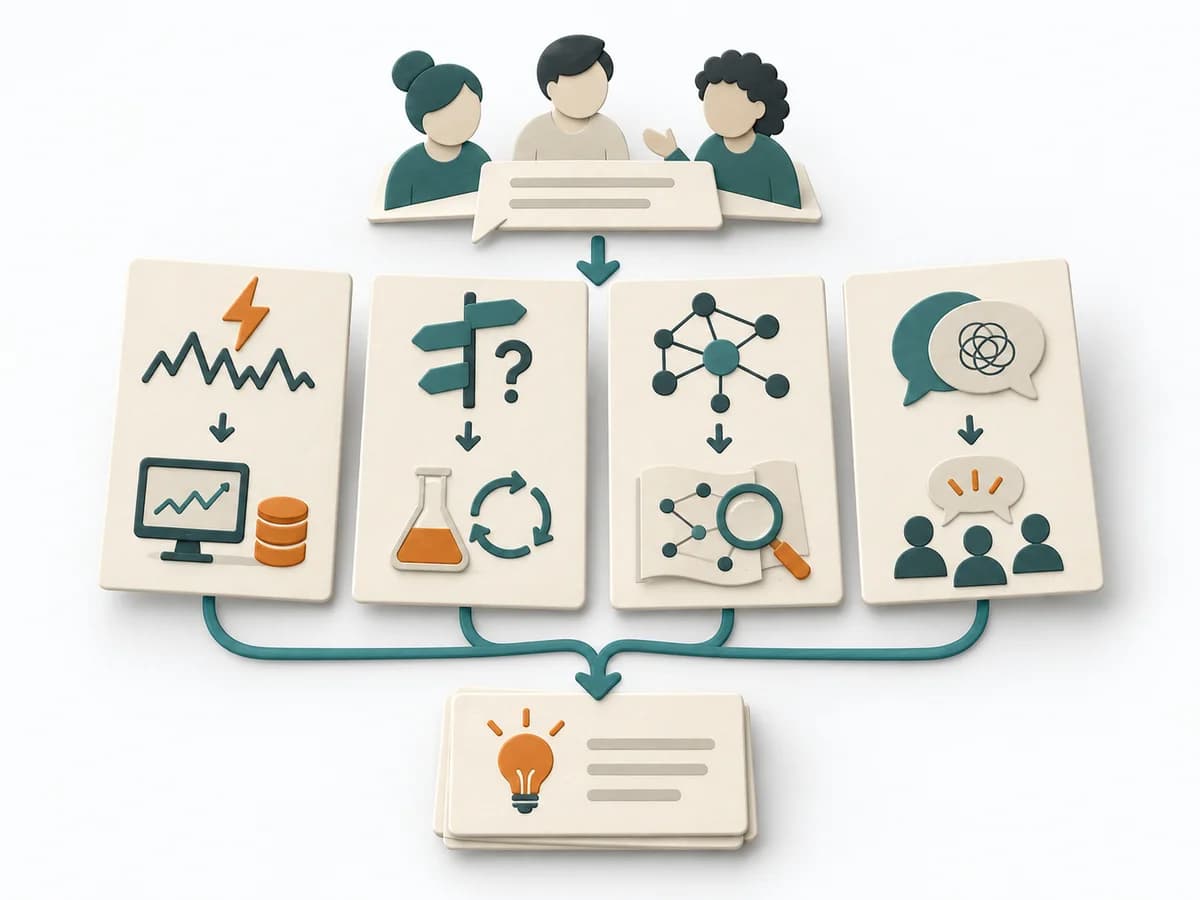 Systems Thinking VUCA Scan |  Facilitation Expectation Mapping |  Team Design Team Topologies Interaction Modes | 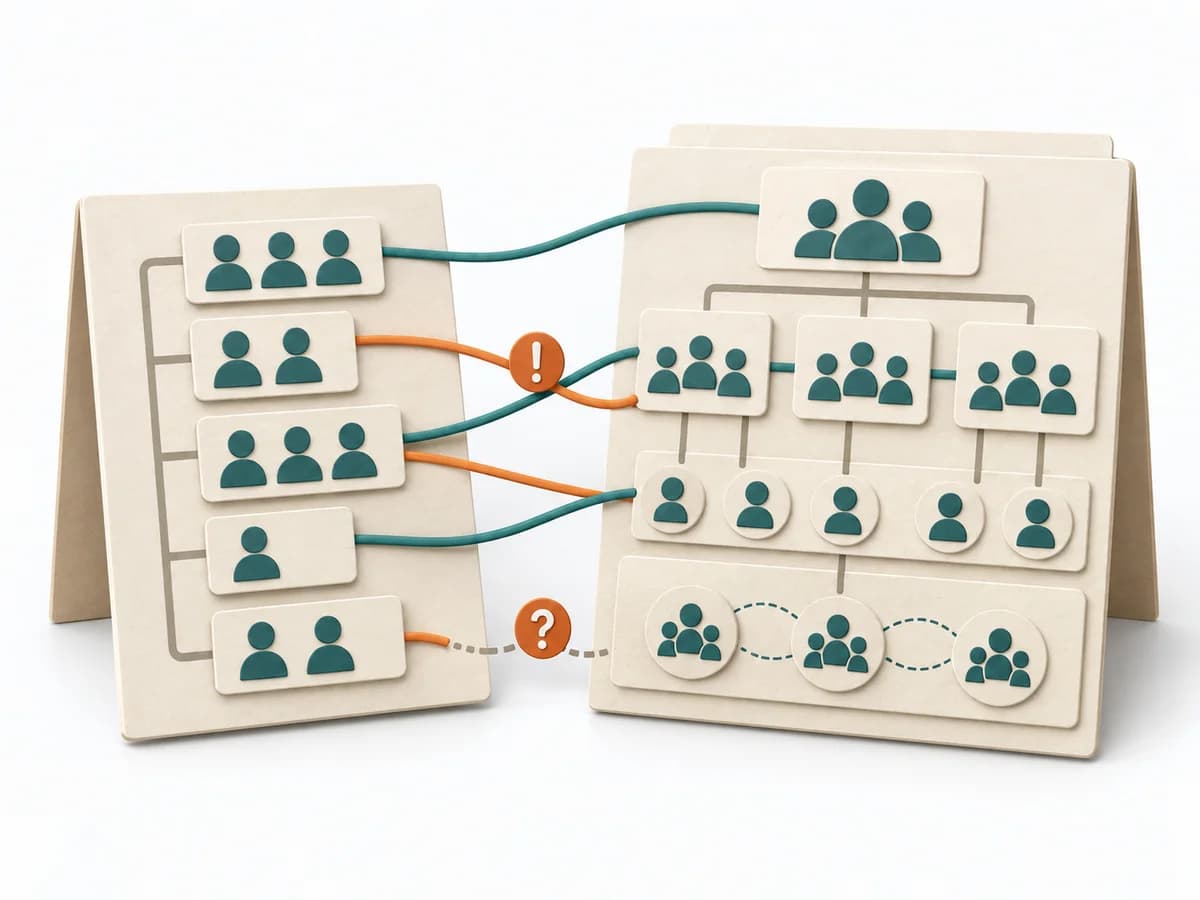 Team Design Spotify Model Mapping |
|---|---|---|---|---|
Purposedifferent | The VUCA Scan helps read difficult situations more precisely. Instead of treating unclarity as generally complicated, the method separates fast change, missing knowledge, systemic entanglement, and ambiguous interpretation. | When roles, interfaces, or projects fail because of differing expectations, Expectation Mapping surfaces these differences. It shows what each side takes for granted and where the pictures diverge. | When several teams collaborate repeatedly, it describes the right interaction mode for each interface between them. It clarifies responsibility, interaction, and load between teams. The result is captured as an interaction heat map and pairwise agreements. | When a team landscape has grown without clear grouping, it maps roles and relationships onto the Spotify model. It clarifies responsibility, interaction, and load between teams. The result is captured as a Spotify model map and action list. |
Complexitydifferent | Low | Low | Medium | Medium |
Timedifferent | 30-90 min | 45-90 min | Half day | 90-180 min |
Participantsdifferent | 1-10 | 3-12 | Team-Leads plus Architecture | 5-15 |
Formatdifferent | Workshop + async | Workshop | Workshop | Workshop |
Outputdifferent | VUCA Map, Response Options, Signal and Learning Plan | Expectation Map, Alignment Notes, Agreements | Interaction Heat Map, Agreements per Pair | Spotify Model Map, Action List |
Tagsno overlap | SensemakingUncertaintyComplexityStrategyForesight | AlignmentStakeholdersTeam | TeamAlignmentCollaborationOrganization | TeamOrganizationAlignmentDiagnosis |