View methods side by side.
Choose up to four methods. Add them using the search and share the comparison by copying its link.
| Criterion | 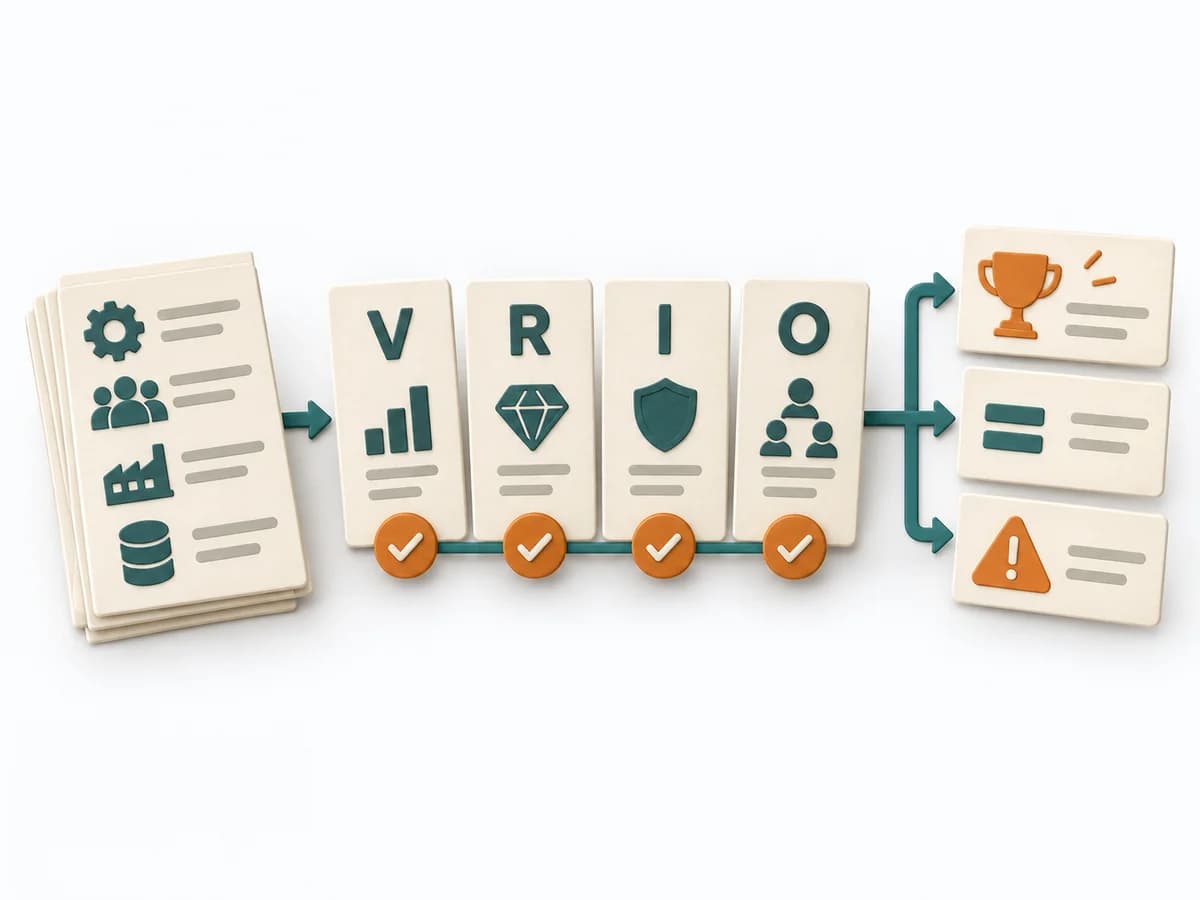 Business Strategy VRIO Framework | 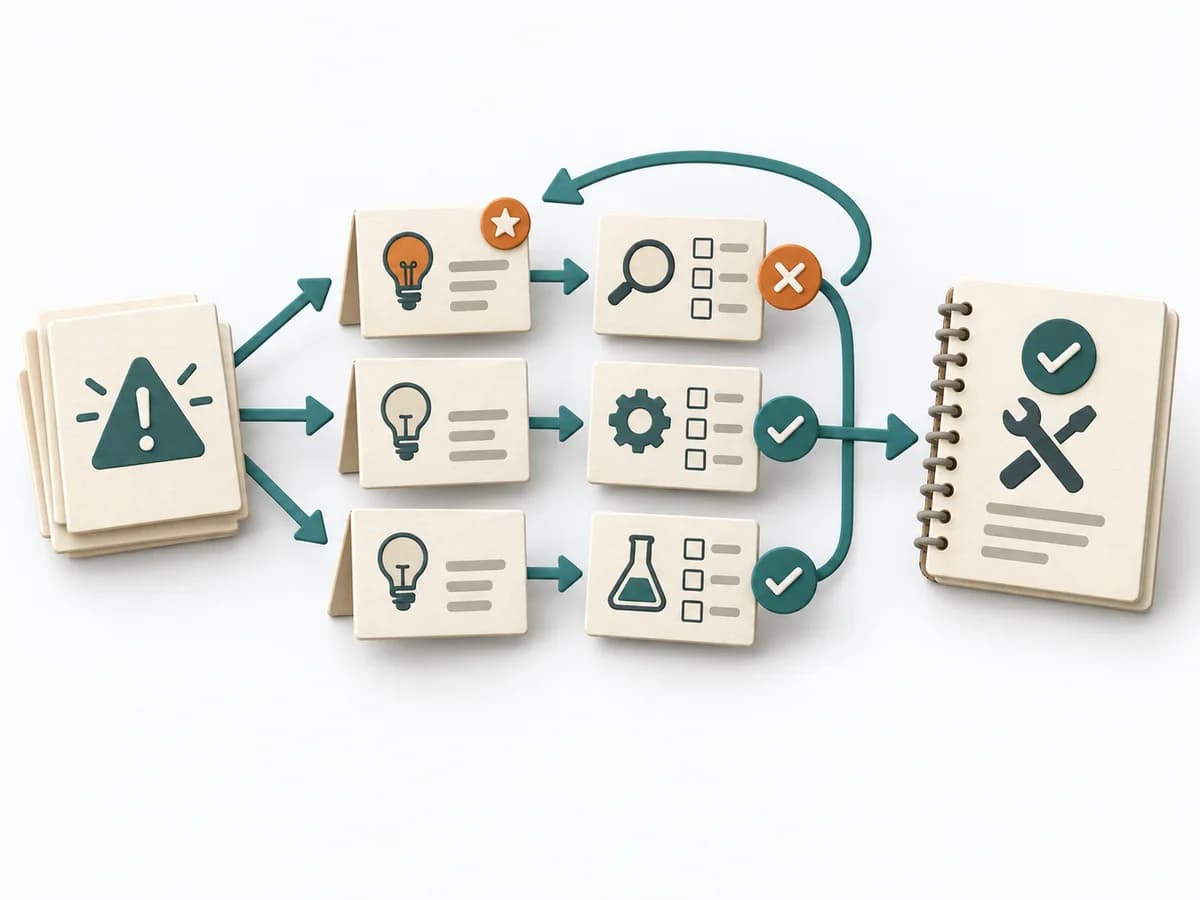 Engineering Hypothesis-Driven Troubleshooting | 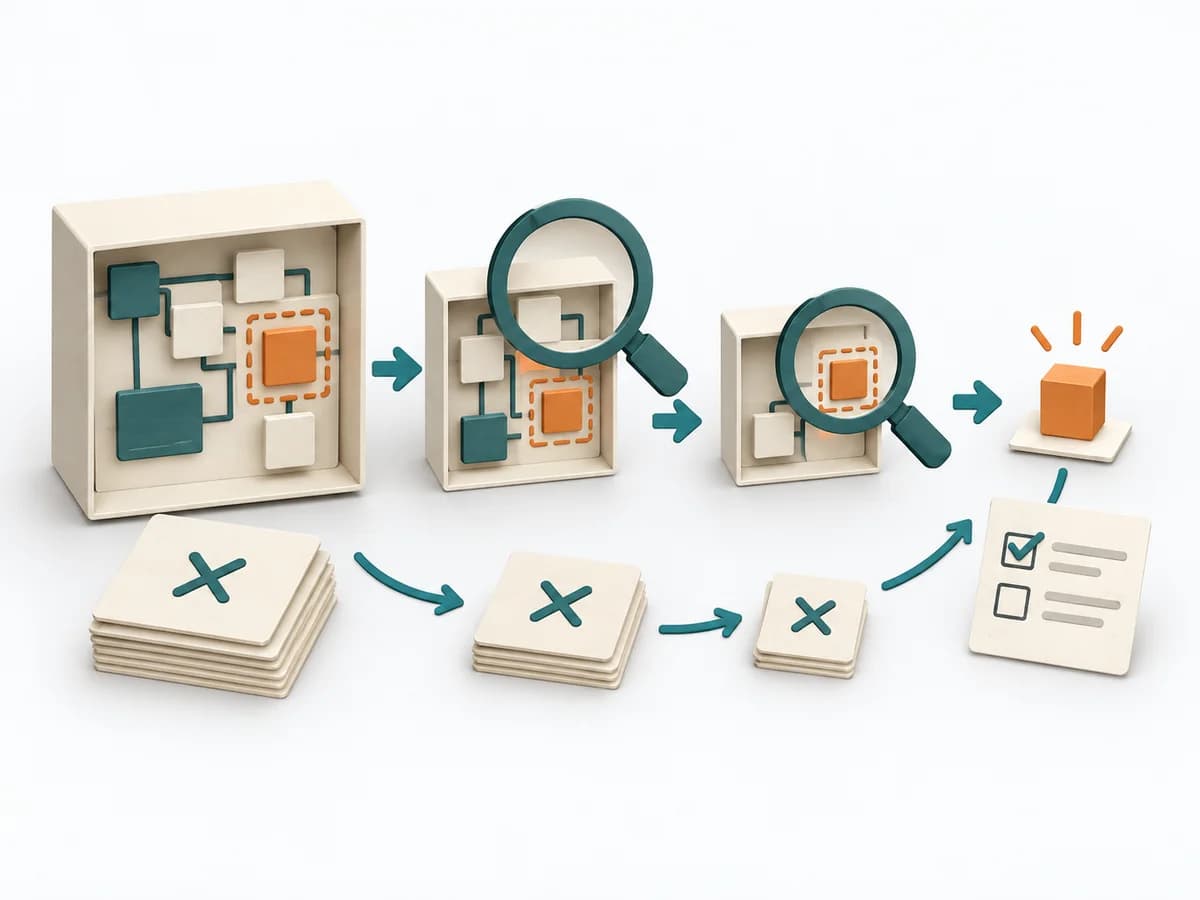 Engineering Fault Isolation | 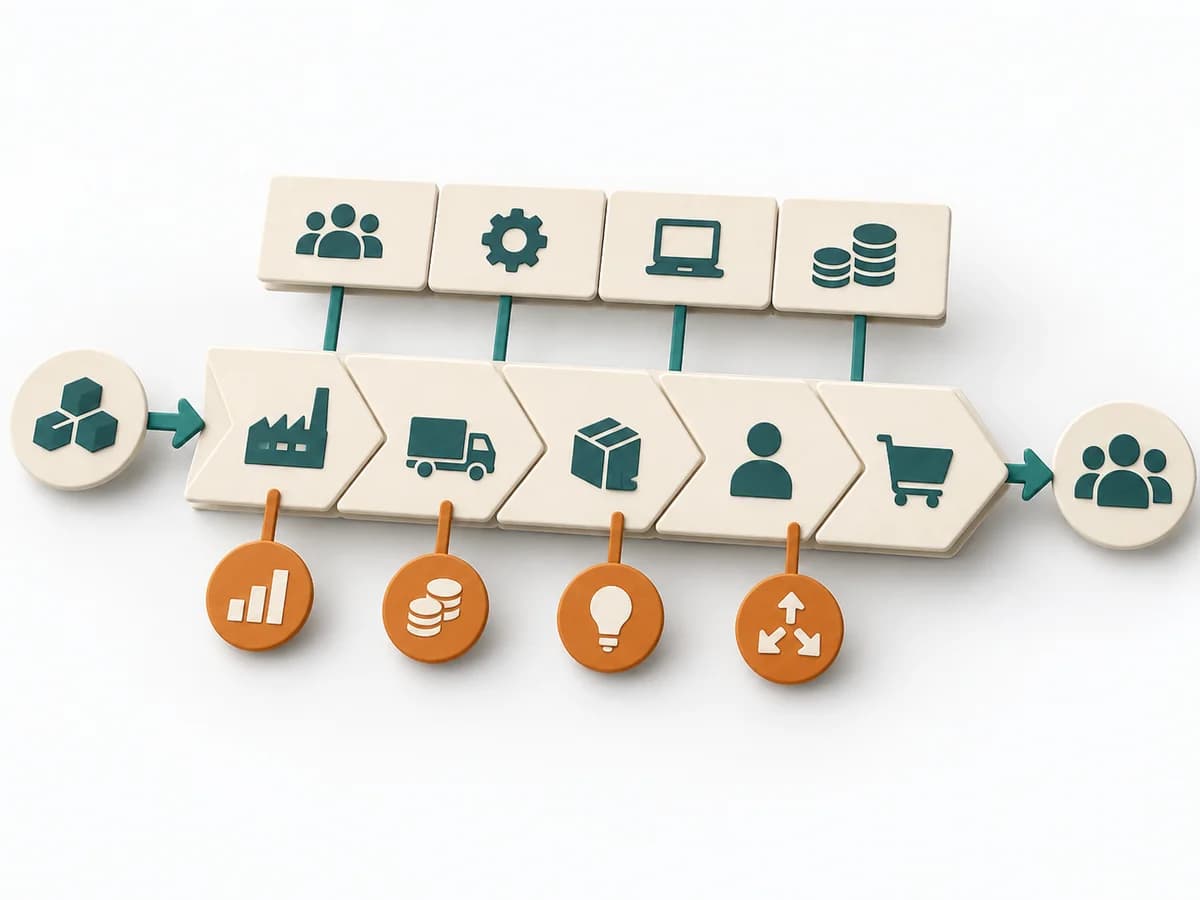 Business Strategy Value Chain Analysis |
|---|---|---|---|---|
Purposedifferent | The VRIO Framework rates resources and capabilities on whether they are Valuable, Rare, Inimitable, and Organized. It compares strengths, risks, market logic, and courses of action. The result is captured as a VRIO table and strategic actions. | When systems fail unexpectedly, spontaneous attempts often produce more noise than insight. Hypothesis-driven Troubleshooting translates symptoms into testable assumptions and makes troubleshooting learnable. | In technical failures, the visible symptom often gets mixed up with the actual cause. Fault Isolation narrows the fault space and progressively reduces which part of the system is truly affected. | Value Chain Analysis shows where value is created, costs accrue, and differentiation becomes possible along the process. It compares strengths, risks, market logic, and courses of action. The result is captured as a value-chain map and lever list. |
Complexitydifferent | Medium | Medium | Medium | High |
Timedifferent | 90-180 min | 30-240 min | 30-180 min | Half day |
Participantsdifferent | 3-6 | 1-6 | 1-6 | 3-8 |
Formatdifferent | Workshop | Workshop + async | Workshop + async | Workshop |
Outputdifferent | VRIO Table, Strategic Actions | Hypothesis Log, Test Plan, Evidence Notes, Diagnosis Summary | Fault Isolation Map, Test Log, Excluded Hypotheses, Narrowed Fault Area | Value Chain Map, Lever List |
Tags1 shared | StrategyDiagnosisBusiness modelCapability | TroubleshootingProblem solvingDiagnosis | TroubleshootingDiagnosisEngineering | StrategyBusiness modelDiagnosisAnalysis |