View methods side by side.
Choose up to four methods. Add them using the search and share the comparison by copying its link.
| Criterion | 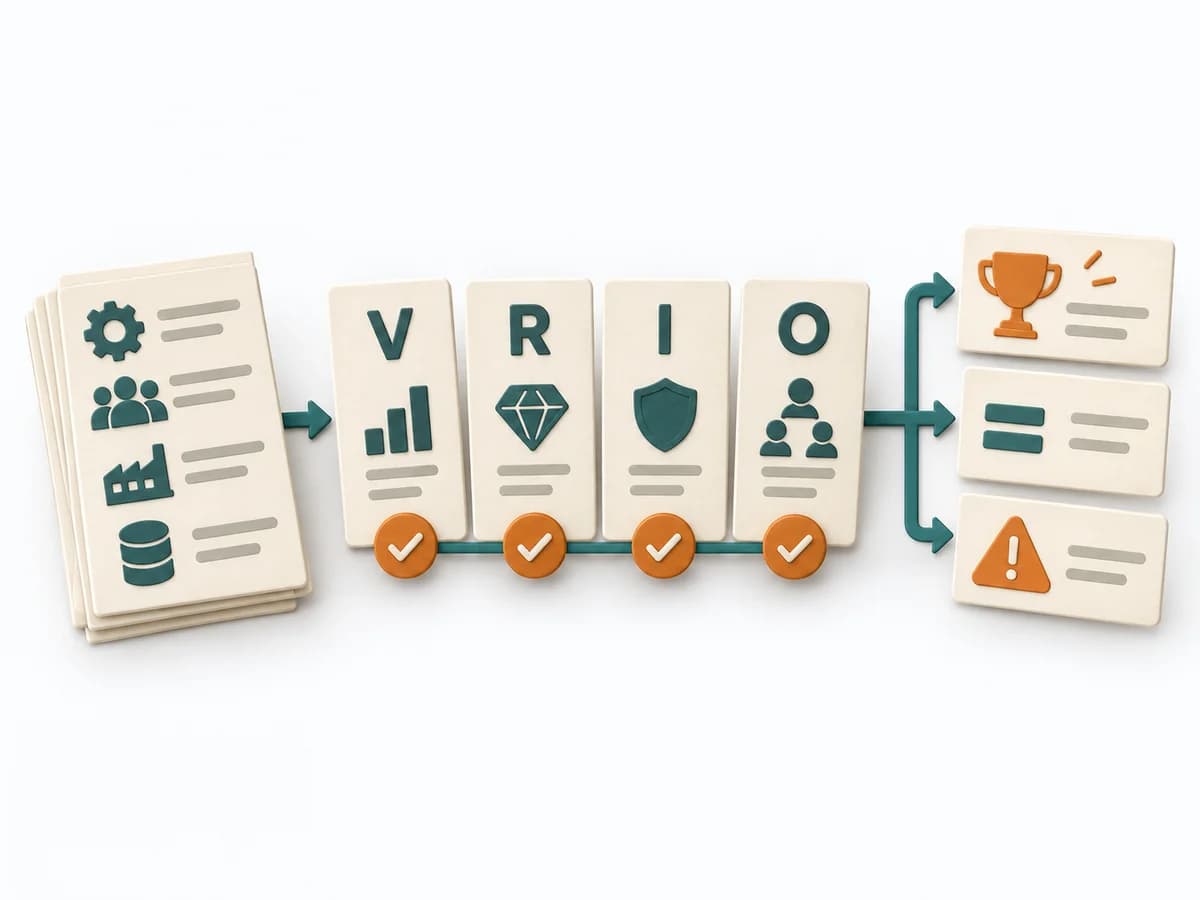 Business Strategy VRIO Framework |  UX Design Customer Journey Canvas |  UX Research Customer Journey Mapping | 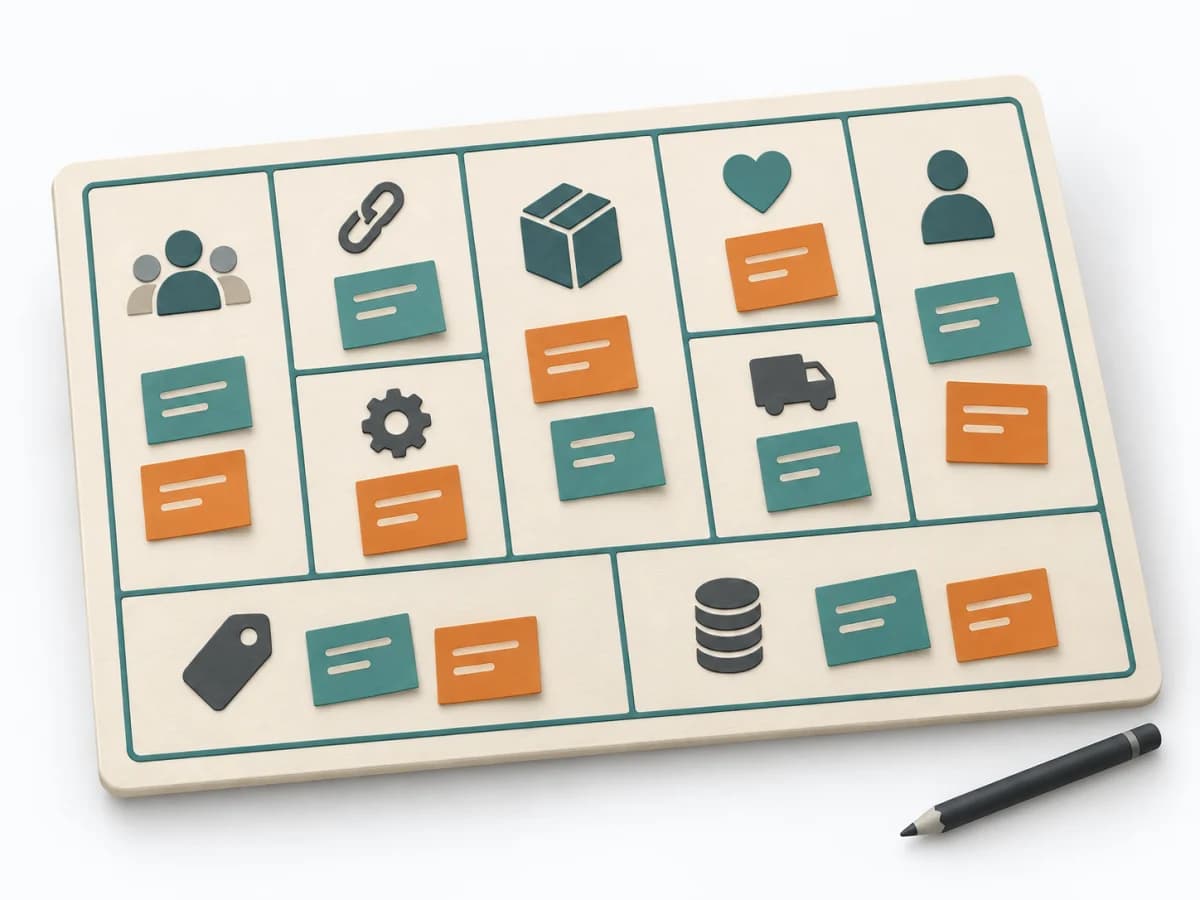 Business Strategy Business Model Canvas |
|---|---|---|---|---|
Purposedifferent | The VRIO Framework rates resources and capabilities on whether they are Valuable, Rare, Inimitable, and Organized. It compares strengths, risks, market logic, and courses of action. The result is captured as a VRIO table and strategic actions. | When a journey needs to be understood across several phases, it arranges experience, touchpoints, and opportunities into one picture. It makes gaps and friction along the user path clear. | When a user journey falls apart across many touchpoints, customer journey mapping makes the experience visible as a coherent arc. Phases, emotions, and breaks become legible enough to prioritize critical moments deliberately. | The Business Model Canvas condenses a business model to its key building blocks and assumptions. It makes variants quickly comparable and reveals gaps before validation or implementation begins. |
Complexitysame | Medium | Medium | Medium | Medium |
Timedifferent | 90-180 min | 1-3 h | 2-4 h | 1-2 h |
Participantsdifferent | 3-6 | 3-10 | 4-10 | 2-8 |
Formatdifferent | Workshop | Workshop | Workshop | Workshop + async |
Outputdifferent | VRIO Table, Strategic Actions | Customer Journey Canvas, Pain Points, Experience Opportunities | Journey Map, Pain-point List, Opportunity Backlog | Business Model Canvas, Assumption List, Business Hypotheses |
Tagsno overlap | StrategyDiagnosisBusiness modelCapability | JourneyCustomerService designCanvas | JourneyServiceService design | Business modelStrategyValueInnovation |