View methods side by side.
Choose up to four methods. Add them using the search and share the comparison by copying its link.
| Criterion | 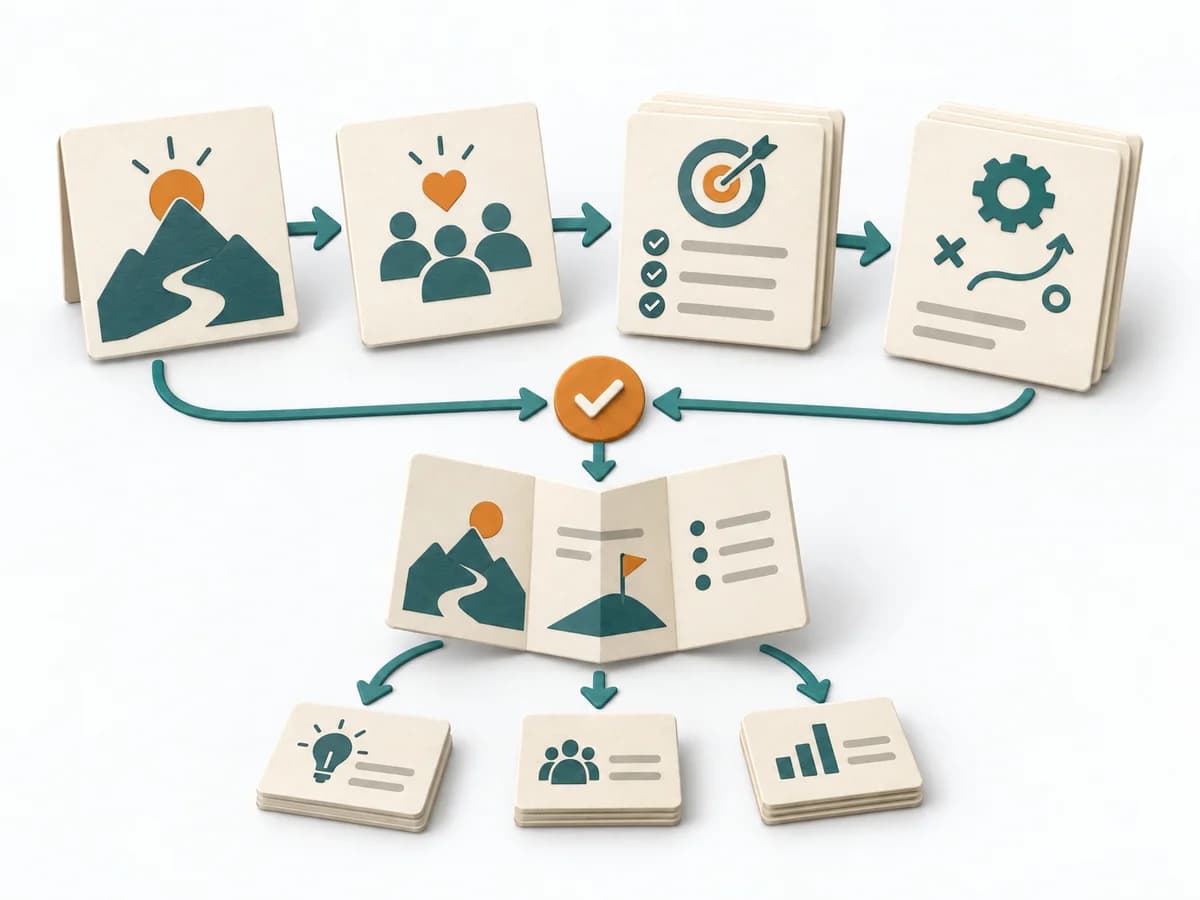 Business Strategy VMGS |  Business Strategy GAP Analysis |  Product Discovery Test Card | 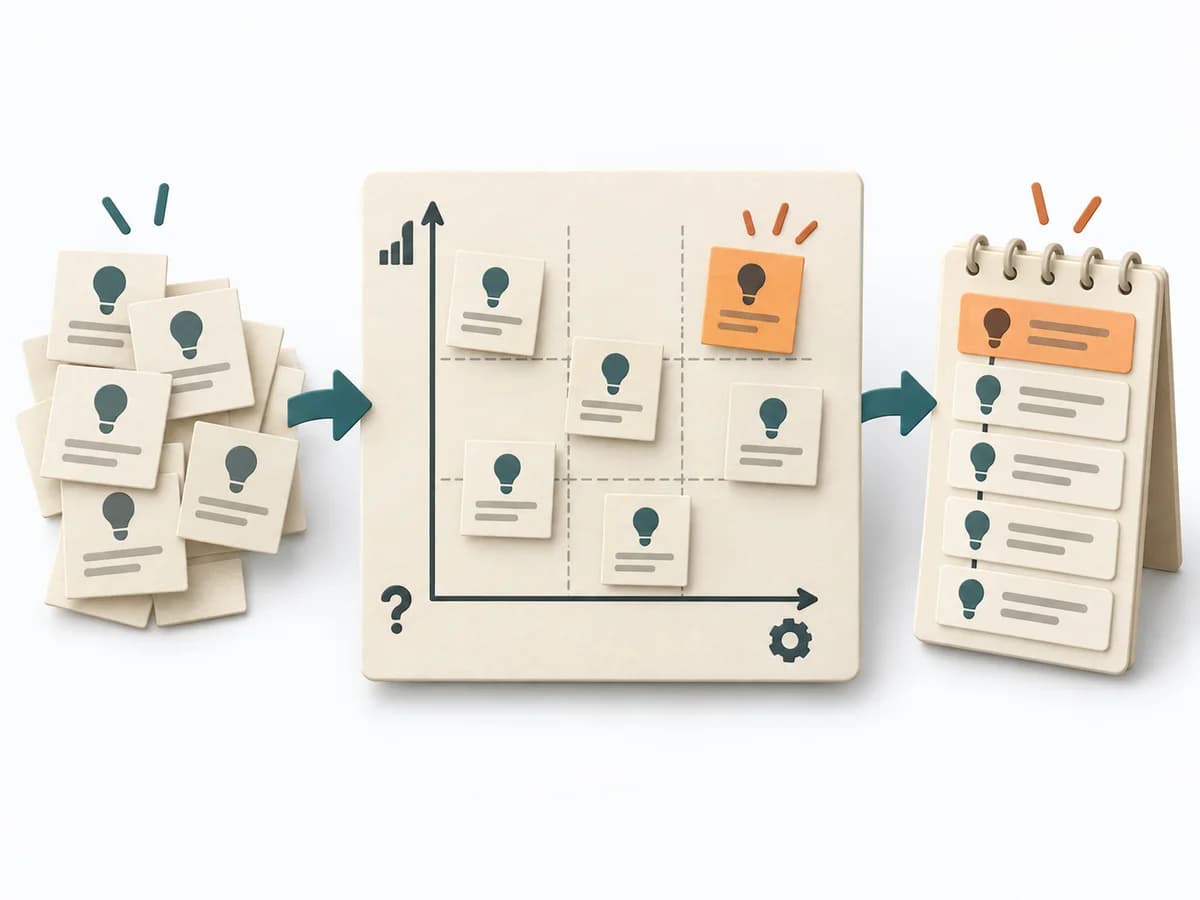 Product Discovery Hypothesis Prioritization Canvas |
|---|---|---|---|---|
Purposedifferent | VMGS arranges vision, mission, goals, and strategies into a clear guiding logic. Direction, purpose, and priorities are connected so teams can decide more coherently. | GAP Analysis compares the current state with a target picture and makes the distance manageable. It becomes useful when, ahead of new initiatives, it must become clear which capabilities, processes, or resources are missing. | The Test Card turns a critical assumption into a testable claim and specifies in advance which result counts as success. | When many hypotheses compete for attention, it brings order to their learning sequence and importance. It separates problem, assumption, solution, and evidence. The result is captured as a prioritization canvas and a hypothesis backlog. |
Complexitydifferent | Medium | Medium | Low | Medium |
Timedifferent | 2-4 h | 1-3 h | 20-35 min | 60-90 min |
Participantsdifferent | 3-12 | 2-8 | 1-5 | 3-8 |
Formatdifferent | Workshop | Workshop + async | Workshop + async | Workshop |
Outputdifferent | Vision Statement, Mission Statement, Goals, Strategies | Gap Matrix, Action Plan, Risk Notes | Test Card with a pre-set threshold | Prioritization Canvas, Hypothesis Backlog |
Tagsno overlap | VisionGoalsStrategy | StrategyAnalysisPlanning | ExperimentsValidationDiscoveryHypothesis | ExperimentsPrioritizationDiscoveryHypothesis |