View methods side by side.
Choose up to four methods. Add them using the search and share the comparison by copying its link.
| Criterion | 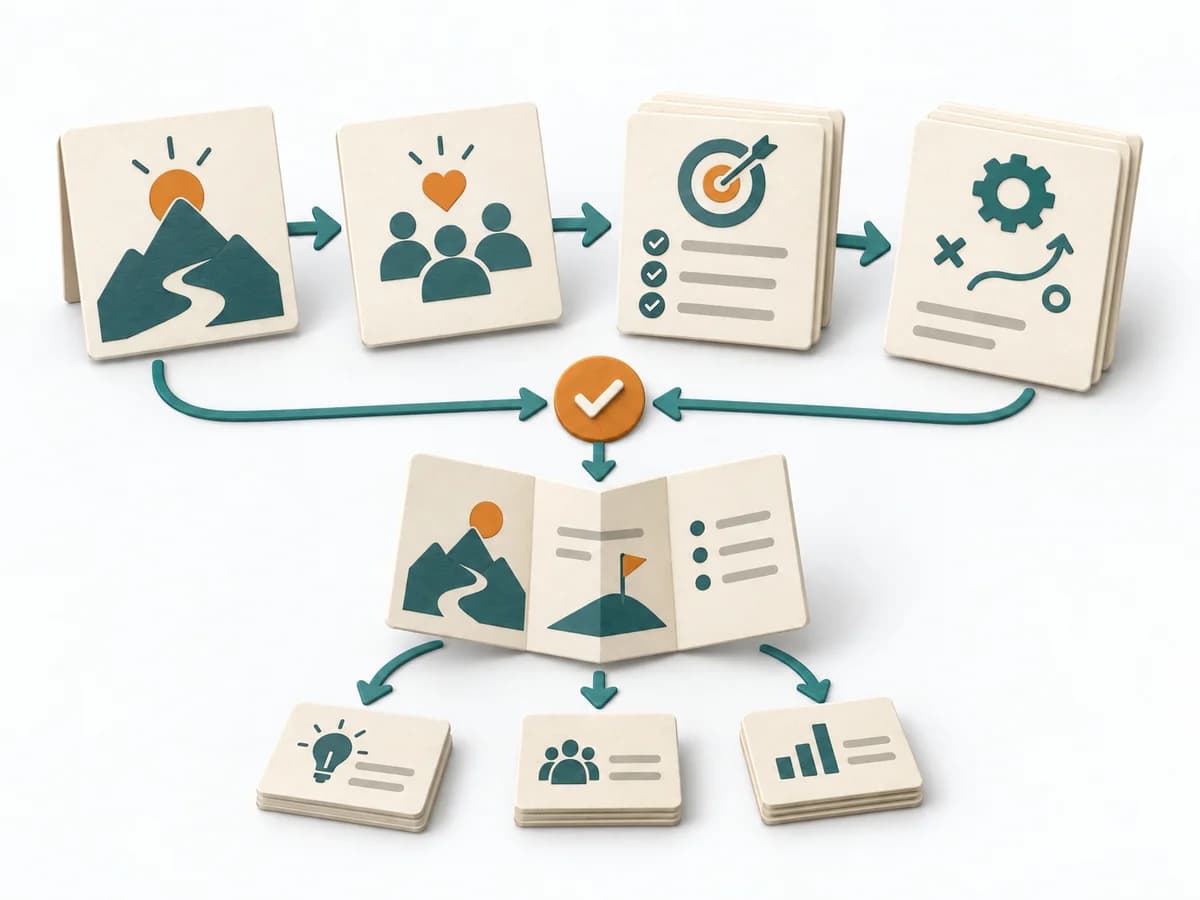 Business Strategy VMGS | 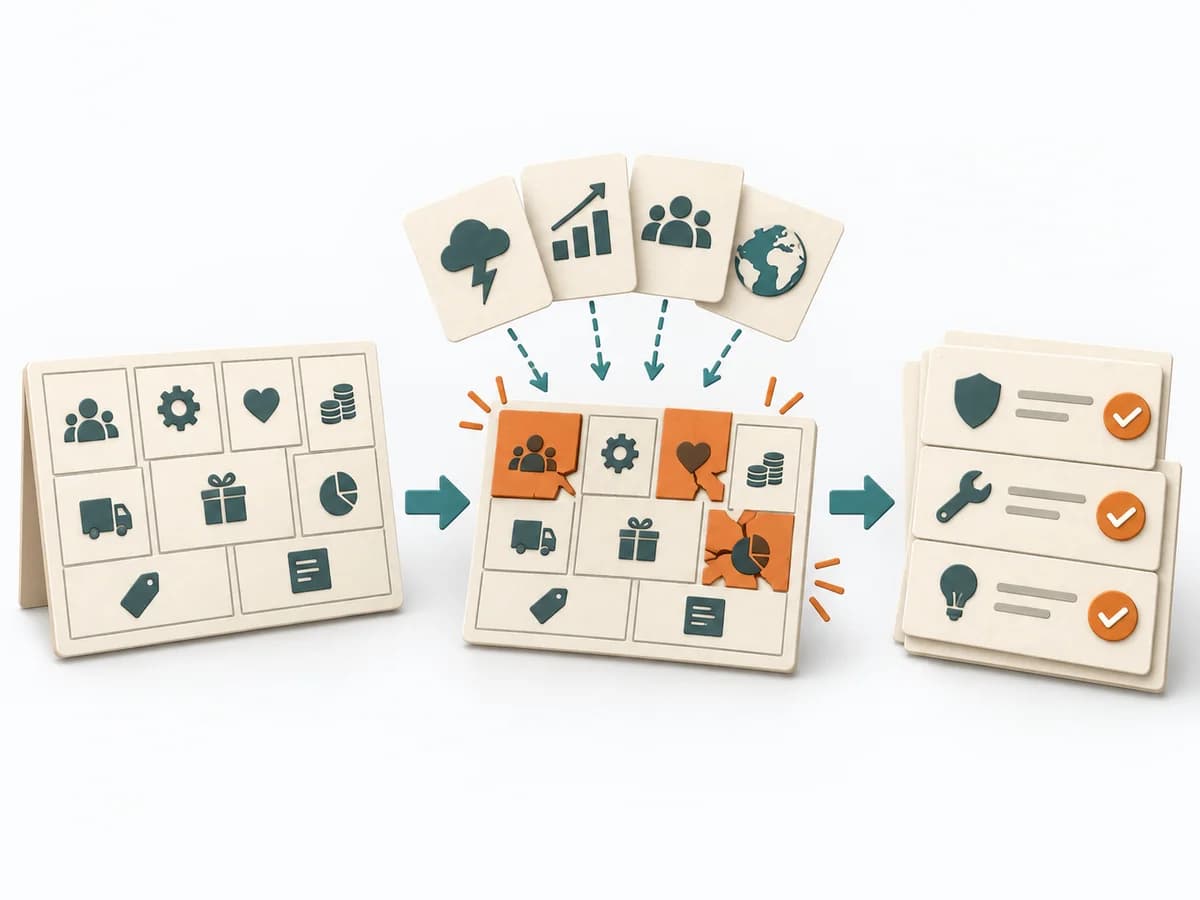 Business Strategy Business Model Stress Test |  Facilitation Stakeholder Salience Model |  Facilitation Power Interest Grid |
|---|---|---|---|---|
Purposedifferent | VMGS arranges vision, mission, goals, and strategies into a clear guiding logic. Direction, purpose, and priorities are connected so teams can decide more coherently. | A Business Model Stress Test checks how well a business model holds up under pressure and headwinds. It compares strengths, risks, market logic, and courses of action. The result is captured as a stress-test report and action plan per scenario. | When stakeholders appear to matter very differently, the Stakeholder Salience Model rates their actual priority through power, legitimacy, and urgency. It turns individual contributions into a visible selection. The result is captured as a Salience diagram and a class-based strategy. | When many stakeholders compete for attention at once, the Power Interest Grid sorts them by influence and stake. It turns individual contributions into a visible selection. The result is captured as a Power Interest Grid and a stakeholder-specific strategy. |
Complexitydifferent | Medium | High | Medium | Low |
Timedifferent | 2-4 h | Half day | 60-90 min | 30-60 min |
Participantsdifferent | 3-12 | 3-8 | 3-6 | 2-8 |
Formatsame | Workshop | Workshop | Workshop | Workshop |
Outputdifferent | Vision Statement, Mission Statement, Goals, Strategies | Stress Test Report, Action Plan per Scenario | Salience Diagram, Strategy per Class | Power Interest Grid, Strategy per Stakeholder |
Tagsno overlap | VisionGoalsStrategy | StrategyBusiness modelRiskDiagnosis | StakeholdersFacilitationAlignmentGovernance | StakeholdersFacilitationAlignmentPlanning |