View methods side by side.
Choose up to four methods. Add them using the search and share the comparison by copying its link.
| Criterion |  UX Research User Interviews | 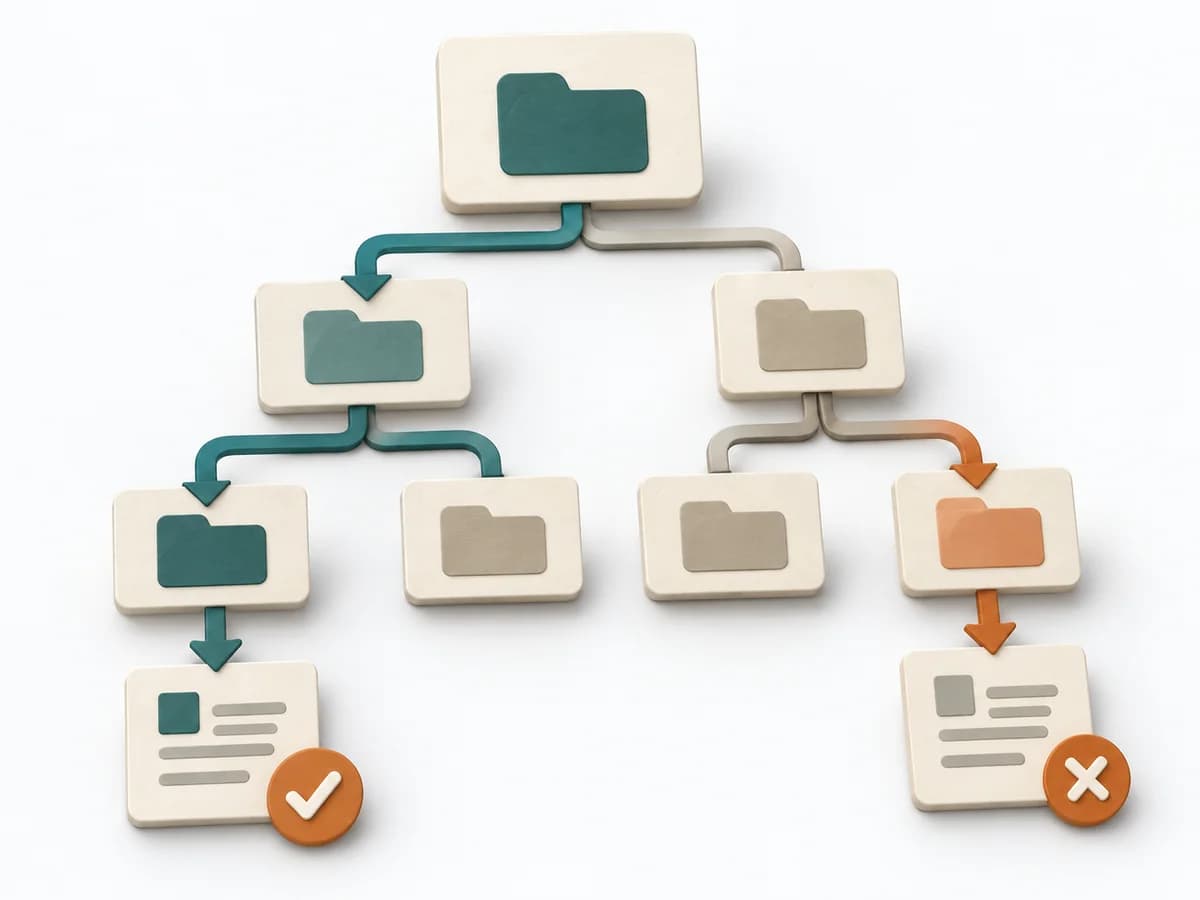 UX Research Tree Testing | 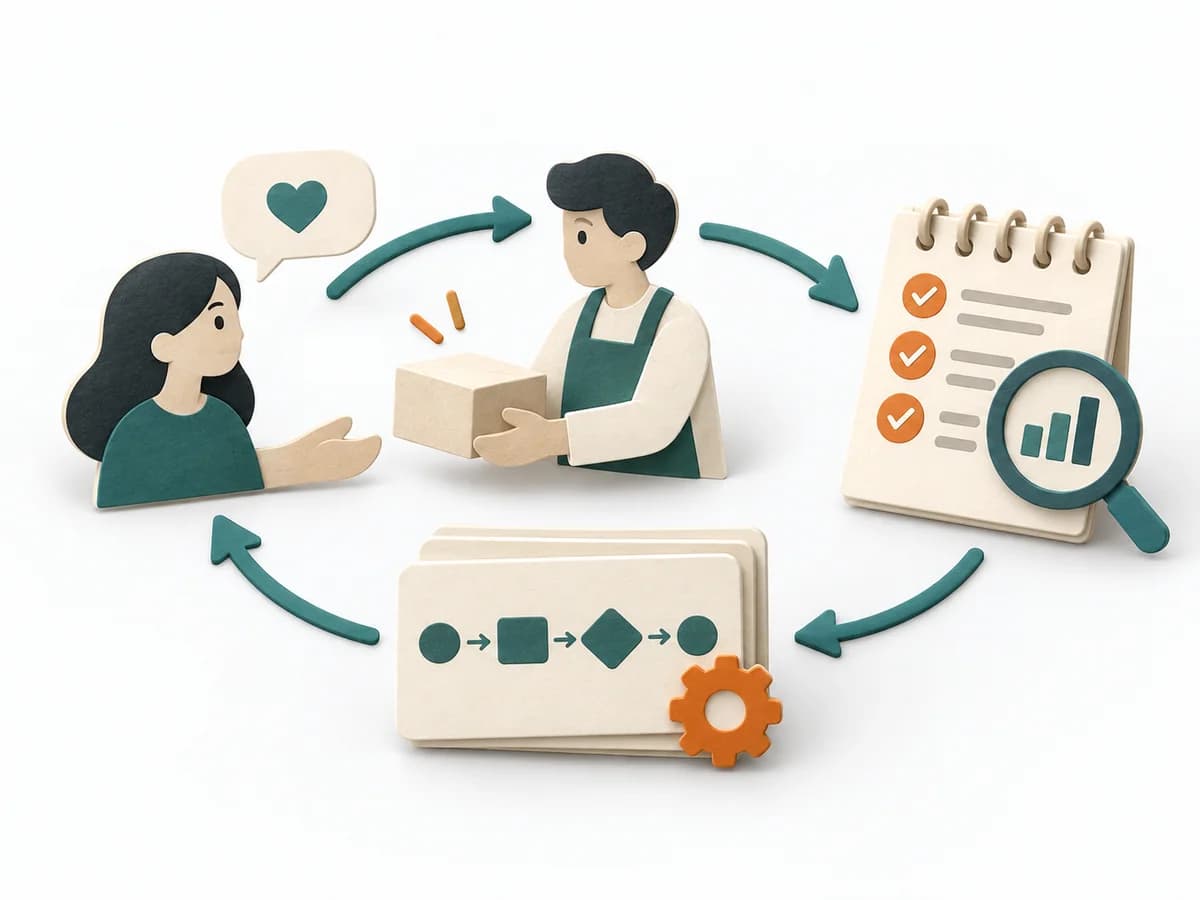 Product Discovery Concierge MVP |  Product Discovery Fake Door Test |
|---|---|---|---|---|
Purposedifferent | When teams derive needs only from assumptions and real motives are missing, user interviews give direct access to behavior and meaning. Conversations from the target group's everyday life make patterns, tensions, and open questions solidly visible. | When a navigation exists but search paths still fail, tree testing checks findability without visual distraction. The method shows whether labels, levels, and paths really lead to the intended destination. | When an idea can first fail or grow through genuine hands-on support, it relies on manual work instead of automation. It shows whether user value holds up even under manual execution. | When demand is still unclear, it measures interest in a feature before it is built. It separates real behavior from polite agreement and deliberately keeps build effort small. |
Complexitydifferent | Low | Medium | Medium | Medium |
Timedifferent | 30–60 min per interview | 1-2 Tage | 1-4 Wochen | 1-5 Tage |
Participantsdifferent | 1 participant per interview | Based on research question | 3-10 Kunden | Nutzertraffic |
Formatdifferent | Workshop + async | Async | Workshop + async | Async |
Outputdifferent | Interview Notes, Themes, Insight Summary | Findability Metrics, Path Analysis, Revised IA | Concierge Learnings, Service Blueprint, MVP Risks | Click Data, Interest Signal, Learning Decision |
Tagsno overlap | QualitativeResearchCustomerDiscovery | Information architectureNavigationFindability | MVPValidationServiceDiscovery | ValidationExperimentsDemandDiscovery |