View methods side by side.
Choose up to four methods. Add them using the search and share the comparison by copying its link.
| Criterion |  UX Research User Interviews | 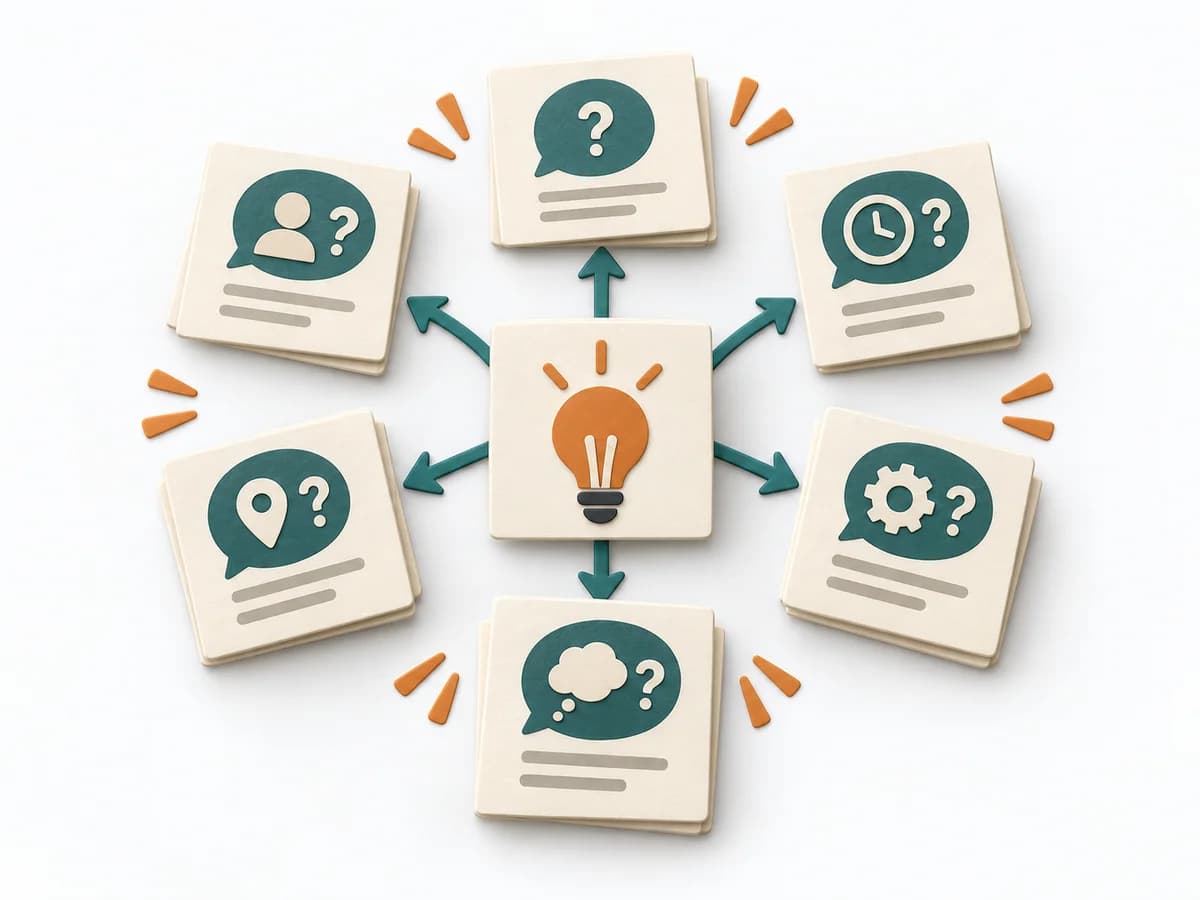 Innovation Starbursting | 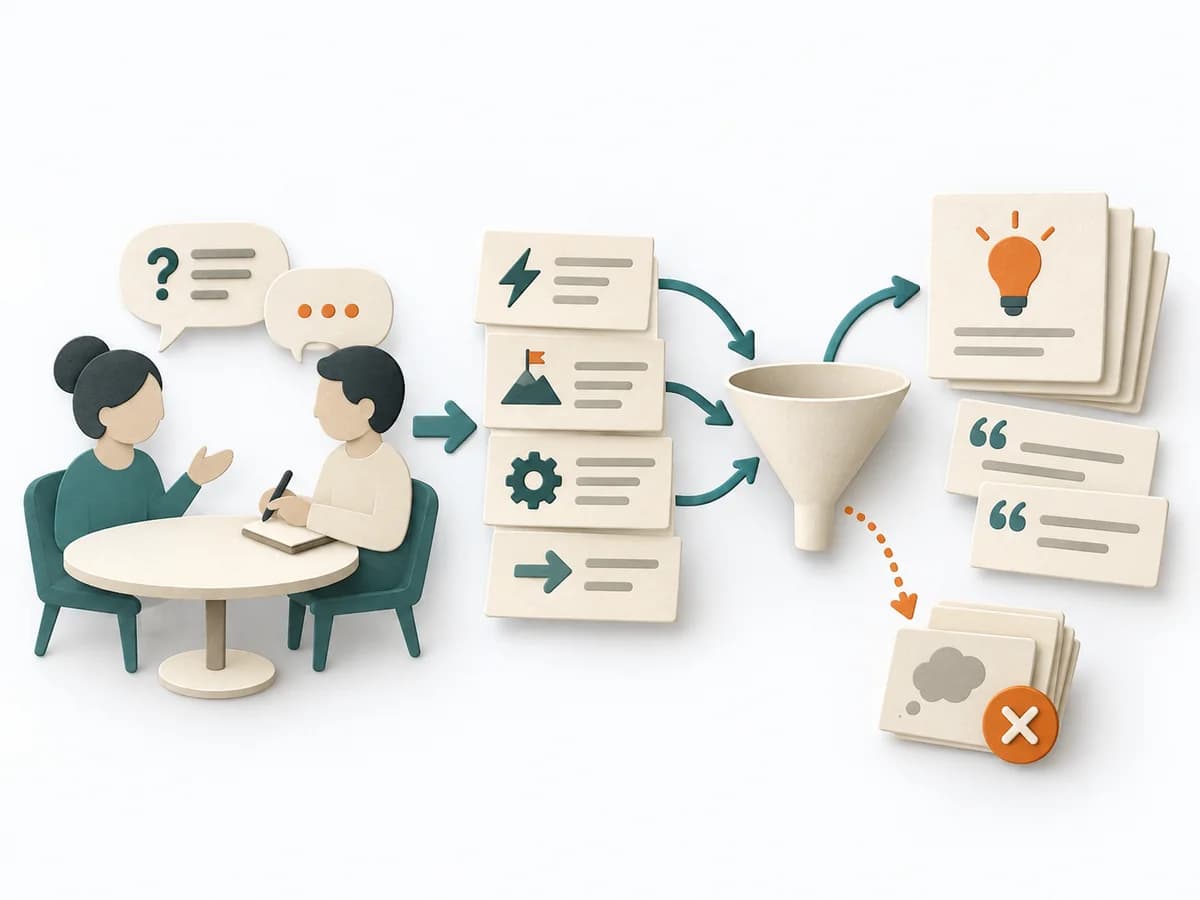 Product Discovery Opportunity Interview |  Innovation Lotus Blossom |
|---|---|---|---|---|
Purposedifferent | When teams derive needs only from assumptions and real motives are missing, user interviews give direct access to behavior and meaning. Conversations from the target group's everyday life make patterns, tensions, and open questions solidly visible. | Helps clarify ideas, open questions, and testable next steps in concrete terms. It opens the thinking space, collects ideas, and leads to testable options. The result is captured as a star-shaped question map, question list, and assumption list. | When opportunities are still hidden behind signals of need, it structures conversations around needs and obstacles. It looks for patterns that lead to new product opportunities. | When a central question feels too large, the method breaks it into neighboring topic fields with their own depth of ideation. It holds structure and openness at the same time, so adjacent perspectives don't get lost. This grows an idea space out of a core problem. |
Complexitydifferent | Low | Low | Medium | Low |
Timedifferent | 30–60 min per interview | 30-60 min | 30-60 min je Interview | 45-90 min |
Participantsdifferent | 1 participant per interview | 3-10 | 5-12 Interviews | 3-10 |
Formatdifferent | Workshop + async | Workshop + async | Workshop + async | Workshop |
Outputdifferent | Interview Notes, Themes, Insight Summary | Star-Shaped Question Map, Question List, Assumption List | Interview Notes, Opportunity Themes, Customer Quotes | Lotus Diagram, Idea Themes, Shortlist |
Tagsno overlap | QualitativeResearchCustomerDiscovery | BrainstormingIdeationWorkshopDiscovery | DiscoveryInterviewsOpportunityCustomer | BrainstormingIdeationCreativityDivergenceWorkshop |