View methods side by side.
Choose up to four methods. Add them using the search and share the comparison by copying its link.
| Criterion |  UX Research User Interviews |  Operations Root Cause Analysis | 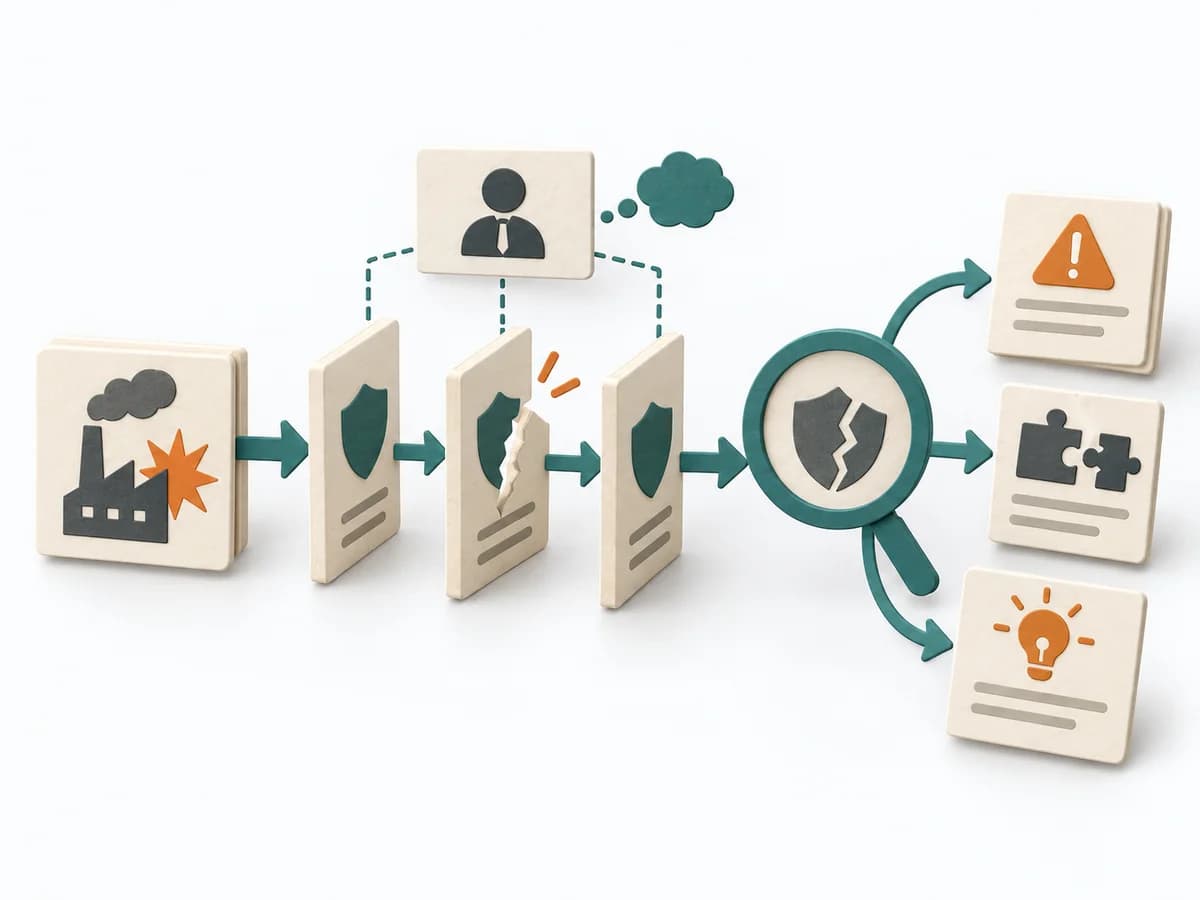 Operations MORT Analysis |  Operations Family Tree Analysis |
|---|---|---|---|---|
Purposedifferent | When teams derive needs only from assumptions and real motives are missing, user interviews give direct access to behavior and meaning. Conversations from the target group's everyday life make patterns, tensions, and open questions solidly visible. | When a problem keeps recurring and the cause stays unclear, the method exposes the underlying mechanism. It separates symptom, guess, and robust explanation from one another. | For a safety-relevant event or a system with high protection requirements, the method examines where controls failed. It exposes both technical and organizational gaps. | For a series of incidents with a similar pattern, the method arranges individual events as branches of a common origin. It makes visible which conditions keep recurring. |
Complexitydifferent | Low | Medium | High | Medium |
Timedifferent | 30–60 min per interview | 1-4 h | Mehrere Tage bis Wochen | 2-4 h |
Participantsdifferent | 1 participant per interview | 3-8 | 2-6 | 2-6 |
Formatsame | Workshop + async | Workshop + async | Workshop + async | Workshop + async |
Outputdifferent | Interview Notes, Themes, Insight Summary | Problem Statement, Cause Hypotheses, Confirmed Causes, Action Plan | MORT Worksheets, Findings per Branch, Corrective Actions, Systemic Recommendations | Family Tree Diagram, Pattern Notes, Systemic Measures |
Tagsno overlap | QualitativeResearchCustomerDiscovery | Root causeProblem solvingQualityIncident | Root causeSafetySystemicIncident | Root causePatternsIncidentSystemic |