View methods side by side.
Choose up to four methods. Add them using the search and share the comparison by copying its link.
| Criterion |  UX Research User Interviews | 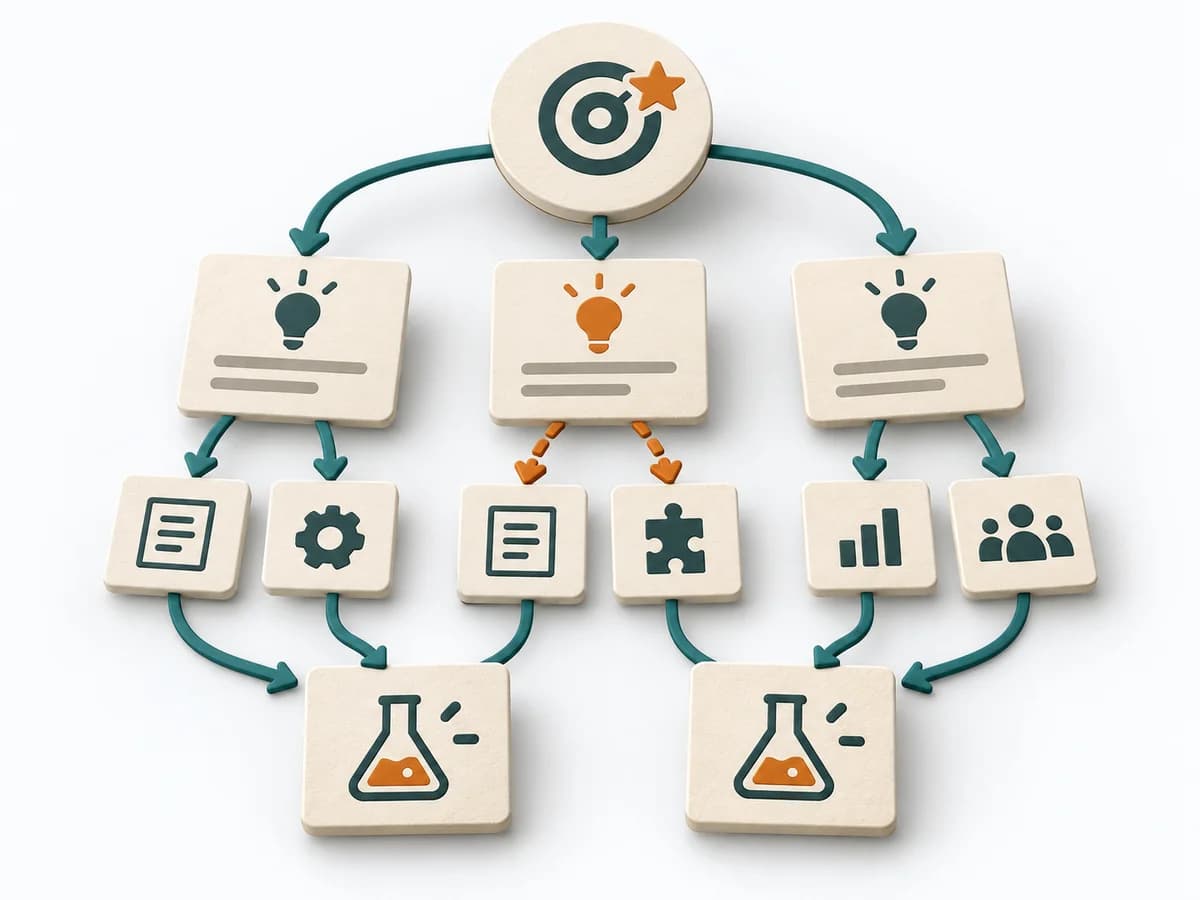 Product Discovery Opportunity Solution Tree | 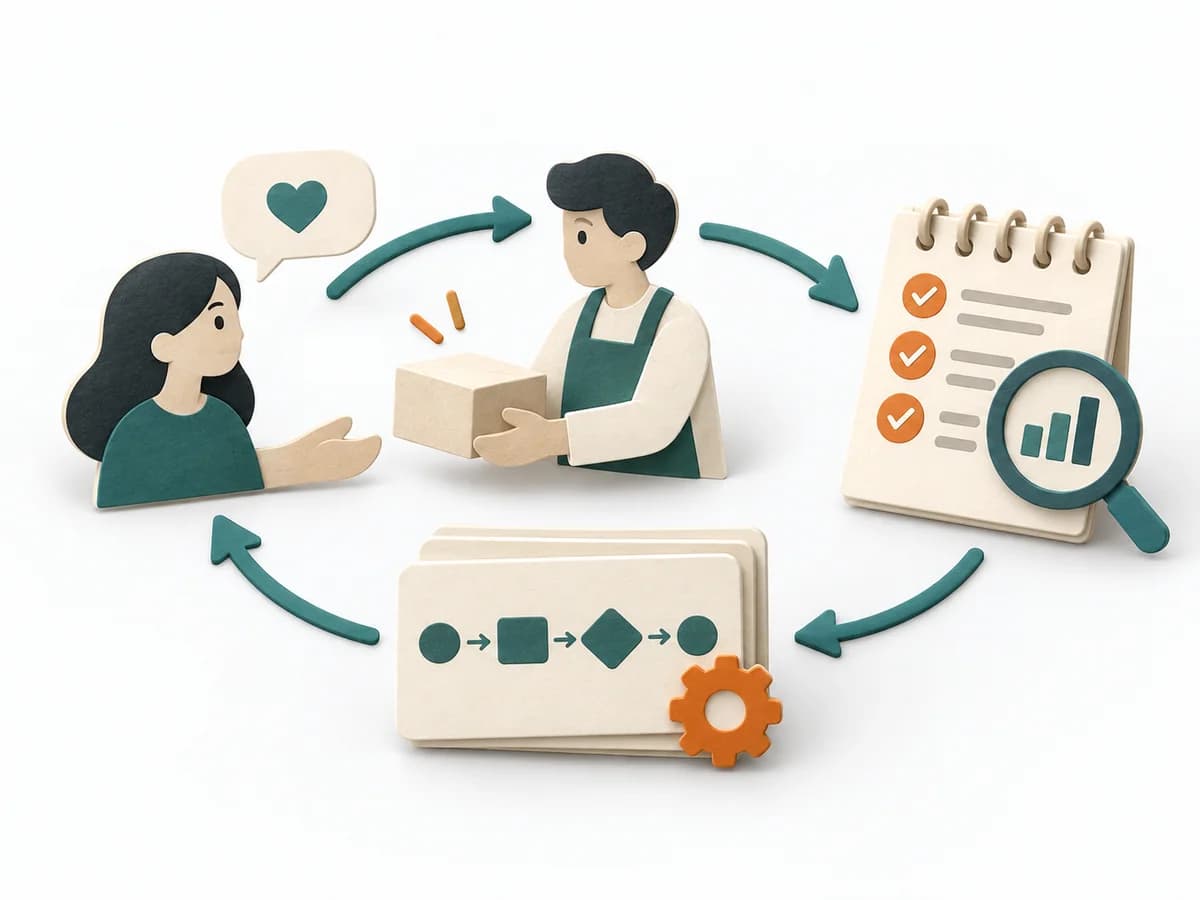 Product Discovery Concierge MVP |  Product Discovery Learning Card |
|---|---|---|---|---|
Purposedifferent | When teams derive needs only from assumptions and real motives are missing, user interviews give direct access to behavior and meaning. Conversations from the target group's everyday life make patterns, tensions, and open questions solidly visible. | When discovery keeps swinging between goals, ideas, and learning loops, it creates clear steering logic. It connects the desired outcome, opportunities, and experiments into a legible structure. | When an idea can first fail or grow through genuine hands-on support, it relies on manual work instead of automation. It shows whether user value holds up even under manual execution. | The Learning Card connects traceable test results to a reasoned next action while keeping the limits of the insight visible. |
Complexitydifferent | Low | Medium | Medium | Low |
Timedifferent | 30–60 min per interview | 1-2 h Setup, laufend | 1-4 Wochen | 25-40 min |
Participantsdifferent | 1 participant per interview | 2-6 | 3-10 Kunden | 1-5 |
Formatsame | Workshop + async | Workshop + async | Workshop + async | Workshop + async |
Outputdifferent | Interview Notes, Themes, Insight Summary | Opportunity Solution Tree, Experiment Backlog, Learning Log | Concierge Learnings, Service Blueprint, MVP Risks | Learning Card with evidence and next action |
Tags1 shared | QualitativeResearchCustomerDiscovery | DiscoveryOutcomesExperimentsOpportunity | MVPValidationServiceDiscovery | ExperimentsValidationDiscoveryLearning |