View methods side by side.
Choose up to four methods. Add them using the search and share the comparison by copying its link.
| Criterion |  UX Research User Interviews | 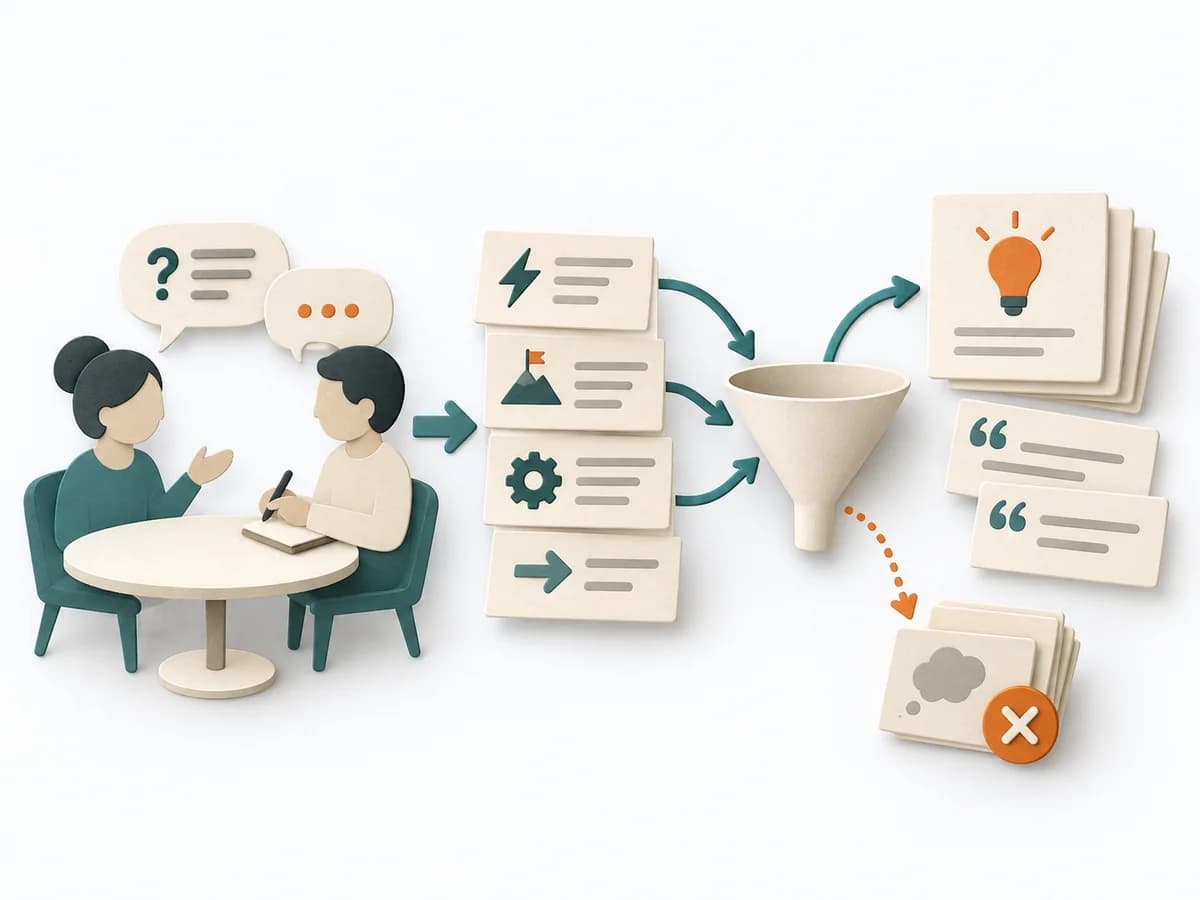 Product Discovery Opportunity Interview |  Systems Thinking Leverage Points |  Business Strategy McKinsey 7S |
|---|---|---|---|---|
Purposedifferent | When teams derive needs only from assumptions and real motives are missing, user interviews give direct access to behavior and meaning. Conversations from the target group's everyday life make patterns, tensions, and open questions solidly visible. | When opportunities are still hidden behind signals of need, it structures conversations around needs and obstacles. It looks for patterns that lead to new product opportunities. | Leverage Points show exactly where interventions in a system produce a disproportionate effect. It draws relationships, patterns, and feedback loops. The result is captured as a leverage map and action strategy. | McKinsey 7S checks whether Strategy, Structure, Systems, Shared Values, Skills, Style, and Staff fit together. Organizational misalignments become visible across multiple levers as a result. |
Complexitydifferent | Low | Medium | High | Medium |
Timedifferent | 30–60 min per interview | 30-60 min je Interview | Half day | 2-4 h |
Participantsdifferent | 1 participant per interview | 5-12 Interviews | 3-12 | 3-12 |
Formatdifferent | Workshop + async | Workshop + async | Workshop | Workshop |
Outputdifferent | Interview Notes, Themes, Insight Summary | Interview Notes, Opportunity Themes, Customer Quotes | Leverage Map, Action Strategy | 7S Assessment, Alignment Gaps, Change Actions |
Tagsno overlap | QualitativeResearchCustomerDiscovery | DiscoveryInterviewsOpportunityCustomer | Systems thinkingChangeStrategy | OrganizationStrategyAlignmentChange |