View methods side by side.
Choose up to four methods. Add them using the search and share the comparison by copying its link.
| Criterion |  UX Research User Interviews | 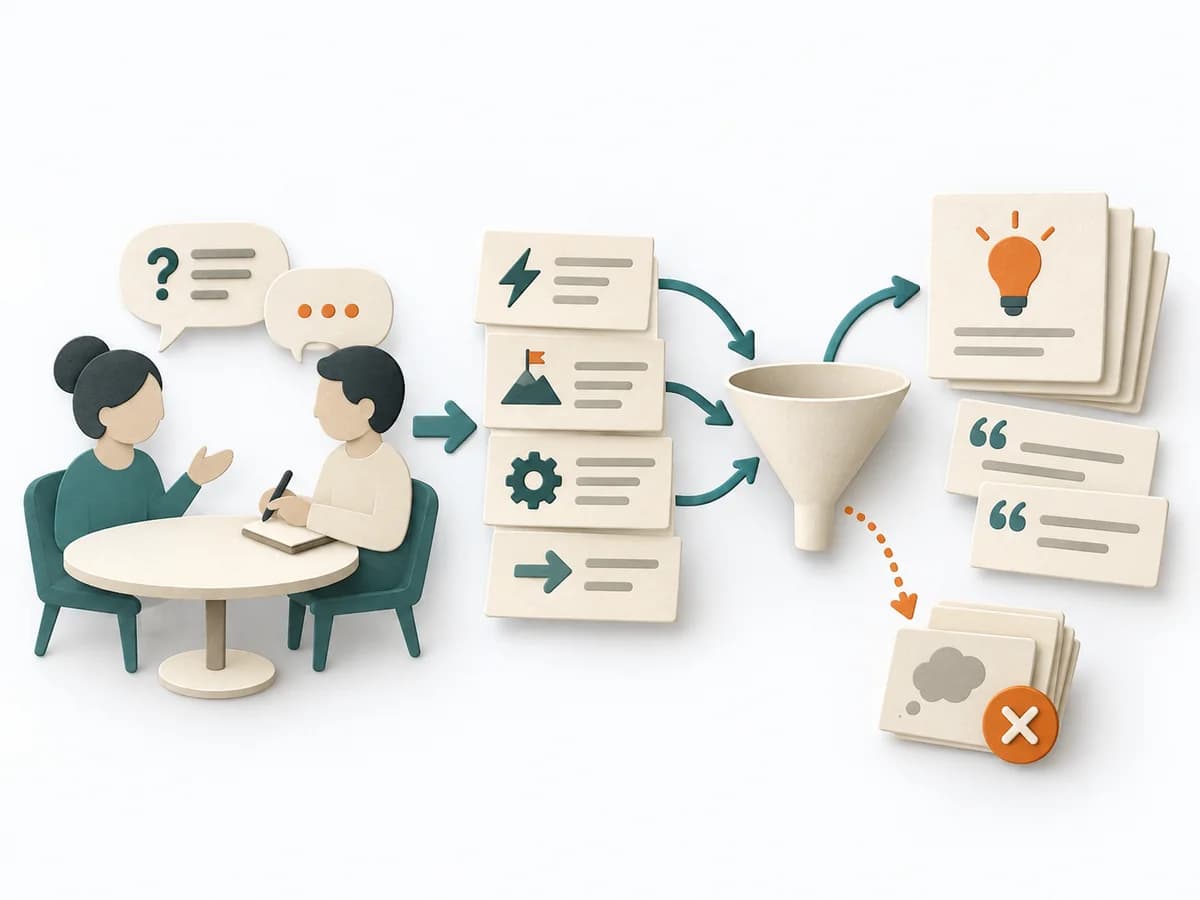 Product Discovery Opportunity Interview | 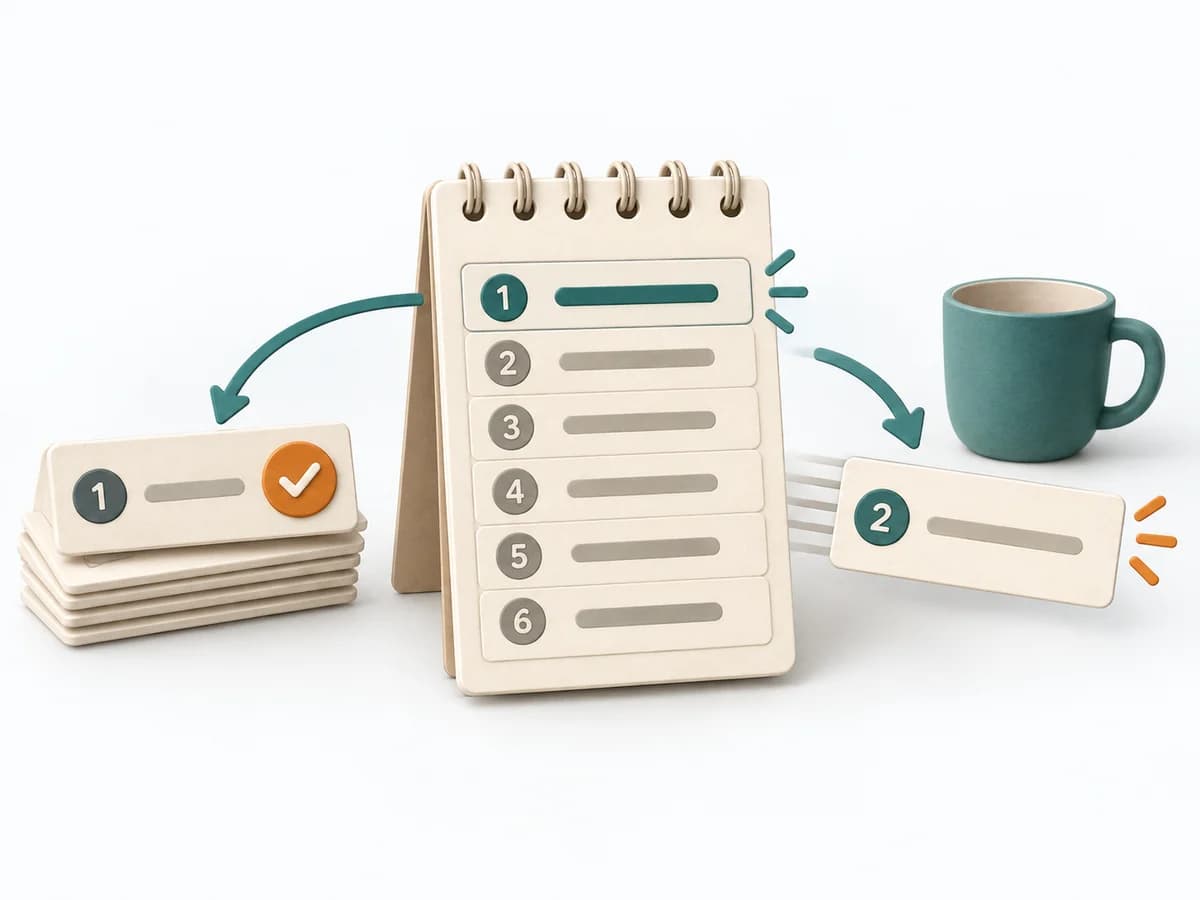 Operations Ivy Lee Method | 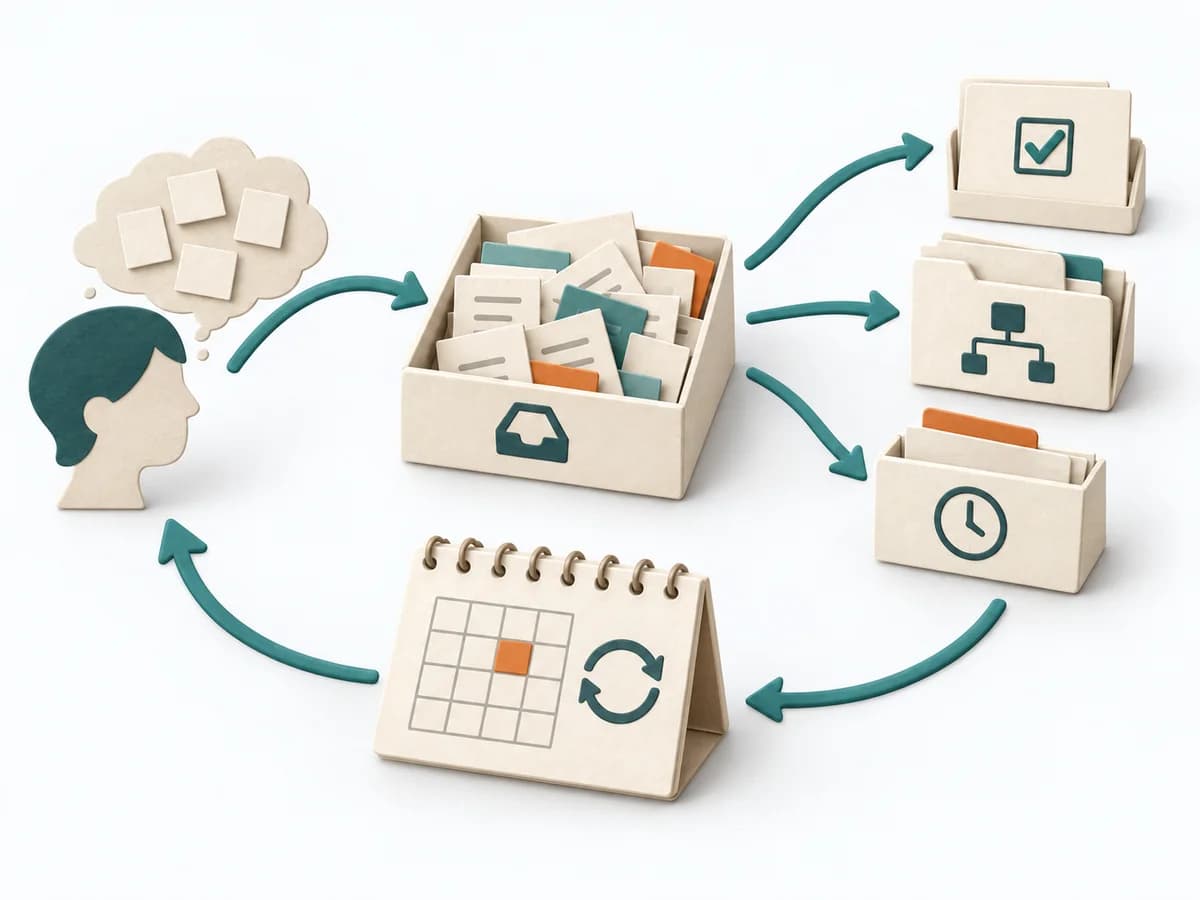 Operations Getting Things Done |
|---|---|---|---|---|
Purposedifferent | When teams derive needs only from assumptions and real motives are missing, user interviews give direct access to behavior and meaning. Conversations from the target group's everyday life make patterns, tensions, and open questions solidly visible. | When opportunities are still hidden behind signals of need, it structures conversations around needs and obstacles. It looks for patterns that lead to new product opportunities. | With a restless workday full of too many open items, the method creates radical simplicity. It directs attention to a short sequence instead of a broad, still-open field. | With many open commitments and ideas in daily life, a reliable external storage system emerges. The method relieves the mind so priority and context don't have to compete in memory. |
Complexitydifferent | Low | Medium | Low | Medium |
Timedifferent | 30–60 min per interview | 30-60 min je Interview | 5-10 min daily | 1-2 h Setup, laufend |
Participantsdifferent | 1 participant per interview | 5-12 Interviews | 1 | 1 |
Formatdifferent | Workshop + async | Workshop + async | Async | Async |
Outputdifferent | Interview Notes, Themes, Insight Summary | Interview Notes, Opportunity Themes, Customer Quotes | Daily Priority List, Completion Notes | Action Lists, Project List, Review Routine |
Tagsno overlap | QualitativeResearchCustomerDiscovery | DiscoveryInterviewsOpportunityCustomer | PrioritizationProductivityExecution | ProductivityPlanningTasksExecution |