View methods side by side.
Choose up to four methods. Add them using the search and share the comparison by copying its link.
| Criterion |  UX Research User Interviews |  Systems Thinking Leverage Points | 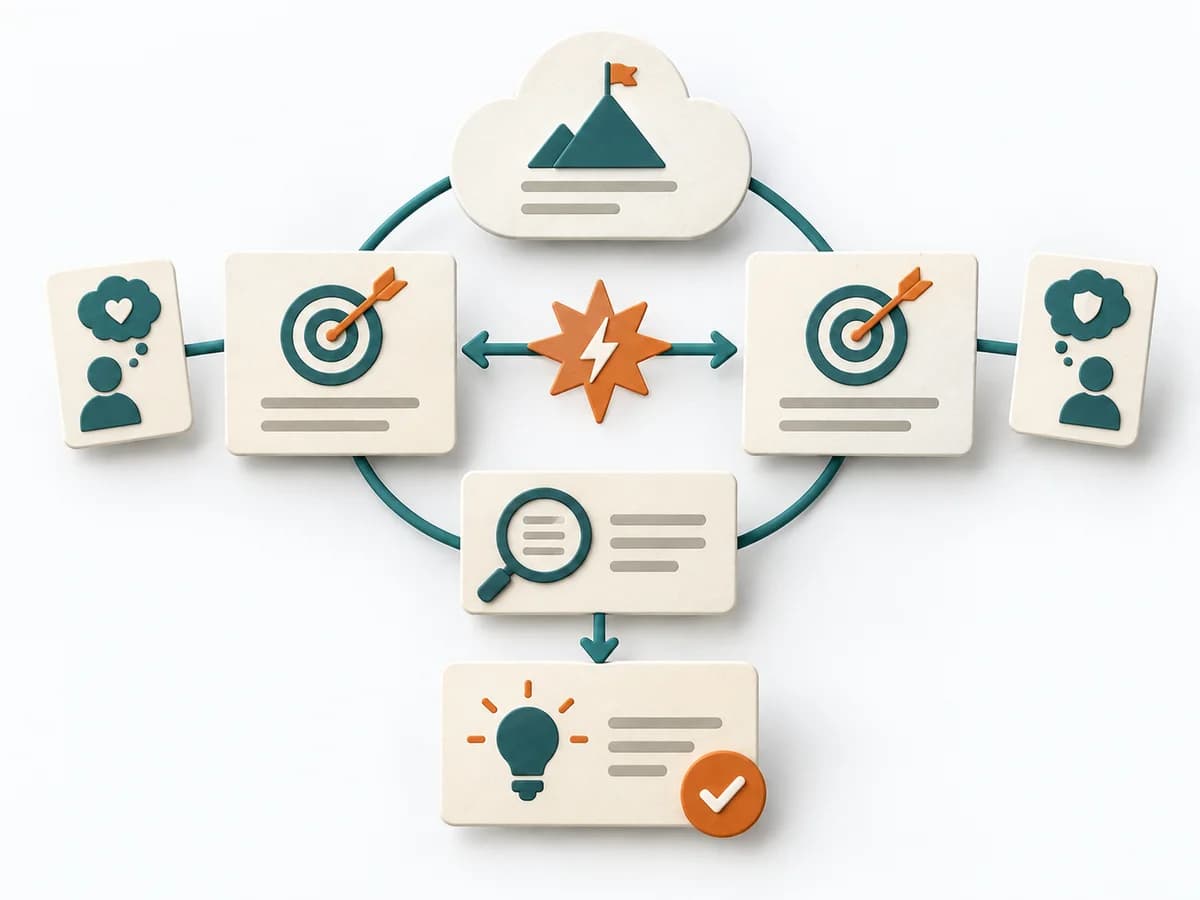 Systems Thinking Evaporating Cloud |  Decision Making Assumption Surfacing |
|---|---|---|---|---|
Purposedifferent | When teams derive needs only from assumptions and real motives are missing, user interviews give direct access to behavior and meaning. Conversations from the target group's everyday life make patterns, tensions, and open questions solidly visible. | Leverage Points show exactly where interventions in a system produce a disproportionate effect. It draws relationships, patterns, and feedback loops. The result is captured as a leverage map and action strategy. | The method makes visible why two seemingly incompatible demands arise and which assumption must be tested to resolve the conflict. | Plans often contain assumptions that were never openly stated and remain dangerous precisely because of that. Assumption Surfacing makes these silent premises visible and prioritizes which of them carry the initiative or could sink it. |
Complexitydifferent | Low | High | Medium | Low |
Timedifferent | 30–60 min per interview | Half day | 60-120 min | 45-90 min |
Participantsdifferent | 1 participant per interview | 3-12 | 2-8 | 2-8 |
Formatdifferent | Workshop + async | Workshop | Workshop | Workshop + async |
Outputdifferent | Interview Notes, Themes, Insight Summary | Leverage Map, Action Strategy | Conflict Cloud, Assumption List, Breakthrough Ideas, Next Experiments | Assumption List, Critical Assumptions, Learning Plan |
Tagsno overlap | QualitativeResearchCustomerDiscovery | Systems thinkingChangeStrategy | Theory of ConstraintsAssumptionsSystems thinking | AssumptionsRiskDecisionDiscovery |